




There’s a reason your routines aren’t cutting it. A psychologist breaks down what actually works – and what’s a waste of time.
The kawaii colouring book, the $100 meditation app featuring Harry Styles, the TV series you can’t stop thinking about, your 12-step skincare routine. An award-winning psychologist says it can all count as self-care. It just has to be deliberate – and measurably good for you.
For Stress Awareness Month this April, we reached out to Flinders University’s Dr Gareth Furber about what self-care really means – and how you can get it to work for you.

So what is stress, actually?
Gareth’s first point: stress isn’t the enemy. A certain amount of it is useful – it’s what gets you out of bed, through a deadline and across a finish line.
The problem is chronic stress – the low-grade, relentless kind that builds when pressure doesn’t let up.
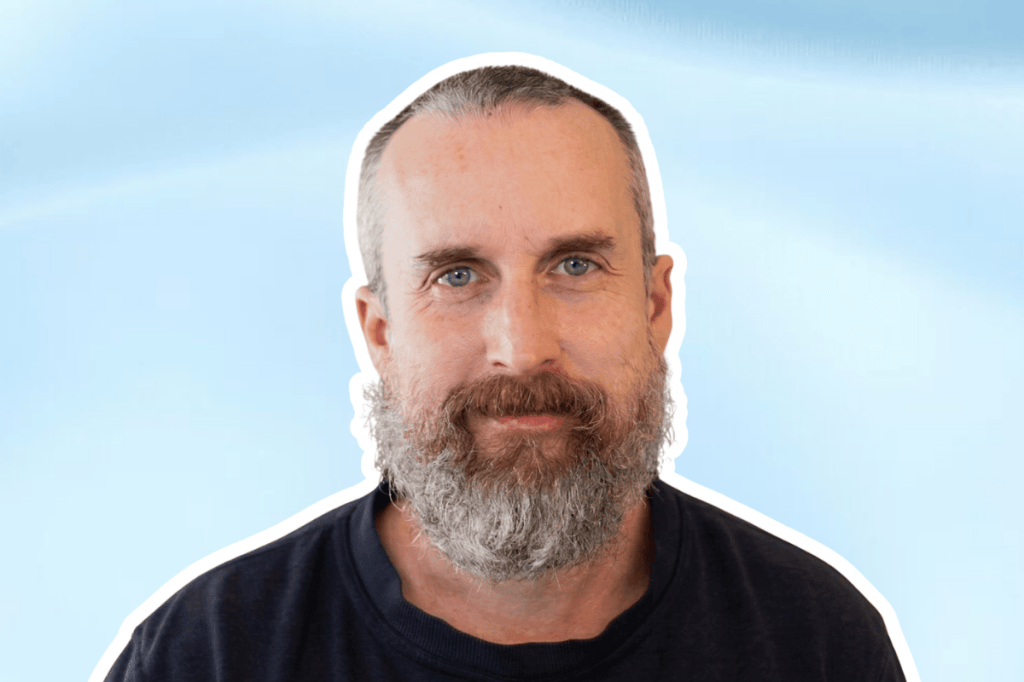
As a psychologist and eMental Health Project Officer at Flinders University’s BetterU Student Wellbeing Hub, Gareth works with young people navigating the chaos of early adulthood – exams and assignments, cost of living, relationship breakdowns and career anxiety.
“It’s like a convergence of life transitions all happening at the same time,” he says. “And the nervous system is still trying to work itself out.”
The simple (and unsexy) foundation
So how do you deal with all that stress? Before anything else: sleep, eating well and movement do the heavy lifting.
“If you optimise your sleep, nutrition and physical activity, you’ve covered up to 80 per cent of the modifiable factors that drive your long-term health,” Gareth says.
None of it is glamorous, but it works. That’s the point.
Preventive Health SA has straightforward, no-nonsense guides on sleep, eating well and movement if you need a starting point – and if you need one-on-one support, their free Better Health Coaching Service connects eligible South Australians with a qualified health coach for up to ten personalised calls.

Self-care: The icing
On top of that foundation sits self-care – and here’s where Gareth’s definition matters.
Self-care isn’t just whatever makes you feel better in the moment, and it’s not whatever you buy because someone on Instagram swears by it. It has to be something you choose deliberately – and something that actually works for you.
Gareth says a good place to start is “The Big 5” – five small, research-backed actions that can make a real difference to your mental health when you do them regularly.
Think of it as a checklist:
- Did I do something meaningful?
- Did I do some healthy stuff?
- Did I tick something off my to-do list?
- Did I connect with the people I care about?
- Did I check in on my thinking?
Do all five most days and your mental health will thank you.
Find out more about the Big 5 – including videos and a downloadable journal to get you started – here.

So what actually counts?
Beyond The Big 5, the definition of self-care stretches further than most people realise.
Gareth says it spans multiple domains – physical, mental, social, financial, even environmental. So making a budget counts as financial self-care, and volunteering to plant trees as environmental.
“If someone explains to me that their skincare routine gives them a healthy grounding routine, a sense of self-worth – I’d say that’s absolutely worth it as self-care,” Gareth says.
The kawaii colouring book could count too, if it’s genuinely doing something for you. So might the meditation app, the TV series and the long bath.
What doesn’t count is the thing you do on autopilot, or the thing that’s all over TikTok but doing nothing to lift your mood.

The wine vs the workout
Soothing your present self is absolutely valid as self-care – the news cycle is a lot at the moment, and Gareth says that occasionally collapsing on the couch with a glass of wine after a long day is a totally understandable call.
But Gareth draws a distinction between self-care that soothes your present self and self-care that also serves your future one. That means that after a long day, it’s often worth dragging your tired self to your Pilates class and bitching through it in the back row with your friend.
“Future you is going to appreciate that you did the workout over the wine,” he says.
Gareth explains that the stronger your sense of who your future self is – and how much you genuinely care about them – the more the harder choices start to feel like looking after someone you love, rather than punishing yourself.

What works is different for everyone
Here’s where Gareth says most wellness advice – even the kind based on solid clinical research – falls down. It tells you what works without mentioning that none of it works for everyone, and some of it actively makes certain people feel worse.
Gareth ran a five-minute breathing meditation with a room full of students and asked for a show of hands afterwards. About 60 per cent felt calmer. 20 per cent felt about the same. The rest felt more annoyed than when they started.

Evidence-based doesn’t mean universally effective
His approach is to treat self-care like an experiment rather than a pre-defined lifestyle overhaul. Each month, he sets a SMART goal – specific, measurable, achievable, relevant and timely – picks one thing to try, and at the end of the month assesses whether it actually made a difference.
If it did, it stays. If it didn’t, he “parks it” rather than deletes it, because what doesn’t work now might work later in someone’s life.
He’s tried rowing, meditation, dietary changes and sleep hygiene. The rowing machine stayed. So did meditation – eventually.
“I’ve parked it at multiple times in my life where it was just annoying me,” he says. “Now if I don’t get to meditate for a while, I’m antsy. I want to do it.”
Gareth says this approach to self-care is worth it because the benefits stack up. “If you keep at it, you’ve run a minimum of 12 experiments in a year,” he says. “Half might work out, the other half you put aside. But you’re a lot more knowledgeable at the end of the year than when you started.”

Five free experiments worth trying this month
- An awe walk: Twenty minutes somewhere with a view of nature – sky, water, trees, whatever you’ve got – and actively look up. This shifts focus outward, reduces rumination and measurably improves mood.
- The rage page: Write out everything that’s stressing you – unfiltered, messy, no grammar, no structure. Don’t fix it or reframe it. Just get it out of your head and onto paper – it can really make you feel better.
- Celebrate something stupidly small: Sent an email? Finished a task? Put your washing on? Pick a ridiculous way to mark it – a clap, a dance, a shouted “yes!”. It sounds dumb, but your brain learns from it.
- Thank an object: Your pot plant, your laptop, your bed – pick something in your life and actually thank it. Out loud or on paper. It sounds slightly unhinged, but it forces your brain to notice what’s working instead of what’s not.
- Connect with someone you actually like: A text doesn’t count here. Real connection is a call, a coffee or a walk. Gareth rates this among the most reliable mood-shifters going around.

Want more options? Gareth and students at Flinders have already built a full menu. The Good Vibes Experiment – a national award-winning campaign developed with students, psychologists and creatives – offers 20 evidence-based tactics for improving your mental health, from gratitude practices and mindful colouring to exercises for building social connection and challenging unhelpful thought patterns.
It’s free, and deliberately designed around the idea that there’s no one-size-fits-all solution. Try one. If it doesn’t work, move on to the next.
Need even more options? Check out Gareth’s free Self-care Mega Guide.
“It’s important to reframe how we talk about mental health – as something everyone has and can work to improve, rather than just associating it with mental illness.”
For mental wellbeing supports, tools, community events and handy contacts, check out Preventive Health SA.
If you or anyone you know is struggling, make sure to reach out to one of the mental health services available 24/7:
LifeLine: 13 11 14
Beyond Blue: 1300 22 46 36
SA mental health services register