



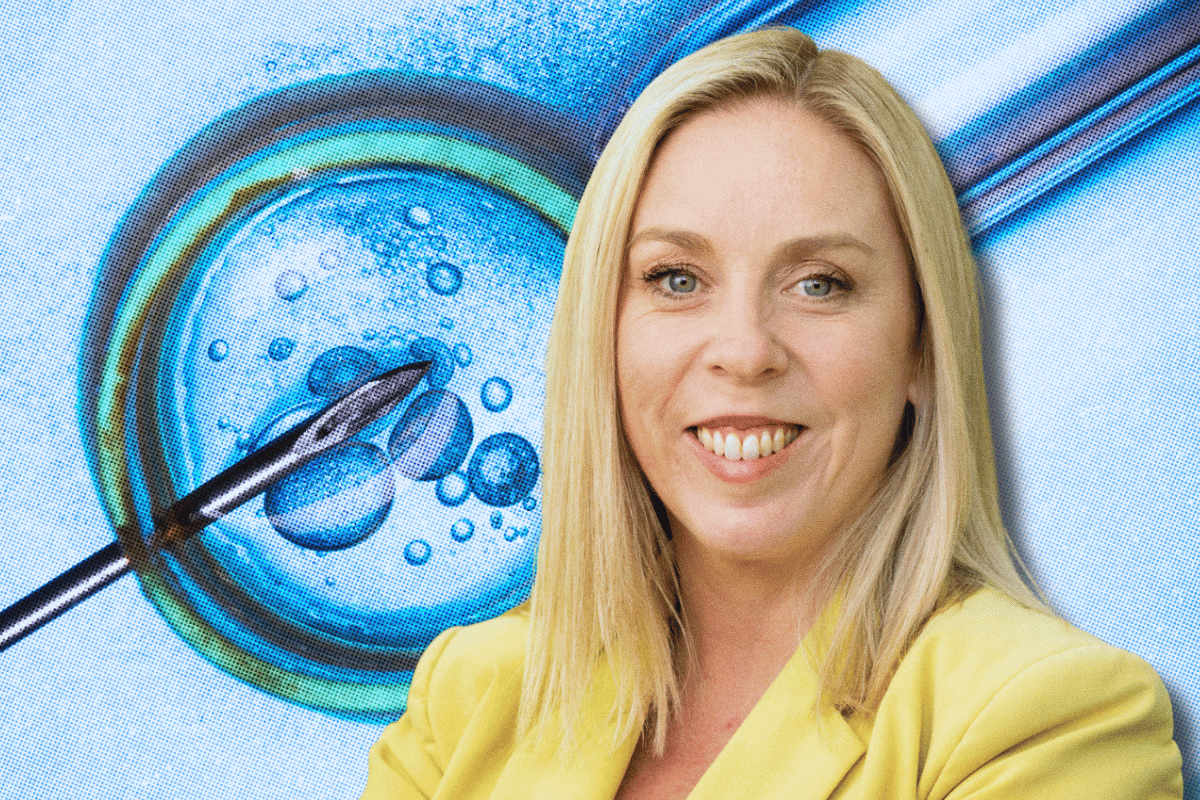
Adelaide scientist Kylie Dunning is exploring how light could help embryologists choose which IVF embryo to transfer first.
Imagine going through IVF and having five embryos in the freezer. Each looks promising, but there’s no way to know for certain whether any of them will result in a baby.
The first transfer might work. Or it could take four unsuccessful attempts before the fifth does – if any do at all.
Adelaide reproductive biologist Associate Professor Kylie Dunning is developing technology that could help embryologists make a more informed choice about which embryo to transfer first – by shining light on them. Literally.
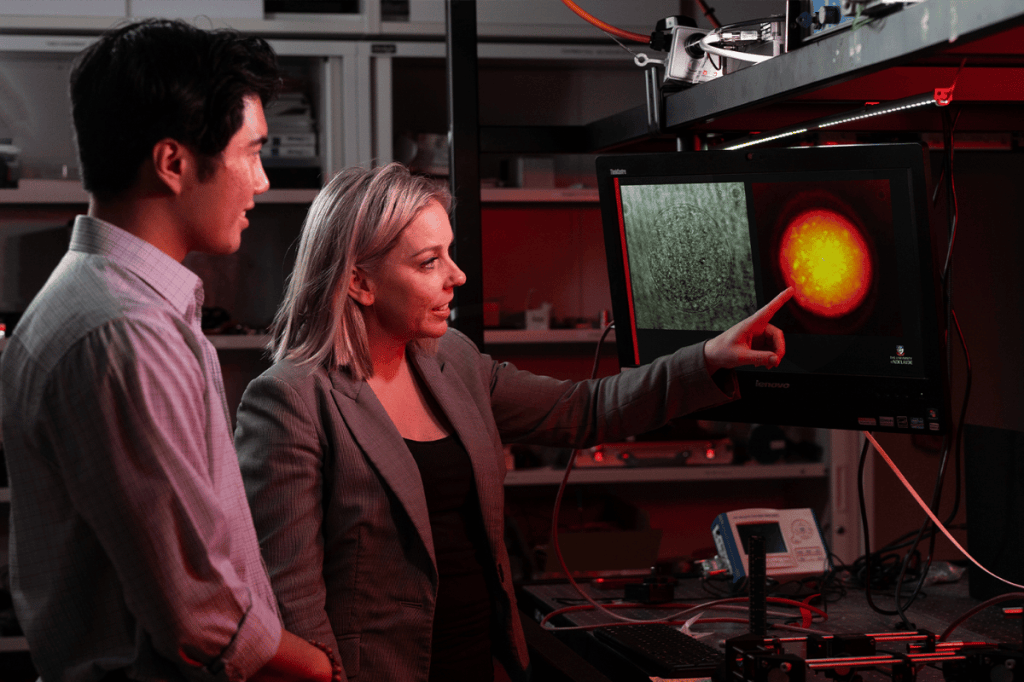
Working with physicists and engineers at Adelaide University, she’s studying the faint glow embryos give off in response to light for clues about their chances of developing successfully.
The research has made her a finalist in the Mid-Career STEMM Professional of the Year category of the 2026 SA Science Excellence and Innovation Awards, run by the state government’s Department of State Development.
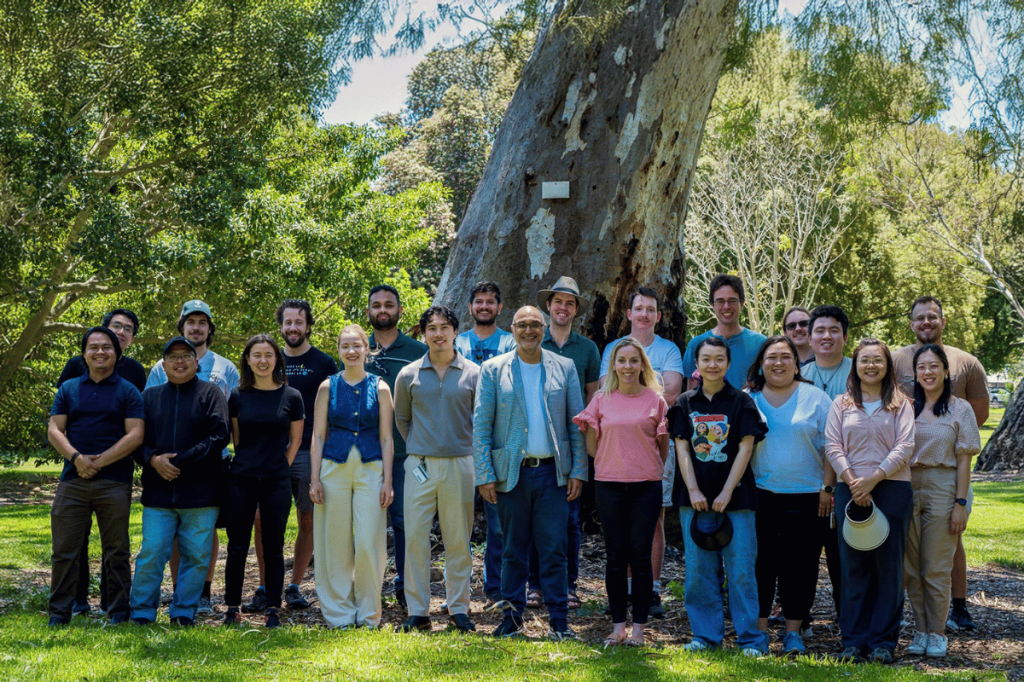
For Kylie, the award nomination belongs to the whole team.
“It’s not just me. It’s their work. It’s their hard labour,” she says. “It’s them coming in at odd hours to make this research a success.”
What could this mean for people going through IVF?
“I don’t know anybody who has been thrilled about going back in for another embryo transfer, or another cycle,” says Kylie, who was also named South Australia’s Young Tall Poppy of the Year in 2020.
“It would be amazing if more patients could get that with the first embryo.
“Some people have to stop because of the financial out-of-pocket costs. And for some people, the emotional roller coaster is too much for them and too much for their relationship.”
A single IVF cycle can cost thousands of dollars out of pocket.
South Australia’s Fertility Treatment Rebate Scheme, delivered by SA Health, now provides eligible patients with up to $4250 towards fertility testing and treatment.
Better embryo selection could eventually mean fewer unsuccessful transfers, potentially further reducing that financial and emotional strain.
“Anything where we can improve the chance of somebody taking home a baby in that first cycle, on that first embryo transfer, that’s a win for the patient.”
Why doesn’t IVF always work?
IVF is a complicated process, with multiple stages where things can go wrong.
“First, it requires the woman to receive high doses of hormones,” Kylie says. “They need to give themselves lots of injections regularly to grow multiple eggs in the ovary.”
From there, each stage has its own hurdles:
- Egg collection: Sometimes no eggs are retrieved, leaving nothing to fertilise.
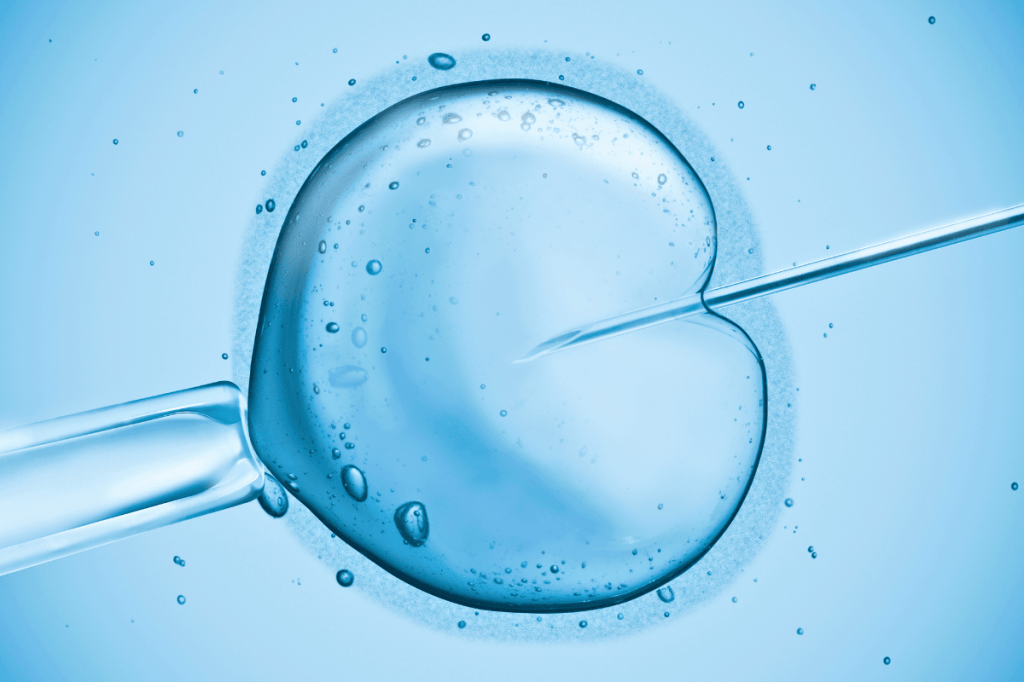
- Fertilisation: Eggs and sperm are combined in a dish, or a single sperm is injected into an egg. Even then, Kylie says, “you can get complete absence of fertilisation”.
- Embryo development: Not every fertilised egg develops into an embryo suitable for transfer.
- Implantation: An embryo might not implant in the uterus, or the pregnancy might not progress.
According to UNSW’s national IVF data, only 37 per cent of women starting IVF with their own eggs had a baby from their first round of treatment, including transfers of frozen embryos from that round.
Choosing which embryo to transfer is a big part of the challenge. Embryologists assess their appearance and development, sometimes taking a biopsy to examine their genetic makeup.
“These tools to assess embryo health generally don’t improve your chance of taking home a baby in that embryo transfer cycle,” Kylie says.
The technology her team is developing could provide that missing piece of the puzzle.

How can light reveal an embryo’s health?
It comes down to how our cells produce energy.
Some molecules involved in cellular metabolism naturally fluoresce when exposed to particular wavelengths of light.
“So if you shine a certain colour of light on these cells, those compounds will naturally glow back,” Kylie explains.
Her team captures that faint glow using “highly sensitive cameras, similar to those used in astronomy”.
The signals reveal an embryo’s metabolism – how its cells produce and use energy – offering clues about its viability.
“You can use light in a few different ways to look at what’s going on inside a live cell without using any sort of added dye or anything like that.”
The next step for Kylie’s research
Kylie’s team has used light-based imaging to distinguish between mouse embryos with the expected number of chromosomes and those without.
Researchers in the US have since used a similar approach to investigate human embryos.
“Somebody else picked up the baton after us and showed its promise in the clinic as well,” Kylie says.
Now her team is working with embryologists to build a microscope that could become part of everyday IVF practice.
“They’re very busy people,” Kylie says. “If you want something to be a success, you need to fit with what happens in a regular cycle, in a regular embryology day.”
Kylie also hopes the technology could reduce the need for invasive embryo biopsies.
“I don’t always think that’s in the best interest of the embryo,” she says, although biopsies will still have an important role in screening for inherited conditions such as cystic fibrosis.
The scientist behind the research
Kylie’s move into light technology was “a little bit serendipitous”.
Returning from parental leave with about six months left on her contract, she was offered a position at the ARC Centre of Excellence for Nanoscale BioPhotonics at Adelaide University.
“I said, ‘Sure, sign me up,’” she recalls.
Suddenly, she was working alongside physicists, engineers and materials scientists, learning techniques from completely different fields.
“You see them using that in a certain context, and then I think, well, we could use that in our field.”
While the technology was new to Kylie, she’d already spent years studying reproductive biology – a field that fascinates her.
“The first time you do IVF, it’s amazing. It’s this incredible process of two cells uniting, one very small, one very large, and creating new life.”
But after years studying how life begins, Kylie’s research became personal.
“You spend so much of your 20s making sure you don’t get pregnant that when you decide it’s time, you think it’ll be fine. And for so many people it’s not.”
Kylie experienced several miscarriages herself, and says her research is now “firmly rooted in my personal experience”.
“A loss is a loss no matter when it happens,” she says. “Losing a pregnancy before 12 weeks is still a loss, and it’s just not spoken about.”

What she’d tell people in their 20s and 30s
The World Health Organization recognises everyone’s right to decide whether to have children, when to have them and how many to have.
For Kylie, making those decisions also means understanding how fertility changes with age, so people can make informed decisions about their own futures.
About half of Australian women under 35 had a live birth from their first round of IVF treatment, compared with 34 per cent of women aged 35-39 and 13 per cent of those aged 40-44.
Kylie remembers seeing graphs of fertility declining each year during her PhD studies.
“I’d run my eye across the bottom line to find my age, and then look up and see where I was.”
She understands why people who want children might want to delay until they’ve got a home, an established career or more financial security.
“But it would be awful to have run out of time because you were just waiting for all those other things to fall into place.”
And if you’re trying for a baby but it’s not happening, you don’t have to wait indefinitely to get help.
For personal fertility advice, Your Fertility recommends seeing a GP after 12 months of trying to conceive, or six months if you’re 35 or older. Seek advice earlier if you have irregular periods or a known reproductive condition.
If you’re struggling with infertility or pregnancy loss, COPE has a list of support services and helplines. If you need immediate emotional support, call Lifeline on 13 11 14, available 24/7.
Discover more about the finalists of the 2026 South Australian Science Excellence and Innovation Awards. Winners for each category will be announced on 12 November at a gala dinner.