


South Australia’s first fertility treatment rebate scheme is now open, with eligible patients able to claim thousands towards fertility testing and treatment. Here’s how it works.
About one in 16 Australian babies are now born through IVF, and approximately one in eight for women over 35.
The catch is the one everybody already knows: it isn’t cheap. A single cycle of IVF can cost more than $4000 out of pocket, and that’s before the tests that come first. For plenty of South Australians, that cost is exactly what prevents them going down this track.
From this month there’s some real relief.
South Australia’s first fertility rebate scheme – officially the Fertility Treatment Rebate Scheme – went live on 1 July, backed by $18.5 million over four years, and for eligible patients it can cover close to half the cost of a fertility treatment cycle.
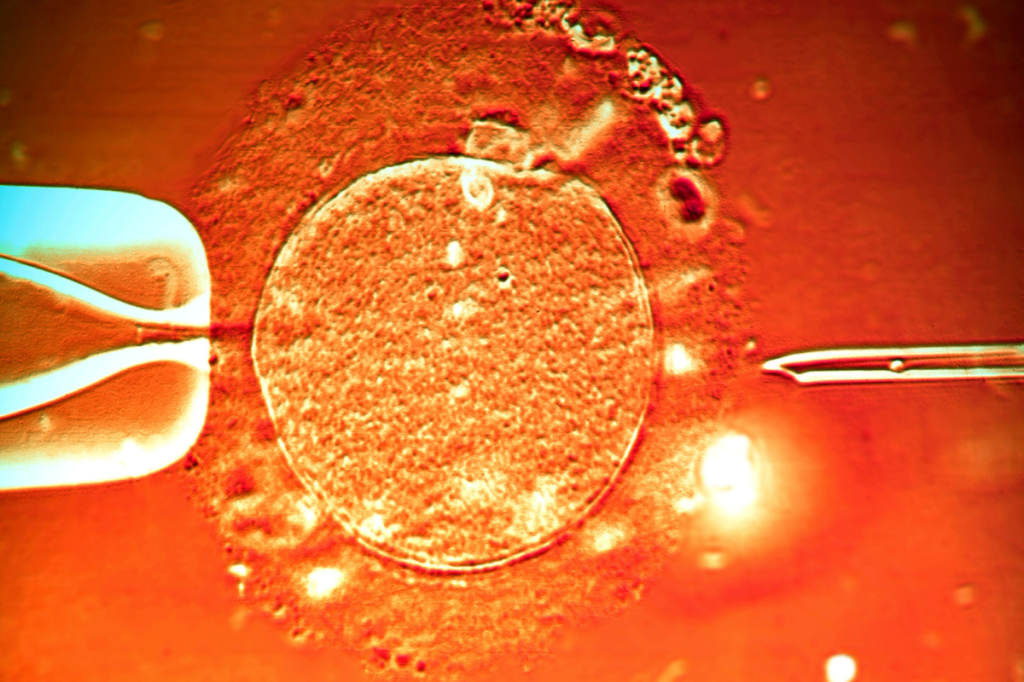
So what actually is IVF?
IVF stands for in vitro fertilisation – “in vitro” meaning in the lab. Normally an egg and sperm meet inside the body and, if everything lines up, a pregnancy follows. IVF does that first step in a lab instead. It’s used for all sorts of fertility problems – blocked fallopian tubes, ovulation disorders, male infertility, or no identifiable cause at all.
It works in stages. Hormone injections over a couple of weeks coax the ovaries into ripening several eggs at once, rather than the usual one. Those eggs are collected in a short procedure under sedation and combined with sperm in the lab, in the hope some fertilise and grow into embryos. A few days later, one is placed in the uterus – and then comes the part nobody enjoys, waiting to see if it takes. Any spares can be frozen for another go.
That’s one cycle, and it’s often not enough: just over a third of women have a baby from their first round, so plenty go back for a second.
Fertility struggles are common, too – doctors generally call it infertility after a year of trying, and it affects around one in six Australian couples, often for no clear reason.
Medicare covers part of an IVF bill, but the gap left over is what pushes people to delay, or give up before they start. That’s the gap this scheme helps with.

What you can claim
There are two new state government rebates, and you can claim both.
The first is a one-off $250 towards fertility treatment testing. Worth knowing: the testing can be done on either partner, whether that’s a semen analysis or pelvic ultrasound (for fertility purposes), but the claim has to be lodged by the person hoping to get pregnant.
The second is $2000 for each fertility treatment cycle, including IVF (fresh and frozen transfer cycles), Intrauterine Insemination (IUI) or Assisted Insemination procedures, and you can claim it for up to two cycles.
Add the lot together and that’s up to $4250 back in your account.
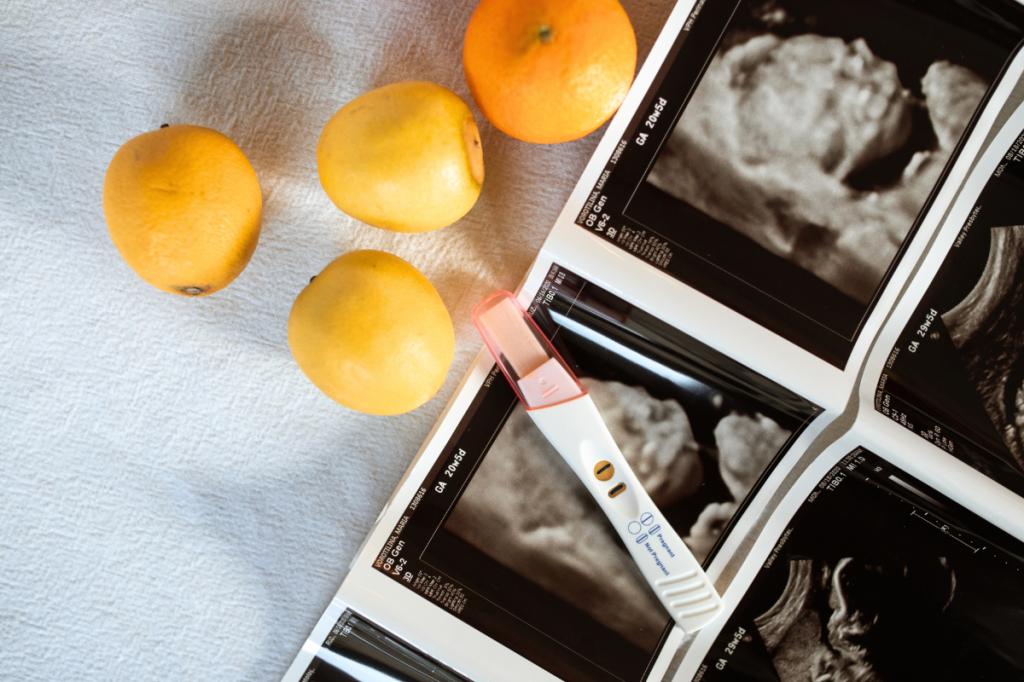
Who can get it
To qualify for either rebate, you’ll need to tick every box on one list and at least one box on another.
The must-haves: you’re a South Australian resident, you’re the person seeking to become pregnant, you’ve paid an out-of-pocket cost for eligible testing or treatment, that treatment is for a genuine fertility issue rather than elective, and it happened on or after 1 July 2026.
On top of that, you need just one of these: you receive the Family Tax Benefit, you hold a Health Care Card (a Low Income Health Care Card or Pensioner Concession Card counts), or your household income is $180,000 or less.
What’s on offer across Australia
South Australia is one of only three states to offer a rebate of this kind, alongside New South Wales and Tasmania.
Where NSW caps eligibility at a household income of $116,000 and pays out for a single cycle, SA lifts the threshold to $180,000 and lets you claim for two.
Tasmania also limits its rebate to a one-off $2000 rebate.
Given how often a first cycle doesn’t work, that second rebate is an important difference.
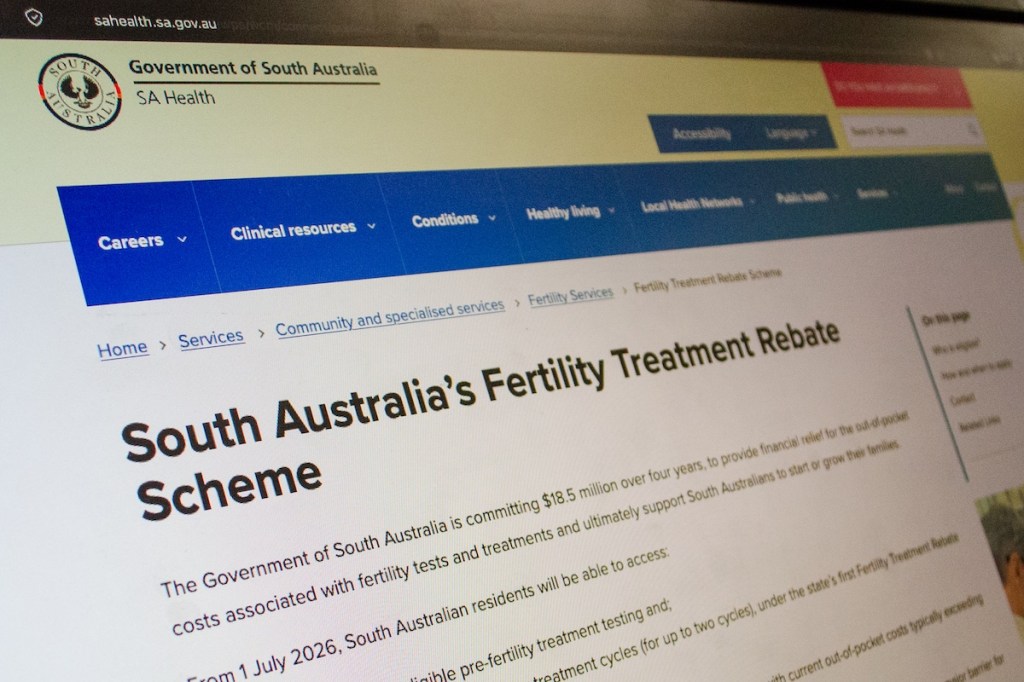
How to claim
The process runs in three steps.
First, download the correct declaration form from the SA Health website, either the pre-fertility treatment testing form or the fertility treatment form, depending on which rebate you’re after. If you’d rather do it by post, you can request one by calling 08 8372 7578.
Second, fill it in and sign it alongside your specialist or your registered treatment provider.
Third, lodge it online at sa.gov.au. If English isn’t your first language, there’s an interpreting service available to support you via 1800 280 203.
One thing to note: your treatment needs to come from a provider on SA Health’s Assisted Reproductive Treatment register to be eligible for the rebate.
And if you’re only just starting to wonder whether treatment is on the cards, the $250 testing rebate is claimable from the very first step, well before you commit to anything bigger.