



Bushfire preparation doesn’t have to be complicated. Here’s how to make a plan, stay informed and protect your home before fire danger season ramps up.
Whether you live in the Adelaide foothills, are planning a weekend away in the Clare Valley or will celebrate Christmas with rellies in the Riverland, getting bushfire ready should be part of your summer plans.
SA’s Fire Danger Season has already begun across much of the state, with metropolitan Adelaide starting on December 1. You can check when it starts and finishes in your area on the CFS website.
And you don’t need to live in a high-risk area to be affected by a bushfire, especially if you’re travelling around SA.
Getting prepared doesn’t have to be complicated. Making a five-minute bushfire plan, downloading a free app and taking a few simple precautions can help keep you safe this summer.
First, make a five-minute bushfire plan
Emily du Bruyn, the SA Country Fire Service’s (CFS) Acting Manager of Learning and Development and a volunteer lieutenant at Mount Pleasant, recommends taking five minutes to make a bushfire plan.
“The CFS website has templates where you or your family can go through and just make a plan as to what you would do in the case of an emergency,” she says.
The free online tool helps you plan when to leave, where to go, what to take and how to get everyone, including your pets, to safety.
Get Alert SA on your phone
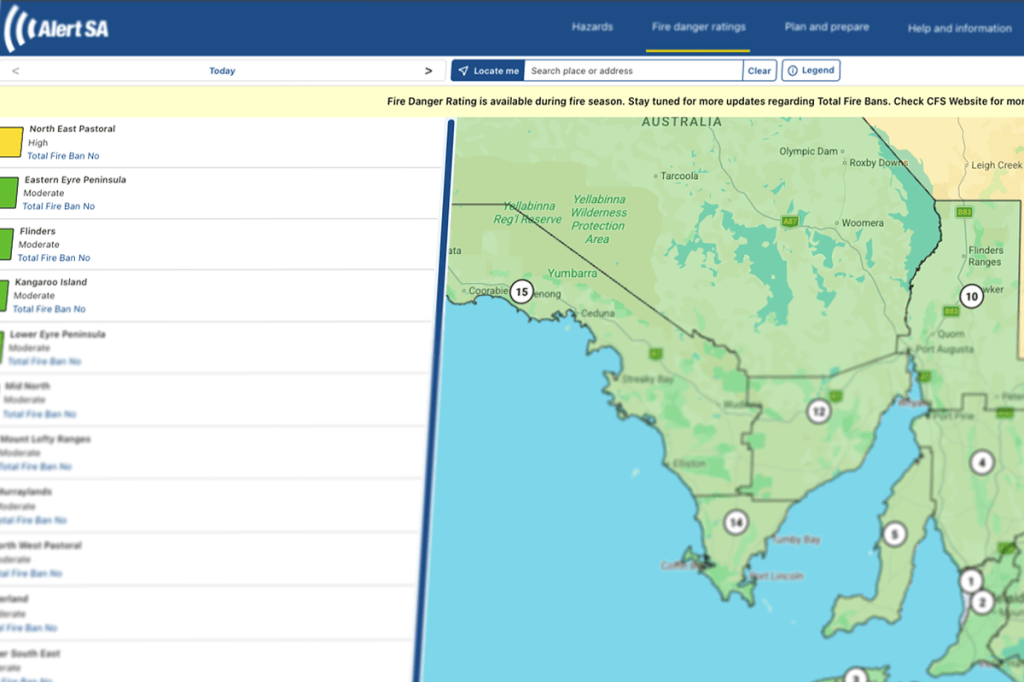
The free Alert SA app is one of the easiest ways to stay informed about bushfires, Fire Danger Ratings and Total Fire Bans.
It’s the state government’s official emergency information app, run by the South Australian Fire and Emergency Services Commission (SAFECOM), with updates directly from the CFS, Metropolitan Fire Service and State Emergency Service.
One of its handiest features is the ability to create up to 10 personalised Watch Zones to keep an eye on places that matter to you, whether that’s home, work, your parents’ place or wherever you’re spending the holidays.
Turn on notifications and you’ll receive alerts for incidents affecting those areas, including Total Fire Ban notifications the evening before and the morning of a ban.
Emily says, alongside making a bushfire plan, knowing where to get emergency information is the best thing you can do to prepare.
“It’s always important to make sure you’re getting your information from more than one place,” she says.
Mobile networks and power can fail during emergencies, so don’t rely solely on the app. Keep track of updates through the CFS website, CFS social media and ABC Radio too.
Know your Moderate from your Catastrophic
You’ve probably seen the coloured Fire Danger Rating signs along the highway, but do you actually know what they mean?
They tell you how dangerous a fire could be if one starts, rather than how likely a fire is to break out.
There are four levels:
- Moderate: Plan and prepare.
- High: Be ready to act. Fires can be dangerous.
- Extreme: Take action now to protect your life and property. Fires will spread quickly and can be extremely dangerous.
- Catastrophic: For your survival, leave bushfire-risk areas. If a fire starts and takes hold, lives are likely to be lost.
You can check daily ratings on the CFS website or Alert SA app.
A Total Fire Ban is different from a Fire Danger Rating. It restricts activities that could start fires, including campfires, certain barbecues and outdoor work. Check the current CFS restrictions to see what’s allowed, or test your fire-season knowledge with our quiz.
Taking a road trip? Do your homework first
Before heading off, check the Fire Danger Rating for your destination and anywhere you’ll be travelling through.
On Extreme days, reconsider travelling through bushfire-risk areas. On Catastrophic days, avoid them altogether. If you live or are staying in a bushfire-risk area, the CFS advises leaving the night before or early in the day when conditions are Catastrophic.
The CFS also has a handy two-minute Traveller Bushfire Plan to help you prepare for your trip.
Pack some extra supplies, including water, a first aid kit, woollen blankets and a battery-powered radio.
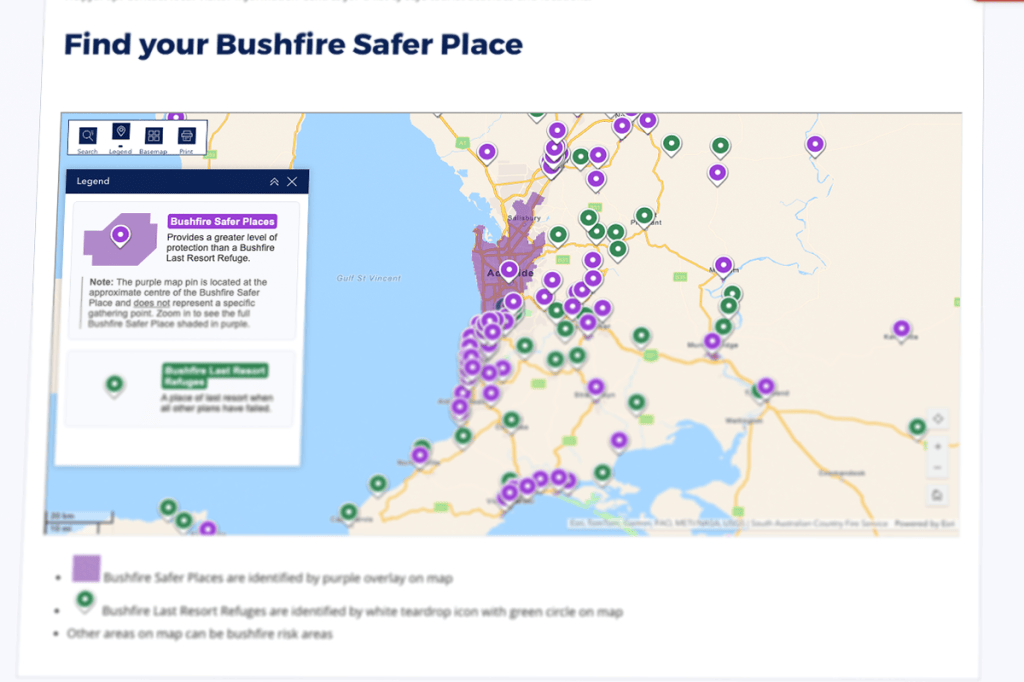
And check where the nearest Bushfire Safer Places are along your route. They offer relative safety during a bushfire, although they aren’t guaranteed to be free from smoke, sparks or embers.
Tidy up around your home (and your parents’)
Think you’re safe from bushfires because you live in suburban Adelaide? Not necessarily.
One of the biggest dangers is ember attacks. Burning embers can travel kilometres ahead of a bushfire, landing in gutters, under verandahs or anywhere there’s something flammable.
They can start fires in roof spaces or beneath houses, even when the main fire is nowhere near your street.
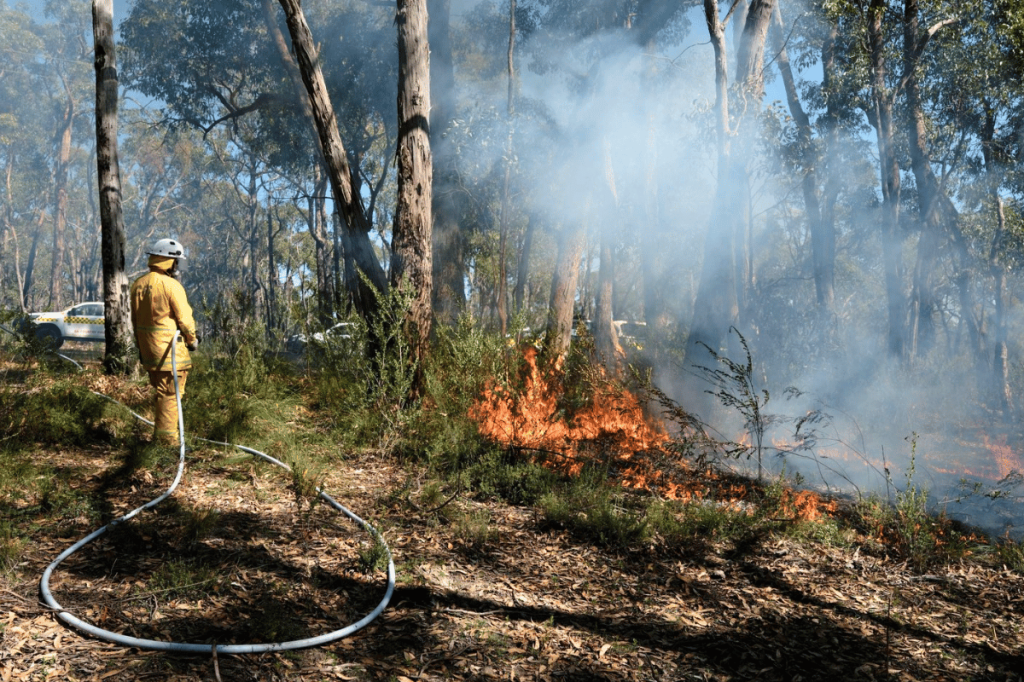
Emily says now’s the time to check your property, or a family member’s, for anything that could catch fire.
“If your home or maybe a family member’s home needs cleaning up around it, whether that’s to do with a lot of vegetation or other things littering around the side of the house, it’s a good time of year now to clean that up and get your home as safe as possible,” she says.
And if your parents live in a bushfire-risk area, it might be worth giving them a hand with the preparations too.
The CFS recommends:
- Clearing leaves and debris from gutters and around your house;
- Removing dead branches, long grass and dry vegetation;
- Moving firewood, rubbish and other flammable materials away from buildings; and
- Checking gaps around windows, doors, vents and roof spaces where embers could get inside.
For more information and practical advice on preparing for bushfire season, visit the CFS website.