


With three giant Tunnel Boring Machines now operating beneath South Road, The Post takes a behind-the-scenes look at the largest infrastructure project in South Australian history.
Standing beside a Tunnel Boring Machine, one thing becomes immediately clear.
Photos don’t do it justice.
Even knowing the numbers beforehand – 100m long, 3500 tonnes and the biggest construction equipment ever used in South Australia – doesn’t prepare you for the sheer scale of the engineering giant when you’re standing in front of it.
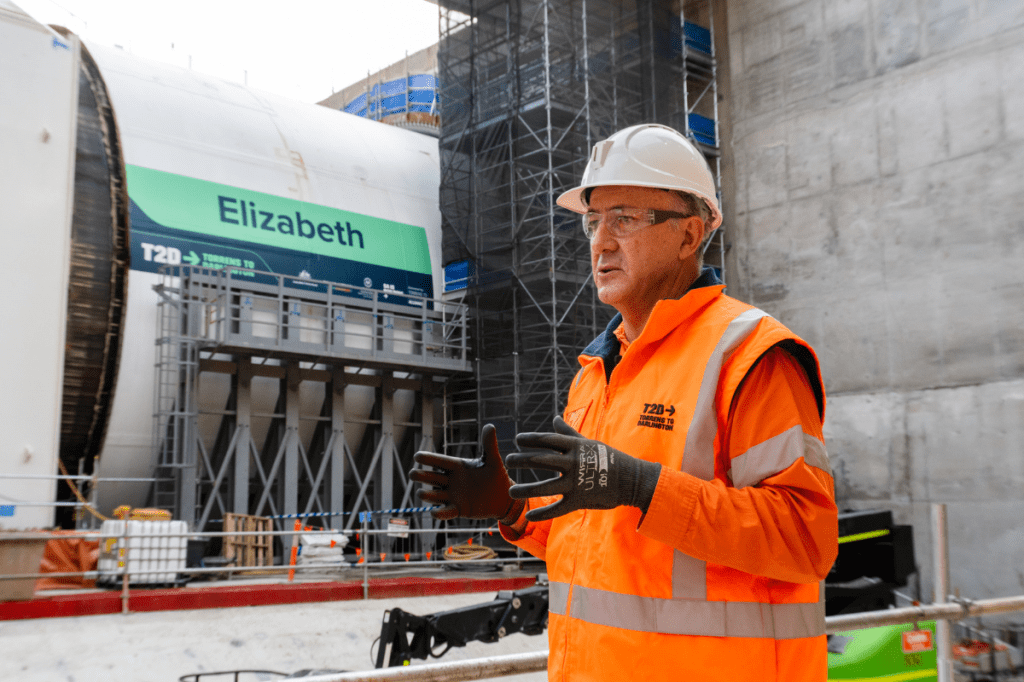
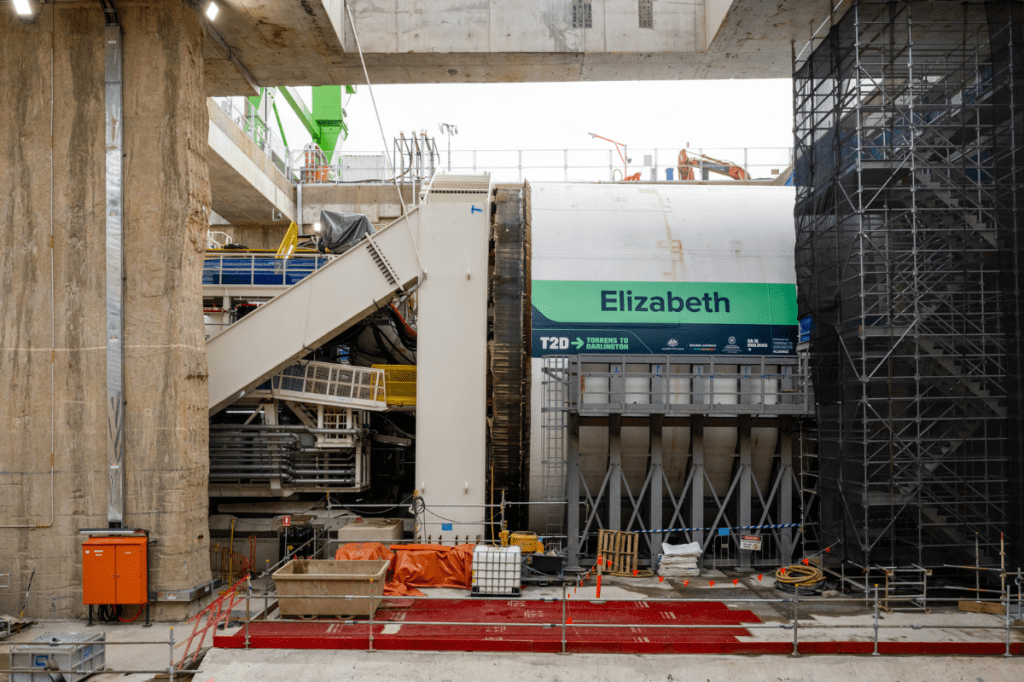
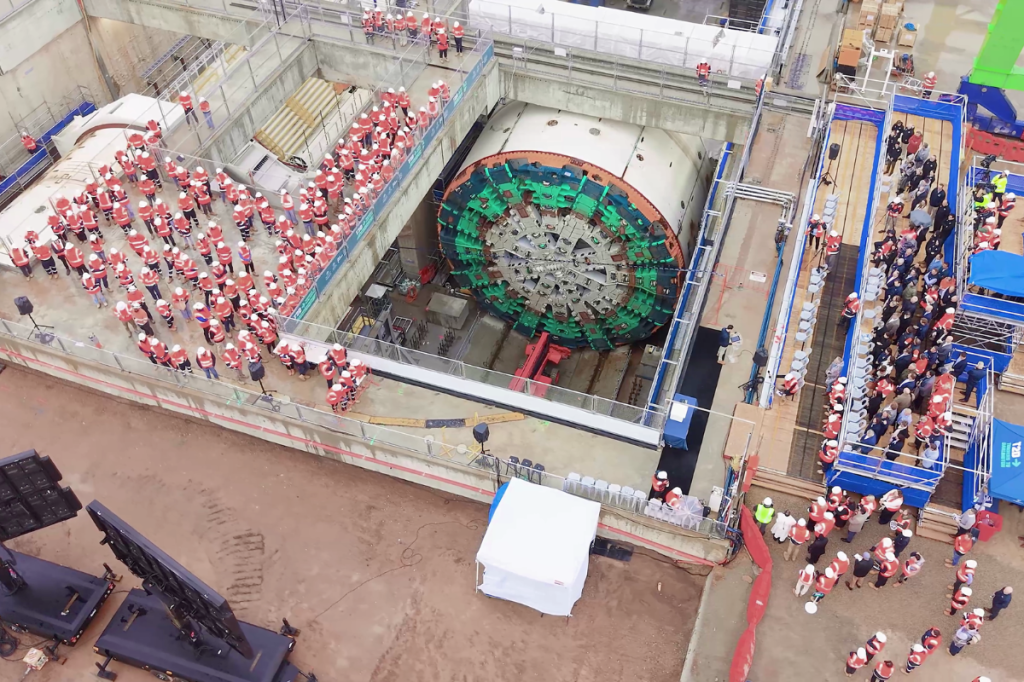
Deep inside the River Torrens to Darlington (T2D) Project’s Hilton launch site, Tunnel Boring Machine (TBM) Elizabeth has begun her underground journey.
She has joined TBMs Mary and Catherine, marking the first time in Australian history that three large-scale Tunnel Boring Machines have been operating simultaneously on the same underground road project.
It’s another milestone for the $15.4 billion project that will complete Adelaide’s long-awaited North-South Corridor by 2031.
But before Elizabeth started her journey underground, there was a mountain of preparation to happen above it.
Preparing to build a tunnel
A tunnel doesn’t simply start with a giant machine chewing through soil and rock.
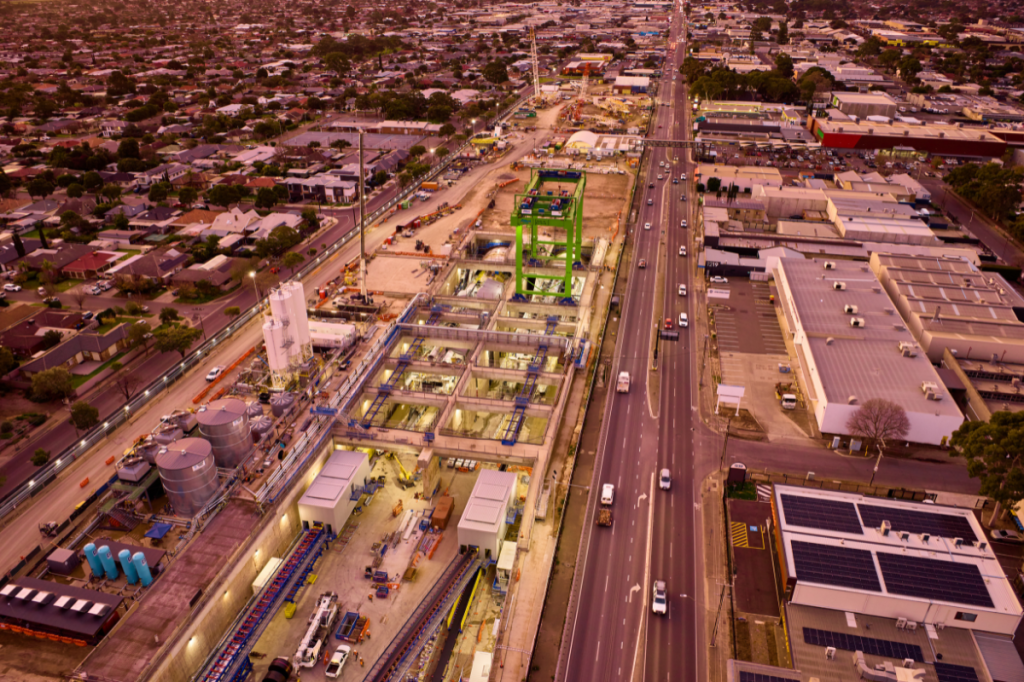
First, construction crews spent almost a year creating the enormous concrete launch box where Elizabeth now sits.
Senior Construction Manager Daniel Boylan describes it as building the tunnel’s front door before the tunnel itself exists.
Massive concrete walls were built from the surface before crews excavated the giant underground space, creating the structure that will eventually become the entrance to the Northern Tunnels.
Only then could Elizabeth be assembled piece by piece.
Those pieces were so enormous that transporting them from Port Adelaide became a project in itself.
Some sections travelled overnight under police escort, with traffic lights temporarily removed so the oversized loads could squeeze through Adelaide’s streets.
“It’s a massive project,” Daniel says.
A 500-tonne gantry crane – nicknamed “the big green monster” and easily visible within the vicinity – then helped assemble the TBM in the launch box.
Much more than a drill
While most people imagine a Tunnel Boring Machine as an oversized drill, Elizabeth is more like a moving underground factory.
“The very front circular steel cylinder is what we call the TBM shield,” Daniel says. “That’s the bit that does the boring and it protects us from the earth outside that would otherwise collapse in on us.”
Behind it stretches around 75m of machinery carrying power systems, cranes, conveyor belts and equipment needed to build the tunnel as it moves forward.
Up to 20 people work on the machine during each shift, split into four or five teams covering the project 24/7.
There’s an operator controlling pressures and steering the machine, crews assembling the tunnel’s precast concrete lining ring by ring, workers injecting grout behind those rings, and teams constantly extending power cables, pipelines and conveyor belts deeper into the tunnel as the machine advances.
Every metre forward means another metre of permanent tunnel completed behind it.
So, where does the dirt go?
One of the questions the T2D Project team gets asked most often is surprisingly simple.
What happens to the millions of tonnes of dirt?
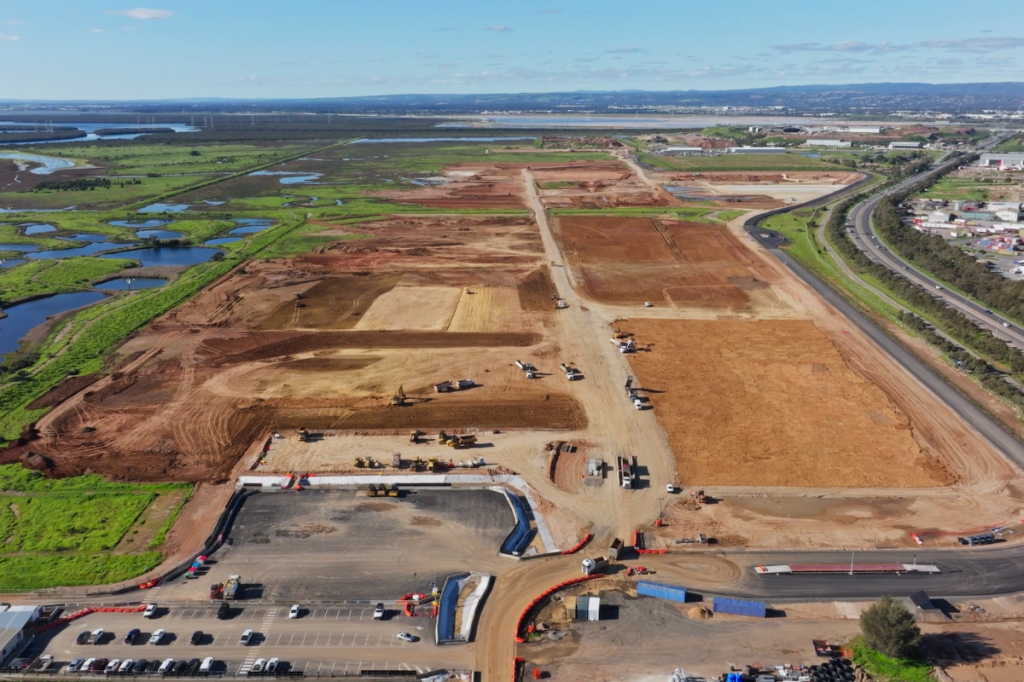
“Once we excavate the dirt, it goes on the conveyor belt system, which is built into the TBM,” Daniel explains. “We bring it all the way back to here [the launch site] into a temporary spoil storage shed we have up on the surface, and then we transport it to Gillman.”
Across the entire T2D Project, about 7.5 million tonnes of spoil will be excavated.
Turning around a 3500-tonne machine
TBM Elizabeth also has a unique job.
Unlike Mary and Catherine, which are each constructing one of the twin Southern Tunnels, Elizabeth will build one Northern Tunnel, emerge at Torrensville near the Brickworks Marketplace, then turn around and build a second one back to Hilton.
“So once we break into what we call North Tunnel, North Portal [near the Brickworks Marketplace] … we will then split the TBM into effectively four pieces,” Daniel says. “Then we’ll use a very specialised heavy lifting cradle and equipment to turn the machine around in pretty much a U-turn and line her up at the very far end …and then she’ll come 2.2km back down the hill.”
With both tunnels complete, Elizabeth will be back in Hilton, where the enormous crane that assembled her will take her apart again.
While some Tunnel Boring Machines around the world are permanently left underground – “sometimes it’s just impractical to pull one of these machines out of the ground” – that won’t happen here, the TBMs will be recovered.
Thousands of jobs, plenty of variety
More than 5000 people are involved across the T2D Project, from engineers and electricians to mechanics, operators and apprentices.
Electrical Superintendent Ben Alterator says no two days look the same.
His team supports not only the Tunnel Boring Machines, but also the spoil facilities, precast factories and other construction sites across the project.
“I enjoy the variety,” he says.
“There’s so much exposure to different electrical systems, and the people and the culture. It’s a really good culture on the project.
“It’s a pleasurable experience to come to work.”
And yes, he’ll be heading underground while the machines are running.
“I reckon I’ll make an appearance or two for sure.”
By the time the tunnelling finishes in around two years, the hard work won’t be over.
Roads, lighting, safety systems and countless other pieces of infrastructure will need to be installed before traffic can finally flow through Adelaide’s first major road tunnels.
But for now, the biggest job has started: three giant machines quietly carving a path beneath South Road, one ring of tunnel at a time.
For more information on the T2D Project, visit its website here. You can track the progress of all three TBMs, including Elizabeth, with the TBM Tracker. And the T2D Community Information Centre is now open at Hilton if you’d like to see a model of a TBM, or chat to someone about how the project works.