


Five trials across Adelaide will explore how traffic signals can better respond to queues, crashes and crowds – potentially changing the way we move around the city.
Sitting through another red light while the road beside you is empty is one of the greatest frustrations of driving.
That’s about to change. Now, at selected Adelaide intersections, smart cameras will soon start making decisions based on what’s happening on the road – giving extra green time to traffic that’s banking up, extending crossing time for large groups of pedestrians and recognising cyclists waiting at intersections.
The technology is part of five AI trials backed by almost $500,000 in state government funding, testing whether the technology can interpret what’s happening on the road in real time, helping to reduce delays and improve safety for everyone on the road.
The trials will take place in Golden Grove, Salisbury Downs, Mawson Lakes and Unley, funded through the Office for Artificial Intelligence’s $35 million AI Proof of Value program.
The RAA has welcomed the trials.
“These trials are a practical step towards a transport network that responds to real conditions rather than fixed timing,” RAA Senior Manager Safety and Infrastructure Charles Mountain says.
What’s actually being tested?
There are five separate trials:
- Crash detection: Existing roadside CCTV will detect crashes automatically and alert Traffic Management Centre operators, potentially speeding up emergency responses.
- Clearance and Green Time reallocation: Technology will identify traffic banking up at an intersection, so more green time can be given in that direction.
- Right-turn overflow: The system will detect when a right-turn queue has spilled beyond its lane and is adding to congestion.
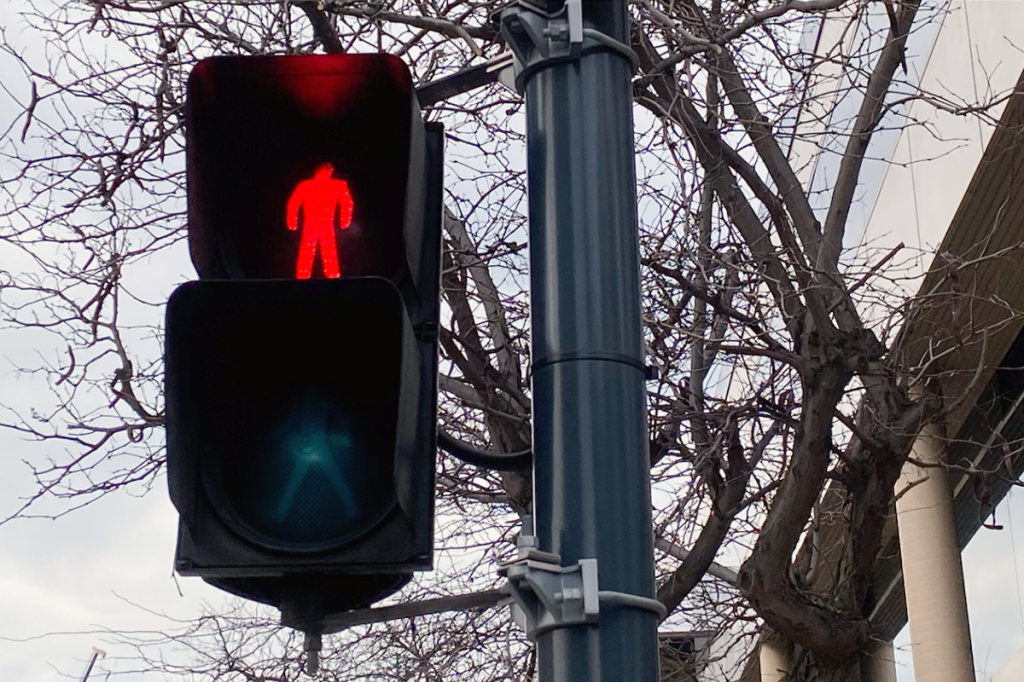
- Adaptive green walk signals: The system will identify how many people are waiting to cross and extend the green walk signal when there’s a larger group.
- Cyclist detection: Technology will identify cyclists and the direction they’re travelling, so traffic lights can better account for them.
Aren’t our intersections already smart?
To an extent – many Adelaide intersections already use programmed signal sequences, road sensors and a central traffic management system that adaptively changes traffic signals. Operators can also adjust them when conditions change.
The difference is that these trials will use AI to analyse live camera footage and traffic data, allowing the system to recognise specific problems that the current system cannot detect. AI systems will complement the current system not replace it.
That won’t mean getting a green light every time you approach an intersection. Traffic lights still have to balance drivers coming from different directions while giving pedestrians and cyclists enough time to cross safely.
The goal is simply to make better decisions faster and by using more detailed information.
Has it worked anywhere yet?
Adelaide has already had a glimpse of what this technology can do.
Smart cameras are operating along the Northern Expressway, Old Noarlunga and at Paradise.
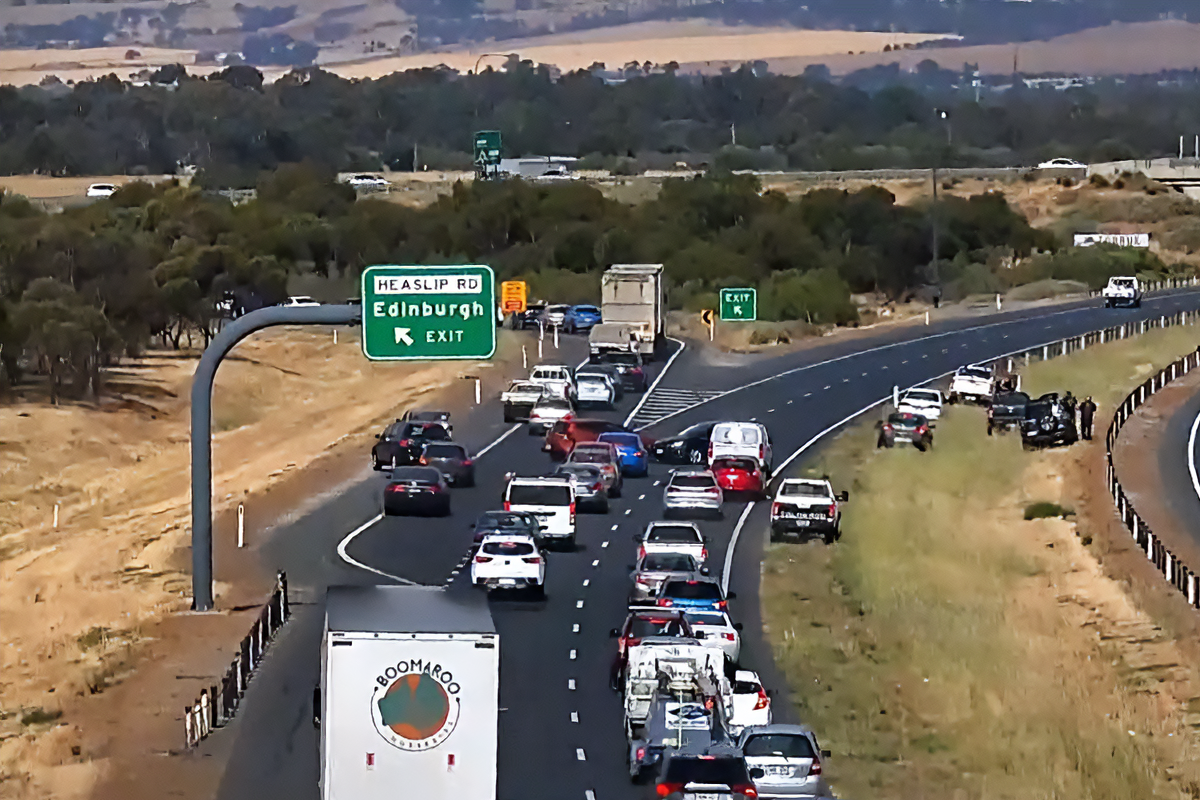
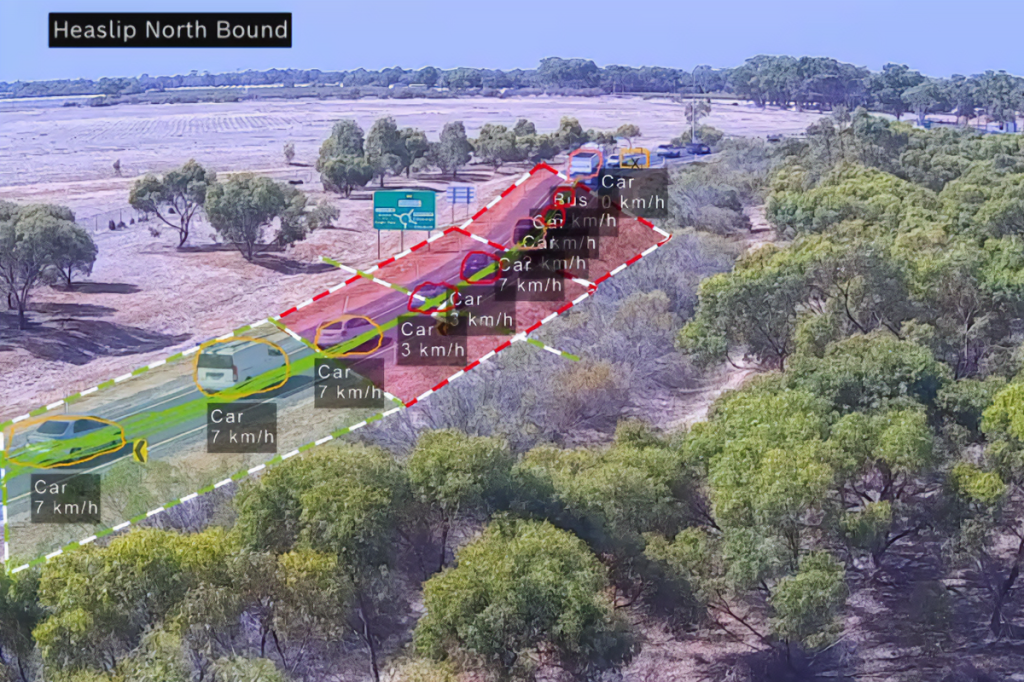
The clearest result so far is at the Heaslip Road exit from the Northern Expressway, where cars leaving the expressway used to bank up onto the high-speed road itself, and rear-end crashes followed.
Cameras now pick up the queue as it forms and briefly hold northbound traffic at the nearby roundabout, opening gaps for cars coming off the ramp until it clears.
The Department for Infrastructure and Transport says collisions at the site have dropped significantly since the system was installed.
Will my commute actually get faster?
Possibly – particularly where the AI technology can identify a problem before it starts causing delays.
But travel times will still depend on how many cars are on the road, how much traffic an intersection can physically handle, roadworks and incidents elsewhere on the network.
And for now, these are trials at selected Adelaide intersections rather than a city-wide rollout.
It’s not just for drivers
Two of the five trials are designed specifically to improve conditions for pedestrians and cyclists.
At most crossings, the green walk signal is fixed at five seconds whether one person or 30 are waiting. The adaptive crossing trial will count how many people are standing at the kerb and extend that time when larger crowds need to cross.
The cyclist detection trial will identify riders and which way they’re heading, allowing traffic lights to recognise bikes more reliably instead of treating them as gaps in traffic.
“We’re particularly pleased to see pedestrians and cyclists included in this trial,” Charles says.
“Designing for vulnerable road users alongside general traffic is a genuine safety gain.”
Find out more about the five trials through the Department for Infrastructure and Transport.