


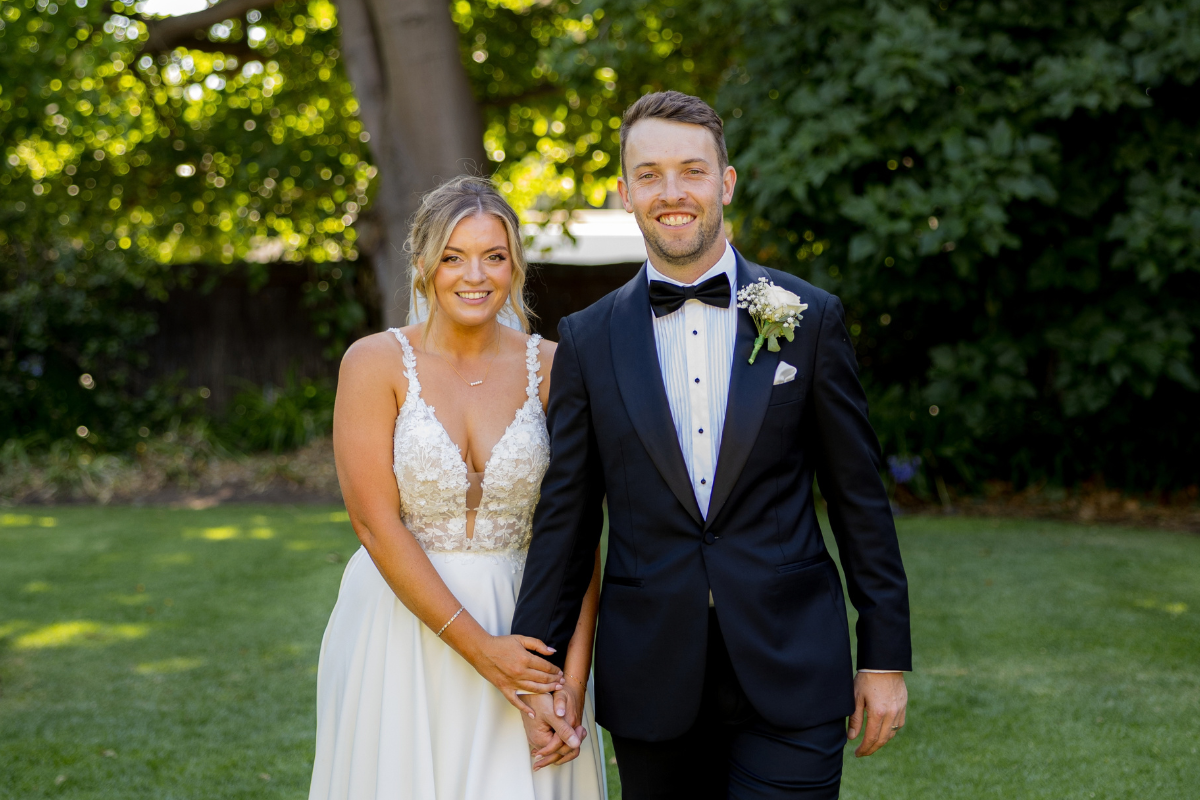
She was 33, newly married and planning a family. Then Adelaide teacher Tayla Whittle had to put her life on hold. This Breast Cancer Awareness Month, she shares her story.
“We got to have our wedding day, and that won’t ever be tarnished.”
Tayla Whittle found the lump a week before her wedding to Trav, almost to the day. She was reading in bed and rolled onto her left side – it ached in a way it hadn’t before. She checked her armpit; it was swollen. That’s what led her to find the lump.
The descriptions of pea-sized lumps she found online didn’t match what she could feel. “I thought mine was nothing,” she says.
She decided it could wait. She already had a GP appointment booked for the week after her Glenelg wedding, originally to talk about the next steps towards starting a family.
Instead, her GP felt the lump and said: “Let’s just focus on this today”.
Scans and a biopsy followed the same day. When the sonographer left the room and three people came back in, Tayla knew something was wrong.
Almost exactly a week after she said “I do,” the 33-year-old Adelaide primary school teacher was diagnosed with early breast cancer.
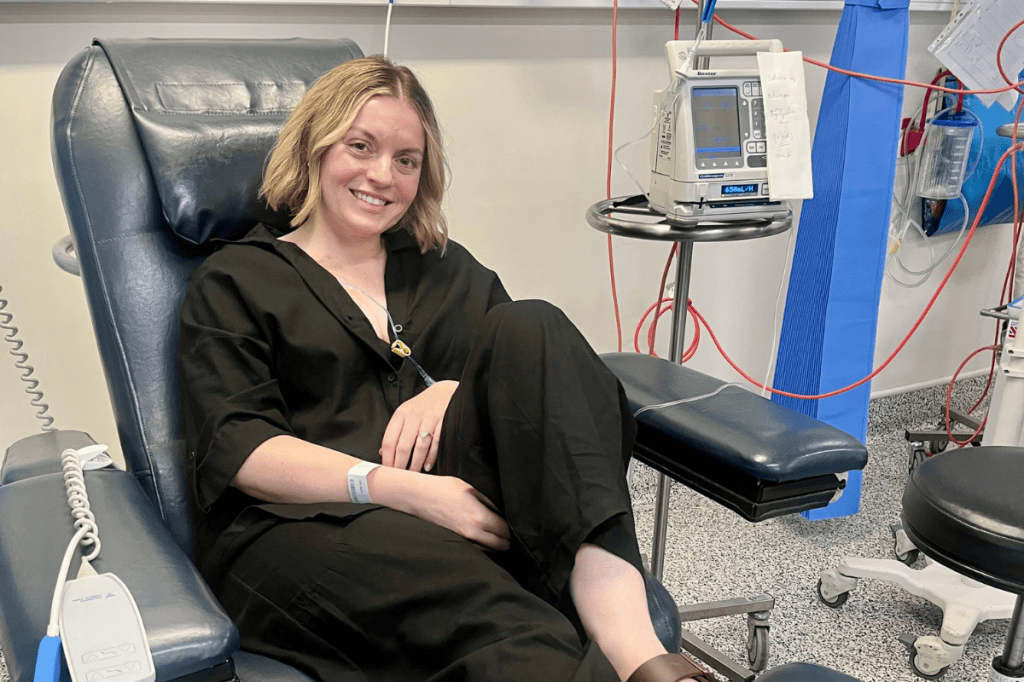
From wedding plans to red devil chemo
Tayla was diagnosed on the Wednesday, saw her breast surgeon on the Thursday and a fertility doctor on the Friday. Before chemotherapy could begin, she needed urgent IVF to help preserve the possibility of having children.
“My oncologist said, ‘You need to do IVF, like, today,’“ Tayla says. “And I was like, ‘Well, how am I going to start today? I’m on contraception?!.’“
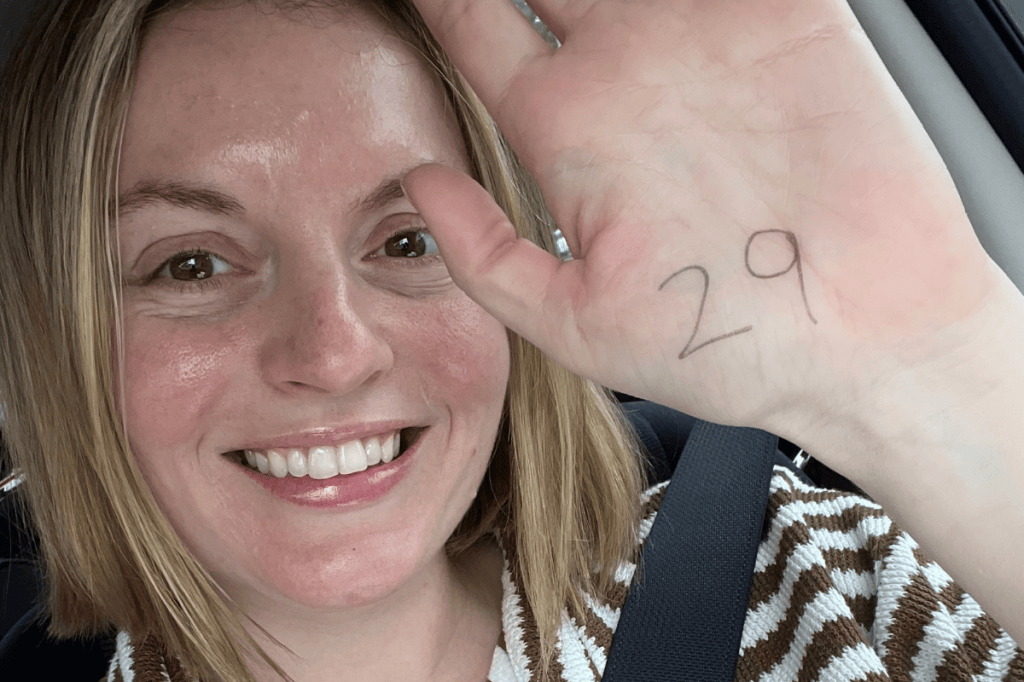
Fertility injections began the next day. Doctors retrieved 29 eggs, resulting in 11 embryos. “I’d mentally prepared myself to be happy with three,” she says. “We were very lucky.”
Then came “the harsh red devil chemo”, just three days after having the eggs extracted.
The IVF cycle had left her with overstimulated ovaries. Tayla says medication for that meant she couldn’t take the usual anti-nausea medication when chemotherapy began, leaving her extremely sick.
“It’s a sick you’ve honestly never experienced before,” she says.
The Maldives honeymoon was postponed. Trav helped her through the days when everything felt too much.
“He’s very good at calming me down,” she says. “You can’t focus on it all at once. You do have to just take it day by day.”
‘I was trying not to look like I had cancer’
“It just strips so much of who you are away from you, and you don’t realise until you go through it,” Tayla says.
“The first thing that’s taken from you is your social life, because you’re either resting or in appointments, so you can’t do the things that you normally do.”
Even on a week off chemo, when she felt well enough to go out for dinner, she got there and wanted to go straight home.
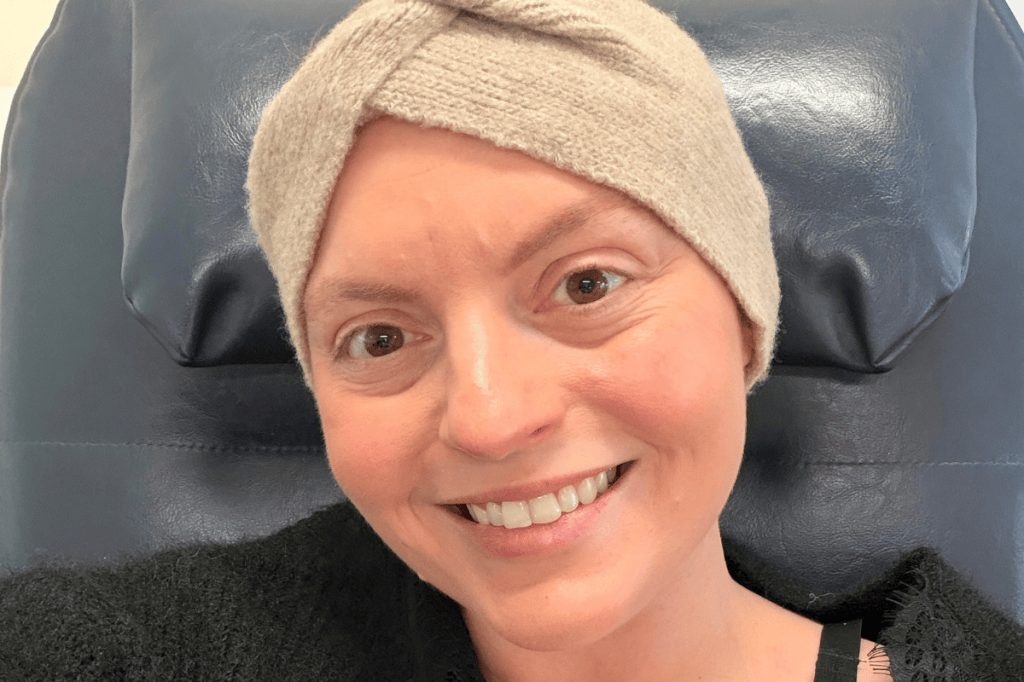
Then came the hair loss. Tayla gained 9kg in two weeks from the steroids and treatment, then lost her hair and eyebrows. Getting dressed up for a friend’s 30th was an ordeal.
“I had just lost my hair. I’d put on all this weight, so I couldn’t fit into any of my clothes. I was like, ‘What do I do for makeup?’ Because even my skin had changed,” she says.
“I was trying not to look like I had cancer, but you just do.”
She was also put into medically-induced menopause, with side effects she puts “up there with chemo”.
“Every symptom, I got it. Every single one – mood, vaginal dryness, hot sweats, cold sweats,” she says.
Why early detection matters
Because her cancer was caught early, Tayla needed a lumpectomy rather than a mastectomy.
“The research has come so far now – early detection made such a difference,” she says. “If I’d let it go longer, it probably would have looked a little bit different.”
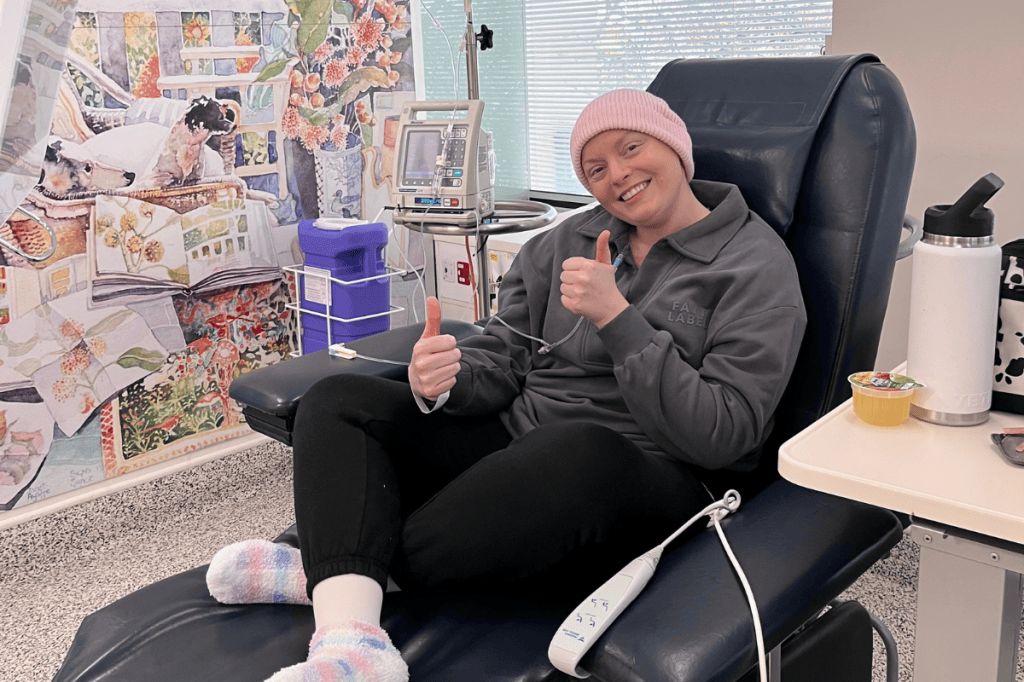
Now 34, Tayla has had 18 rounds of chemotherapy. She’s now part-way through 15 radiotherapy sessions, with further treatment every three weeks expected until around April 2027.
She’s counted 64 cancer-related medical appointments this year. “By the end of the year it will probably be more than 100.”
‘That was normal. That was Tayla.’
Teaching was one part of her life Tayla wanted to hold onto. Her workplace supported her to keep going, with time off for treatment and recovery.
“I had treatment on Fridays. That was my treatment day. So then I had the weekend to recover. Mondays I tended not to be able to go in, but I was back to school on Tuesday,” she says.
“Coming into a new school year, I had to introduce myself to a brand-new class, and then having to follow it with, “And I have cancer.”
The children watched her wedding hair extensions come out, then her hair get shorter, then shorter again, before she started wearing a wig.
“They just didn’t even bat an eyelid. They were so supportive like, ‘Wow, you look so nice. Are you feeling okay?’ and now I often get “Mrs Whittle can you take off your wig so we can see your hair growing back?”
“I think mentally, working really helped me, because that was normal. That was Tayla – I’m a teacher,” she says. “I love my job.”
Of her students, she says: “They will have no idea just how much they’ve actually helped me and gotten me through a very, very hard time.”
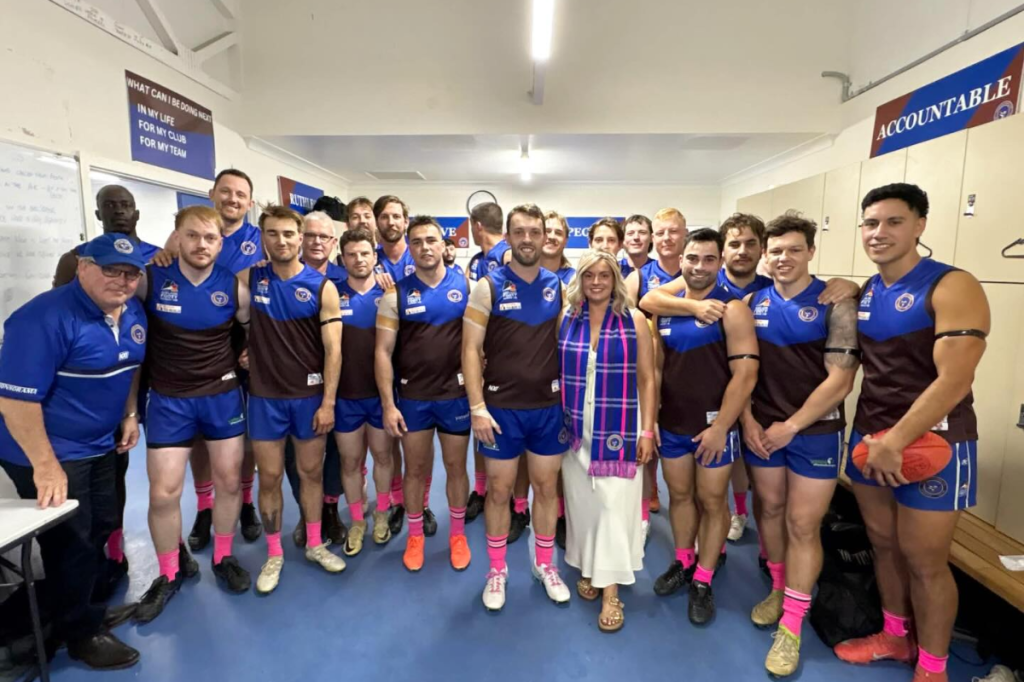
Trav’s football club helped her too. When his Kenilworth teammates heard, they ran a Play4BCNA Ladies Day fundraiser, raising almost $5000 for Breast Cancer Network Australia (BCNA).
“They’re an amazing community. They rally around anyone going through a hard time.”
Plenty of the players’ partners wanted to know more about what she was going through. “It doesn’t just happen to people over 45.”
Finding someone who understands
Tayla had always thought of herself as a positive person. Cancer left her dealing with low moods and feelings she’d never had before.
She remembers thinking: “Oh my God, what do I do? Who do I talk to?”.
Being the youngest in every treatment group was isolating. “In hospital, everyone else is older, and it’s just me,” she says. “I hadn’t had kids yet, I hadn’t done all those things yet. It’s very lonely.”
BCNA’s My Journey helped her find other young women’s stories and support as questions about her future surfaced.
“For me that was things like ‘when would I be able to have children?’. I didn’t have time to process that early on, so it’s kind of all hitting me later.”
She’s now sharing her experience on Instagram through an account called Life Between Treatments. A woman messaged to say Tayla’s radiation video had helped her know what to expect before starting treatment.
“That’s why I’m doing it,” Tayla says. “Doing it for those people who are scared shitless like I was, and had honestly no idea what they’re about to walk into.”
After chemotherapy, she and Trav managed a “mini moon” in Cairns and Palm Cove. The Maldives will have to wait, but they’re already talking about making the eventual honeymoon “bigger and better”.
Know what’s normal for you
Breast cancer is much more common in older women – the average age at diagnosis in Australia is 62. BreastScreen SA offers free screening mammograms every two years from age 40, which are shown to support early detection before and through the peak breast cancer period.
But breast cancer does still happen in younger women, with an estimated 1036 women under 40 diagnosed in 2025, accounting for around five per cent of all breast cancer cases.
The good news is that Australia has one of the world’s highest five-year relative survival rates for breast cancer, at 93 per cent.
This October, for Breast Cancer Awareness Month, Tayla wants younger women to pay attention to changes in their breasts. Even though they are not yet eligible for screening mammograms, they, along with women in between mammograms, should conduct regular breast checks at home and flag any changes with their doctor.
She says you don’t need a special technique. “Just get familiar with how your breasts normally look and feel while showering, dressing or looking in the mirror,” she says.
Changes to look for:
- A new lump, thickening or swelling in a breast or armpit.
- A change in breast size or shape, or skin dimpling, puckering or redness.
- A nipple that newly turns in, develops crusting or sores, or has unusual discharge.
- New pain in one area of a breast, or ongoing unusual pain.
Most breast changes aren’t cancer, but see your GP as soon as possible if you notice something new or different.
“Even if you think, ‘Oh, it might be nothing,’ you just never know,” Tayla says. “Trust your gut.”
Find out more about breast cancer awareness in South Australia here. For broader information, check out these sites here and here.
Visit Breast Cancer Network Australia here or call its free, confidential helpline on 1800 500 258. This Breast Cancer Awareness Month, you can also share your Whole Story with Breast Cancer Network Australia’s social channels.