


An Adelaide team has won a major award for improving care for people with motor neurone disease, while its research into earlier detection and better treatments is getting a new boost.
Jai Arrow was 30 when he retired from the NRL in May after being diagnosed with motor neurone disease (MND). Former Wallaby Nathan Charles, 37, revealed his diagnosis in October, while the late AFL legend Neale Daniher spent years raising awareness of the disease.
Yet despite that visibility, many of us still know little about what MND does – or what happens after diagnosis.
Associate Professor Mary-Louise Rogers, from Flinders University, has spent years working to change that.
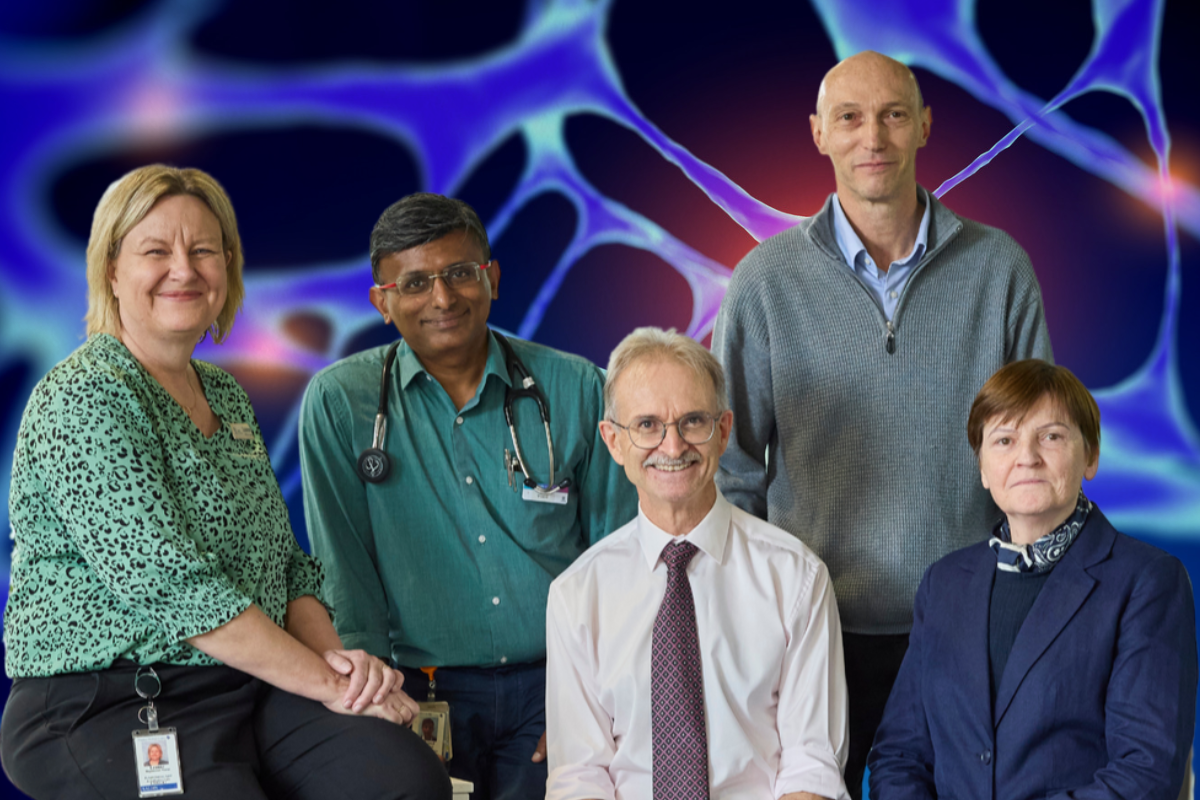
She’s one of five members of the South Australian Motor Neurone Disease Clinical and Research Translation Team (SAMCART), which took home the Excellence in Collaborative Innovation award at the state government’s 2026 South Australian Science Excellence and Innovation Awards.
Now the team’s research is getting another boost, with a new $3 million MND research centre opening at Flinders University, backed by $1.8 million in state government funding..
MND remains incurable, but Mary-Louise says researchers and clinicians are making progress.
“People think nothing’s changed,” she says. “But science moves on.”
So, what actually is MND?
MND is a group of diseases that progressively damage motor neurons – the nerve cells in the brain and spinal cord that control muscle movement.
“People often lose their ability to move their legs and arms, and then to talk and eventually to breathe,” Mary-Louise says.
There’s no cure, and researchers still don’t know why most people develop MND. Progression varies, but average life expectancy is around two to three years from diagnosis.
“It’s a terrible, terrible disease,” Mary-Louise says.
MND can affect people across a wide age range, though around half are under 60 when diagnosed. About 10 per cent of cases are inherited, while most occur without an obvious inherited cause.

One clinic, instead of a maze of appointments
That complexity is why SAMCART brings researchers and clinicians together.
Alongside Mary-Louise, the team includes Associate Professor David Schultz, Dr Vinod Aiyappan, sleep researcher Professor Peter Catcheside and clinic nurse Leanne Davis.
Through the statewide multidisciplinary MND clinic at Flinders, patients can access neurology, respiratory and sleep specialists, dietitians, psychologists and occupational therapists, as well as end-of-life care and support from MND South Australia.
Rather than those services operating in isolation, patients receive coordinated care as their needs change.
“When someone comes into the clinic, they get the allied health people involved, and they also talk to the people looking after them at home,” Mary-Louise says.
Research suggests multidisciplinary MND clinics can improve quality of life and extend life expectancy.
“They’re feeling supported, and their partners and carers are supported as well.”
Helping people stay at home
The team’s support increasingly extends into patients’ homes.
Occupational therapists assess what someone needs at home, while respiratory specialists help manage the breathing problems that often develop as MND progresses.
The team has also developed home ventilation services, allowing people whose breathing muscles are weakening to receive specialist respiratory support at home – particularly important for regional patients who might otherwise have to travel to Adelaide.
Access to equipment matters too.
The state government recently committed another $4 million over four years to MND South Australia, supporting specialist services and its rapid-access equipment loan program for people aged 65 and over who aren’t eligible for the NDIS.
“Timely access to the right equipment can be the difference between staying at home with loved ones and unnecessary hospitalisation,” MND South Australia CEO Dr Samantha Mead says.
For a rapidly changing disease, Mary-Louise says that speed matters.
What can a urine sample tell you about MND?
Mary-Louise’s own MND research started with a nerve-growth receptor she was studying as a postdoctoral researcher.
Previous research suggested part of that receptor could break away from cells, travel through the bloodstream and eventually end up in urine.
Following that trail, Mary-Louise helped develop a potential biomarker – a measurable substance that can provide clues about a disease.
In MND, such markers could help researchers track how quickly the disease progresses and whether treatments are working.
“What we really want is to get a treatment to people who have the disease, and also to detect it earlier,” she says.
“To do that, we need things we can measure that show how fast the disease is going and whether the drugs are working [to slow its progress].”
Over more than a decade, Mary-Louise and her team developed antibodies to identify the biomarker, built a laboratory test and automated the process.
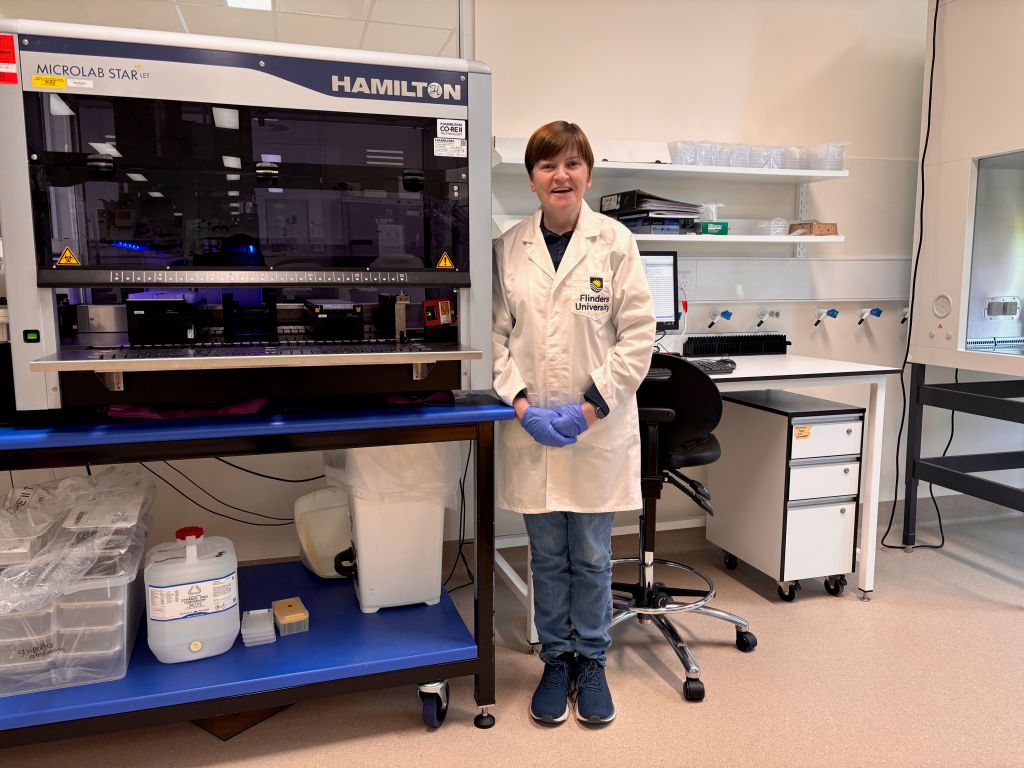
She now leads the Ian Davis Flinders University Biomarker Facility, which scales up testing for MND research and clinical trials in Australia and overseas.
A $3 million boost for MND research
That work is also at the heart of the new Ian Davis MND Biomarker Research Centre of Excellence, which has opened at Flinders University with $1.8 million from the state government, $449,268 from FightMND and a $732,015 in-kind contribution from Flinders.
Based in Flinders’ Health and Medical Research Building, the $3 million centre will focus on developing non-invasive biomarkers that could help researchers work out sooner whether potential treatments are working in clinical trials.
“This investment will help us build on that breakthrough using powerful new technologies,” says Mary-Louise.
“The Centre will give researchers new tools to detect disease signals earlier and better understand how potential therapies are working.”
The facility and centre are named after FightMND co-founder Dr Ian Davis, who was diagnosed with MND at 33 and championed patient-focused research before his death in 2018.
Patients attending the MND clinic at Flinders can choose to provide urine and blood samples for the facility, creating a direct link between clinical care and the research.
There’s also a sensor under the mattress
While Mary-Louise’s urine biomarker research is a major focus, she and her colleagues are also exploring other ways to monitor MND.
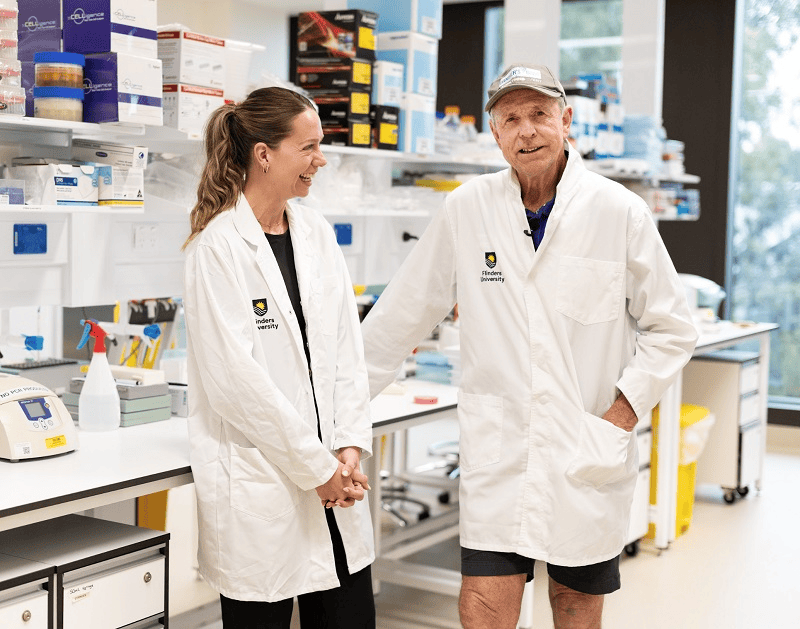
They’re working with MedBug, a South Australian-developed research-stage sensor that sits underneath a mattress and monitors breathing during sleep.
At the moment, assessing sleep-related breathing problems can involve an overnight sleep study. MedBug could allow people to be monitored in their own beds over longer periods, potentially identifying changes sooner so their clinical team can respond earlier.
The sensor isn’t yet an approved medical device, but Mary-Louise says home monitoring could be particularly useful for regional patients.
And treatments are changing too
Working alongside clinicians has helped the team bring international clinical trials to SA, giving local patients access to studies and emerging treatments that might otherwise be unavailable here.
Places in trials remain limited, but treatments are also emerging for some forms of MND.
Tofersen – sold as Qalsody – is now available through the PBS (Pharmaceutical Benefits Scheme) for people with MND with a specific SOD1 gene mutation. It applies to only a small proportion of Australians with the disease, but marks progress towards treating forms of MND once considered almost entirely untreatable.
Despite spending her career working on a disease with no cure, Mary-Louise remains hopeful.
“I do have that hope. I really do think things are happening.”
Support for people living with MND is available through MND South Australia.
Meet more winners and finalists in the 2026 South Australian Science Excellence and Innovation Awards here.