




A new South Australian program is bringing female business owners together to build confidence, explore technology and find smarter ways to work.
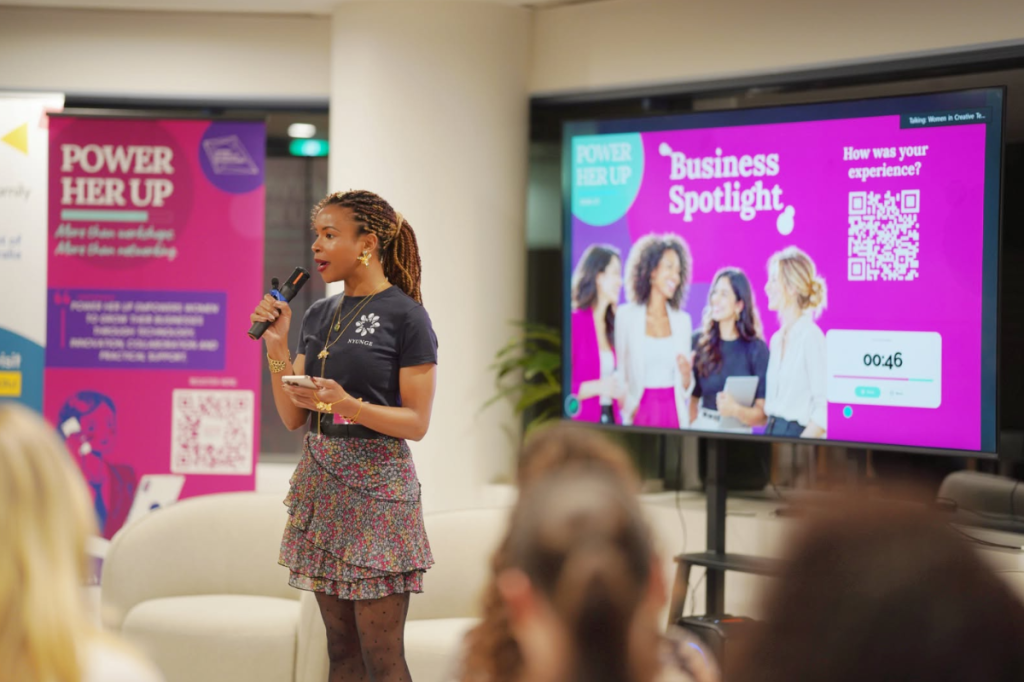
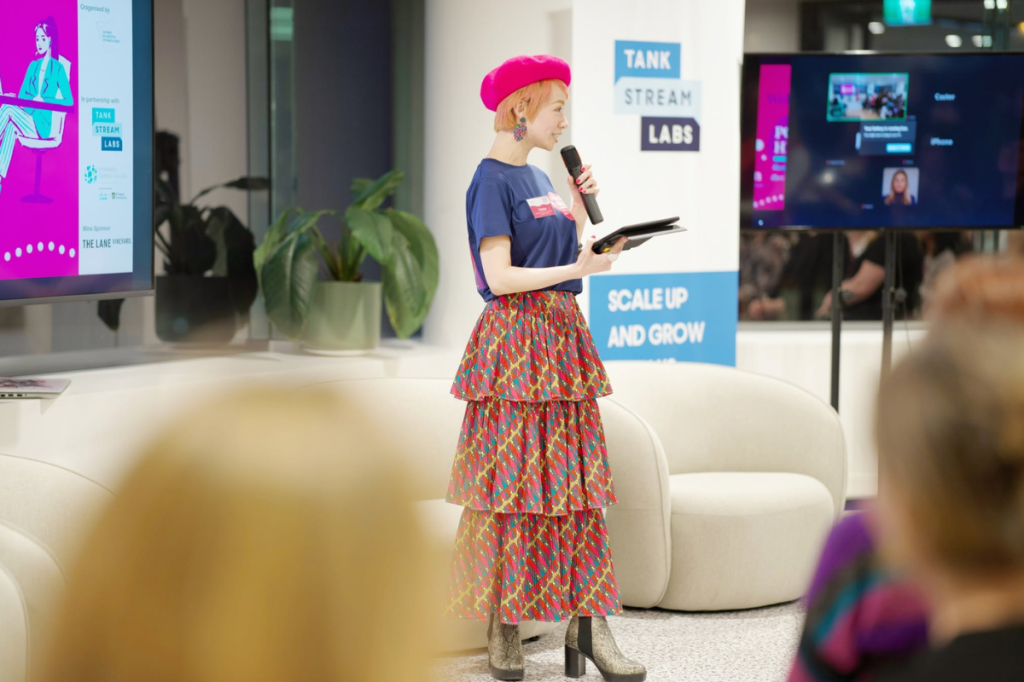
At last month’s launch of Power Her Up, founder Onnie Chan went off-script.
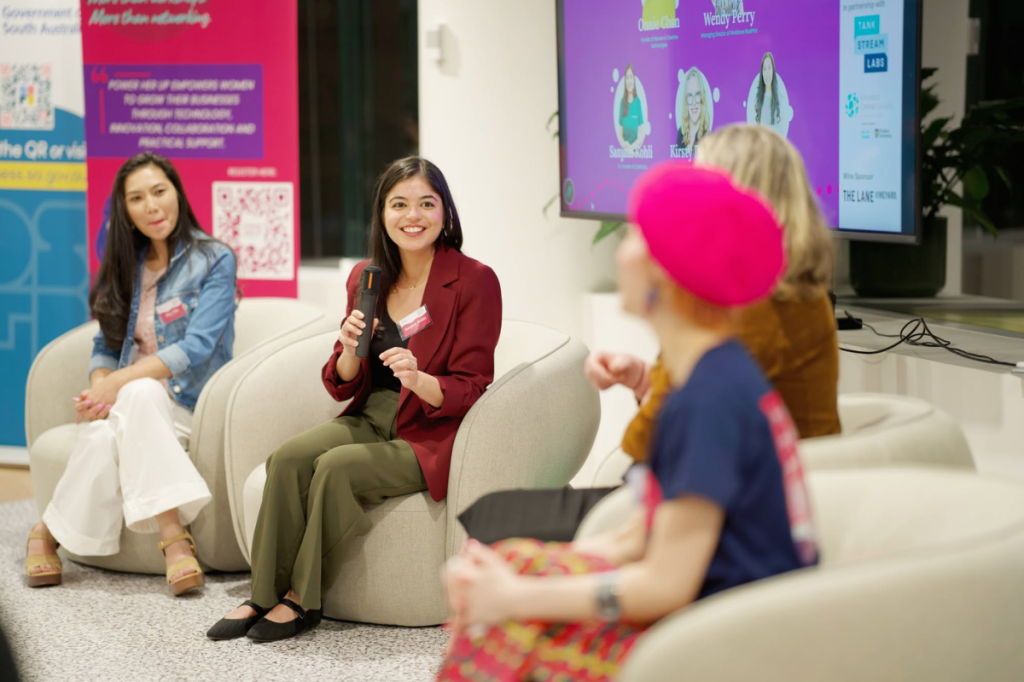
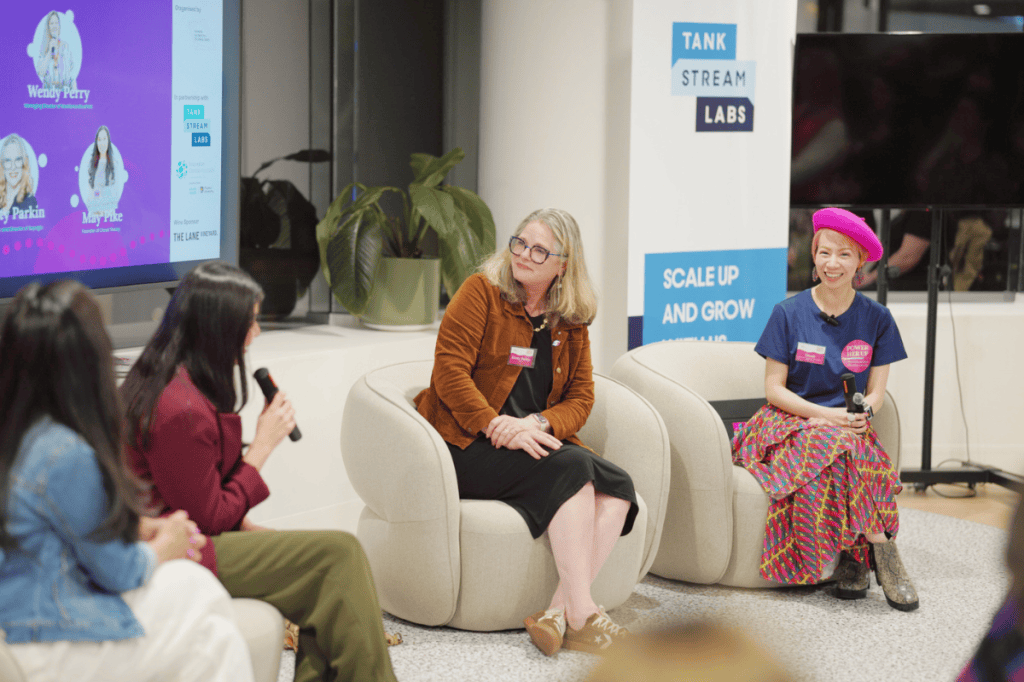
After hearing the panel of successful businesswomen talk about the mistakes, setbacks and things they were still figuring out, Onnie felt they were underselling what they’d actually achieved.
She even stopped one panellist, Chefadora co-founder and CEO Sanjam Kohli, mid-answer.
“I was like, ‘You can’t do this anymore. I know that you’re a humble person, Sanjam, but you also need to start telling people about your achievements’,” Onnie says.
“When you only talk about one side of your story, that’s all people will see.
“You have to keep mentioning your achievements too, so people know how far you’ve actually come.”
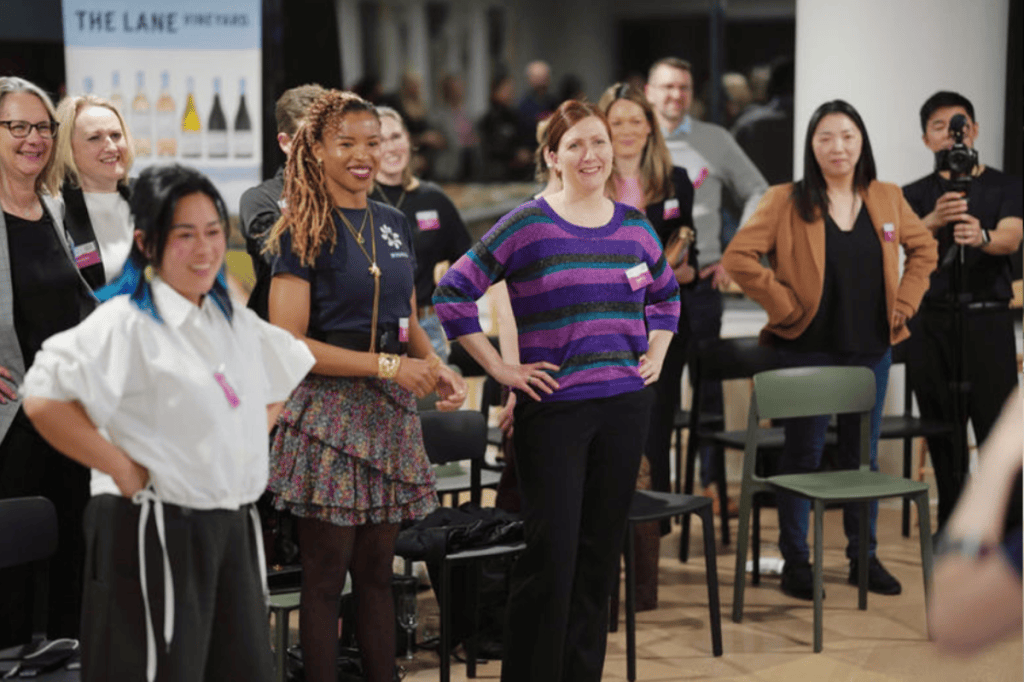
So Onnie asked everyone in the room to stand, strike a Wonder Woman-style power pose and shout some words together.
First “confident”. Then “resilient”. Finally: “Power Her Up”.
“It wasn’t on our rundown. I just spontaneously felt like, hey, we have to all stand up and take a moment to feel strong.”
Power Her Up is delivered by Onnie’s not-for-profit Women in Creative Technologies (WiCT), with $50,000 in state government funding through the Office for Small and Family Business’s Women in Business Program.
Who is Power Her Up for?
Power Her Up is for women running all kinds of small businesses across South Australia who want to use technology to solve a problem, save time, reach customers or find a smarter way to work.
Onnie says one misconception is that women in business are all aspiring startup founders, or that success has to mean “growing revenue, hiring more people or scaling quickly”.
“In reality, women have very different businesses and definitions of success.”
“Power Her Up is actually for everyone,” Onnie says. “Especially those who don’t have much knowledge about how to introduce technologies into their business – daily workflow, operation or marketing.
“We’re here to help them.”
And despite the current obsession with AI, that’s only one part of it.
“We’re not just talking about AI,” Onnie says. “We’re talking about all kinds of technologies that you can use within growing your business, or just within your daily operation.”
You don’t need to arrive knowing the answer, either. If there’s something in your business that’s taking too long, not working well or holding you back, Power Her Up is designed to help you explore whether technology can solve it.
In feedback collected from women who attended the launch, one participant summed up her challenge simply: “I know I have a product that supports leaders effectively; however, it’s not visible.”
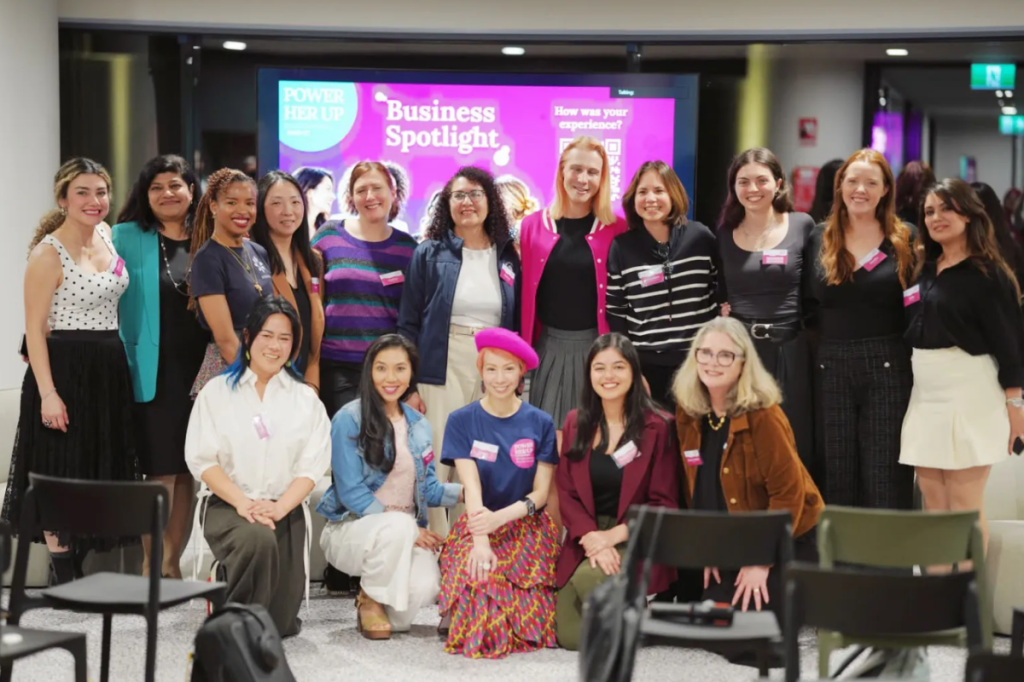
Over the coming months, Power Her Up will roll out workshops, meet-ups, networking events and an Innovation Design Sprint, alongside online support so women across South Australia – including those in regional areas – can get involved.
Sanjam knows the barriers firsthand
Chefadora is an Adelaide-born recipe-sharing platform and AI-powered cooking assistant that now has more than 100,000 monthly active users across nearly 180 countries.
But before becoming its co-founder and CEO, Sanjam studied electrical and electronics engineering – one of just four women in a class of 100.
Later, working as a radio systems engineer designing networks for emergency services, she found being the engineer didn’t always mean people listened to her.
“There have been a lot of times when male technicians would just refuse to listen to me, even though I was the engineer,” she says.
It hasn’t stopped. In investor meetings for Chefadora with her husband Div, people often direct their questions to him.
“He’ll say, ‘Ask Sanjam. She’s the CEO. I’m just the tech person.’“
One potential investor went further, asking what would happen to Chefadora when Sanjam had children.
“I was quite dumbfounded,” she says. “I just could not comprehend that someone was actually asking me this question.”
Feel the fear and do it anyway
Sanjam says self-doubt is something she’s had to work through too.
“I feel like as women we are especially prone to imposter syndrome.”
She points to a line from Sheryl Sandberg’s Lean In that stuck with her: what would you do if you weren’t afraid?
“You realise the other person is just a person too. What’s the worst that could happen? Nothing – they’ll still talk to you.”
She thinks confidence itself can be learned.
“People who look confident are actually just better at taking chances,” she says. “And that’s something you can learn.”
Being in the right room
Women make up 40 per cent of South Australia’s small business owners.
In the state government’s 2024-25 small business engagement survey, 42 per cent of women respondents said they’d faced barriers specifically because they were female business owners – almost the same proportion as the 43 per cent recorded in the 2022 survey.
Onnie sees another pattern too.
“If men know they’re good at a job 80 per cent of the way – or sometimes even 40 per cent – they’ll still go for it, and figure it out until they make it,” she says.
“Women are the other way around. Even when they’re almost a 96 per cent match for a job, they still doubt themselves.”
For Onnie, the answer isn’t simply teaching someone which software to use – it’s about support from other women.
“It’s like a chain,” she says. “Once you connect with the others, you start to build confidence. And once you have confidence in your business, you know that the things you’re doing are right, and you keep going.”
One woman who attended the launch described exactly that shift in her feedback afterwards:
“I was a small fish in a big, exciting pond … You’ve completely changed how I feel about what I’m doing. The business/start-up world suddenly feels a lot smaller, friendlier, and much more accessible.”
Where it started
That idea has been part of Onnie’s work from the beginning.
When she was studying immersive media technologies at the University of Adelaide, all of her lecturers were men.
So she started Women in Creative Technologies (WiCT) as a university club, bringing women from different tech courses together to teach one another software, run workshops and solve problems.
In regular classes, Onnie noticed that if a woman got stuck, “there would always be a guy jumping in to solve your problem”.
In the women’s group, “one of us had to jump in and solve the problem – and that’s how you learn”.
That club eventually became the WiCT not-for-profit now running Power Her Up.
Its motto is: “When one of us rises, we all do”.
“When more and more women become successful, it showcases to the people who come next that they could achieve it too.”
Turning a business problem into a solution
Weekly online meet-ups will be capped at 15 women, giving participants room to talk rather than simply log in and listen.
“We want them to start utilising technology to connect with one another,” Onnie says.
For regional business owners in particular, she wants the sessions to show “there is a community out here in South Australia to support them”.
Then there’s workshops to tackle specific skills and the two-day Innovation Design Sprint planned for next April.
“They’ll have the support they need, but they have to be the one who creates a new way of doing business.”
That could mean finding a smarter way to run daily operations, reach customers, market a product or make sales using the technology available to them.
Onnie wants to see more than another round of inspiring business talks.
“I need to see tangible results.”
Find out more about Power Her Up and sign up for free.