



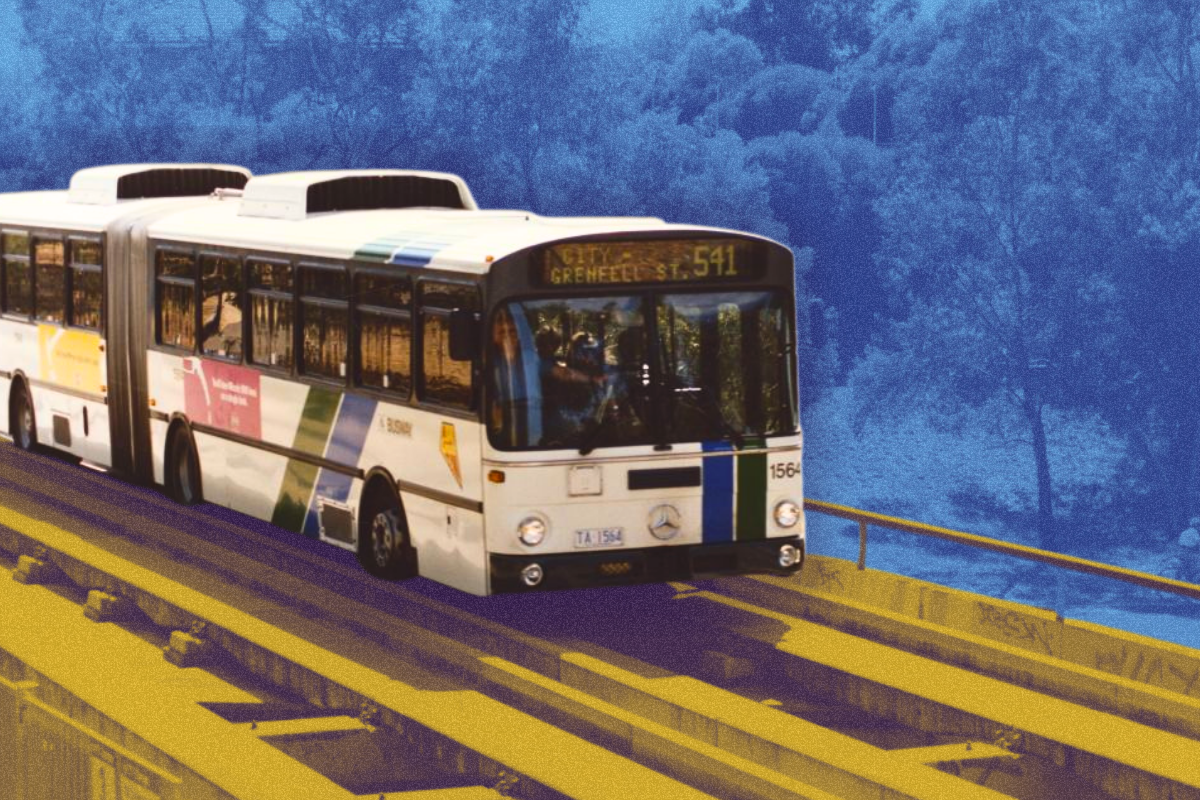
What started as a bold transport experiment has become Adelaide’s busiest public transport corridor. Here’s how the O-Bahn came to be.
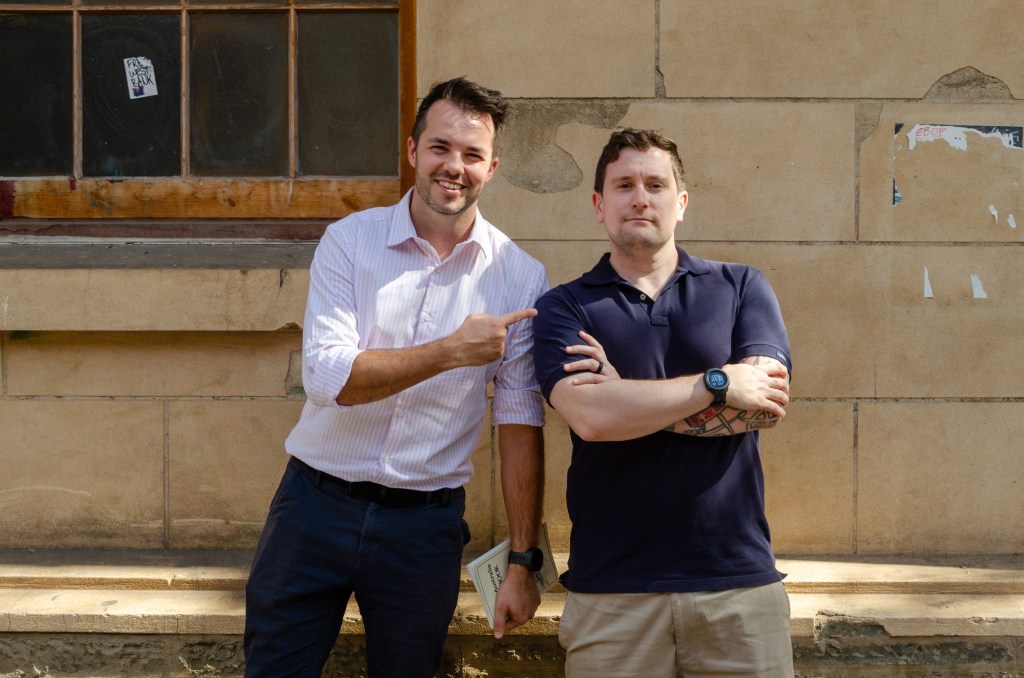
“If anyone tried to get rid of it, people in the north-east would riot,” says local history buff Dan Schmidt. “I’m a lazy man, but I would chain myself to the entrance of the O-Bahn to make sure they don’t take it away.”
The object of all this fervour? A bus. That also happens to fly along concrete rails like a train.
This month marks 40 years since the O-Bahn started transporting passengers across Adelaide.
Dan rides it most mornings from Tea Tree Gully into the CBD. Like thousands of north-east commuters, he swears by it.
“If we had to drive into the city every day it could take close to an hour,” he says. “On the O-Bahn it’s about 15 or 20 minutes.”
That kind of speed is why the system has become Adelaide’s busiest public transport corridor. Around 30,000 passengers use it every weekday, and during peak hour there’s a bus heading towards the city roughly every minute.
Borrowed from Germany, claimed by Adelaide
So how did Adelaide end up with the O-Bahn?
Dan, who runs podcast AdeLOL, twice recognised by the History Council of South Australia for its contribution to SA history, says it’s one of his favourite subjects.
The O-Bahn, he says, didn’t start as a quirky Adelaide experiment. It all came about as a practical solution to a tricky problem.
In the 1970s, planners needed to connect the fast-growing north-east suburbs to the city without bulldozing a freeway through the Torrens corridor.
After years of argument over trains, trams and tunnels – all too expensive, too disruptive, or both – the answer came from Essen, Germany, where engineers had built a guided busway combining the flexibility of buses with the speed of rail.
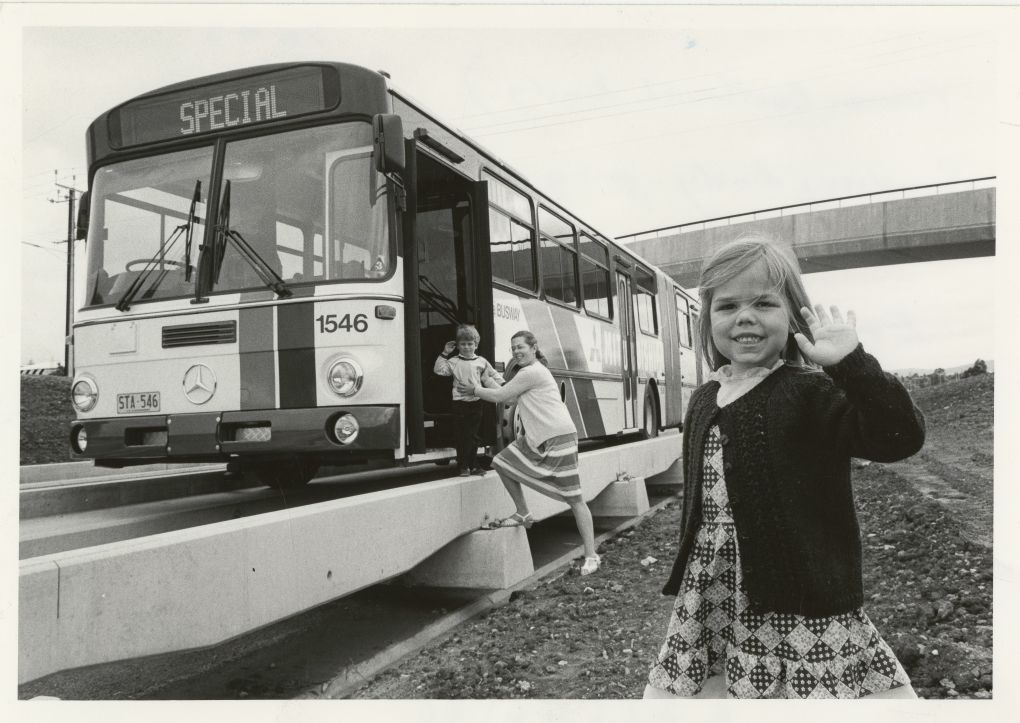
Adelaide borrowed the concept, built it bigger, and opened the first stage in March 1986, running from the city to Paradise via Klemzig. Three years later it extended to Tea Tree Plaza, creating the 12km route still used today.
A speedy way into the city
Billed as the fastest bus in the world when it launched in 1986, the O-Bahn cut travel times almost in half for more than four million passenger trips a year.
The name blends “omnibus” – the original German and English word for bus – with “bahn”, German for path.
In 2017, a final 670m tunnel extension from Gilberton into the city completed the route, giving buses a clear run from Tea Tree Plaza to the CBD without a single surface intersection.
Construction of the corridor also transformed the land beside it into what is now the Torrens Linear Park, one of Adelaide’s most-loved green corridors for walkers, runners and cyclists.
Today, only four guided busway systems operate worldwide: Essen, Adelaide, Nagoya and Cambridgeshire. Adelaide’s is the only one in the southern hemisphere.
Deceptively brilliant
Here’s what makes the O-Bahn genuinely impressive, not just lovably odd.
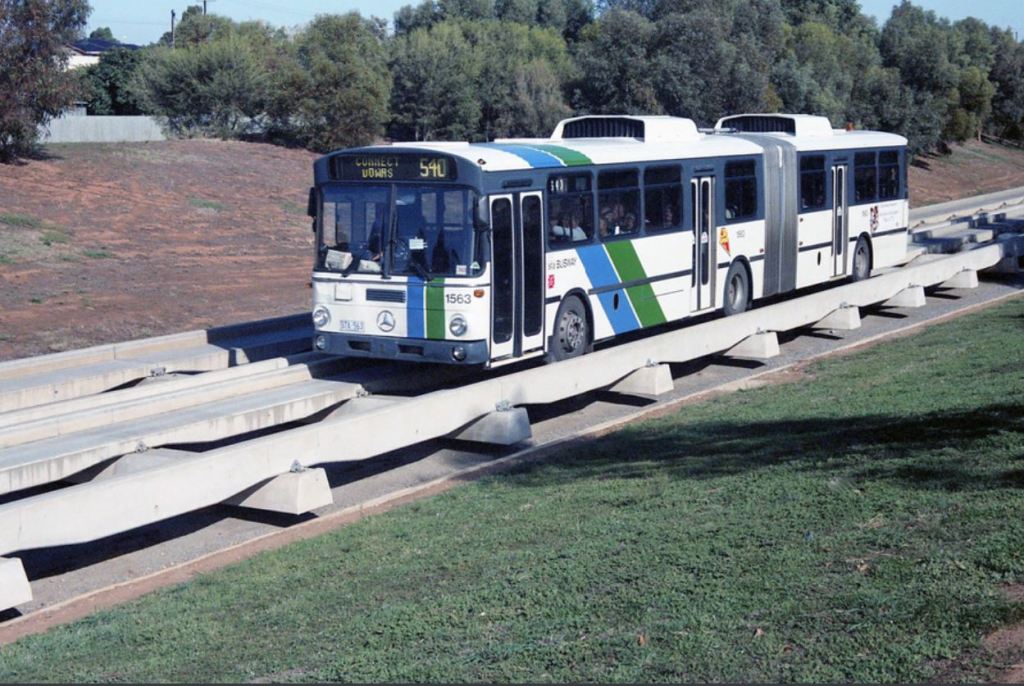
Officially considered a road, it works nothing like one. A regular bus collects passengers on its usual suburban route, then slips onto the concrete guideway where small horizontal wheels lock against raised rails and take over the steering entirely.
The driver keeps control of the speed – up to 90km/h, down from the original 100km/h when the system first opened – but the track does the guiding, before the bus glides off the other end and continues through city streets to its final stop.
No transfers, no traffic lights, just Tea Tree Plaza to the CBD in under 20 minutes.
“It’s something that’s uniquely South Australian – although we did steal the idea from Germany,” says Dan, who is also editor of the Adelaide Mail, the city’s satirical online publication. “Our buses essentially turn into trains and transport a lot of people very quickly.”
That mix of ingenuity and oddness is part of what makes the O-Bahn so beloved.
As the international tech blog Hackaday put it: “Buses flying along concrete rails is an oddball concept that worked, and there’s nothing more Adelaide than that”.
An engineering feat
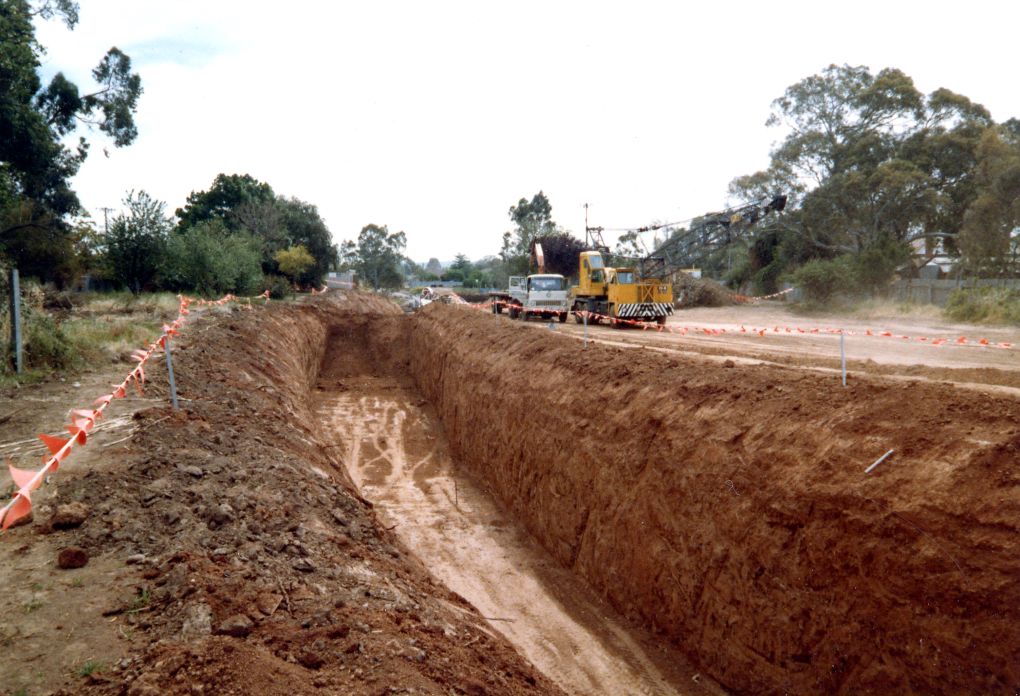
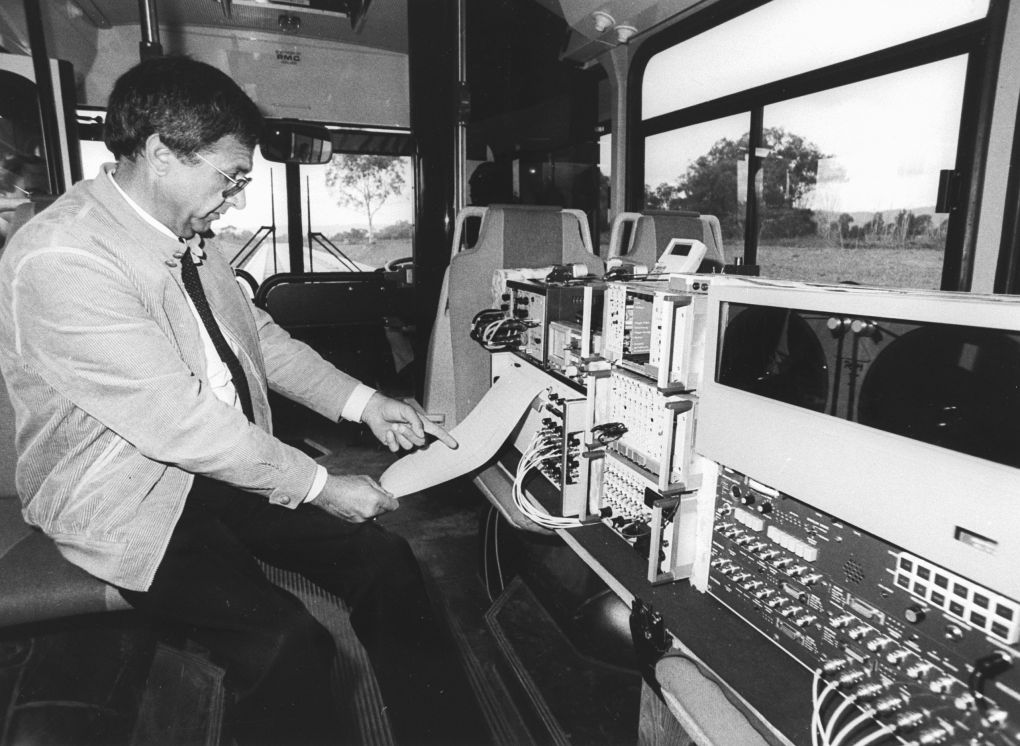
Creating a solid track for so many buses to glide along was no easy task.
Former project engineer Mark Elford remembers the challenges of Adelaide’s expansive soil conditions.
“Extensive foundations were required to make sure the guided track was stable and safe,” he recalls. “We’re talking thousands of sleepers and piles to make sure it would stand the test of time.”
“The scale of what we were building had never been done before…It was certainly a courageous decision at the time.”
When silly drivers derail the system
Every so often, despite flashing lights and enormous “BUSES ONLY” signs, someone manages to drive a car onto the O-Bahn track.
The system is fitted with deterrents that sound like they belong in a Bond villain’s lair – pits and “sump buster” hardware at entry points that can strand a car or rupture its oil pan, while buses glide straight over.
Trying to drive on the O-Bahn is dangerous and disruptive, and it almost inevitably ends with a wrecked car, a crane, a hefty bill and thousands of very unimpressed commuters.
Forty years on
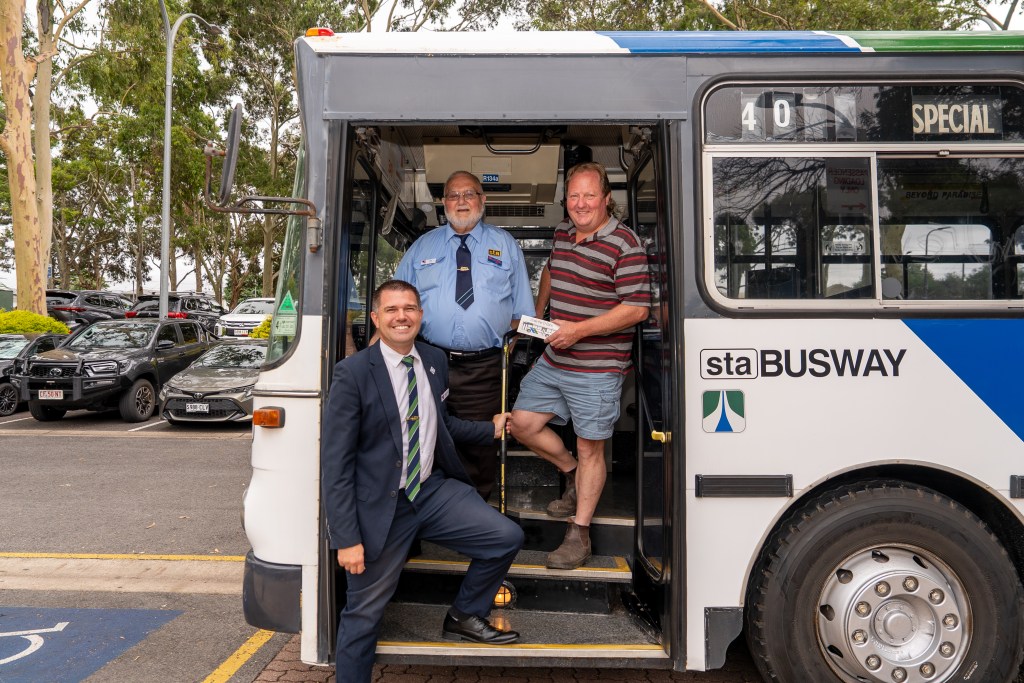
To mark the O-Bahn’s 40-year anniversary, the Bus Preservation Association of South Australia organised special anniversary tours using historic O-Bahn buses – the original fleet retracing their routes for people who love the system as the piece of genuine engineering it is.
Michael Pretty, who jumped at the chance to buy the first original O-Bahn bus ever preserved in Adelaide back in 2012, says the association and its members are thrilled to still be enjoying the service 40 years on.
It’s a sentiment Roy Platt shares. One of the original O-Bahn drivers when the system opened in 1986, he still remembers how nerve-racking those first runs were.
“We had never experienced anything like it before,” he says. “It now transports thousands of passengers – people know they can get to town easy and cheap.”
Find out more about Adelaide Metro’s O-Bahn services here.