


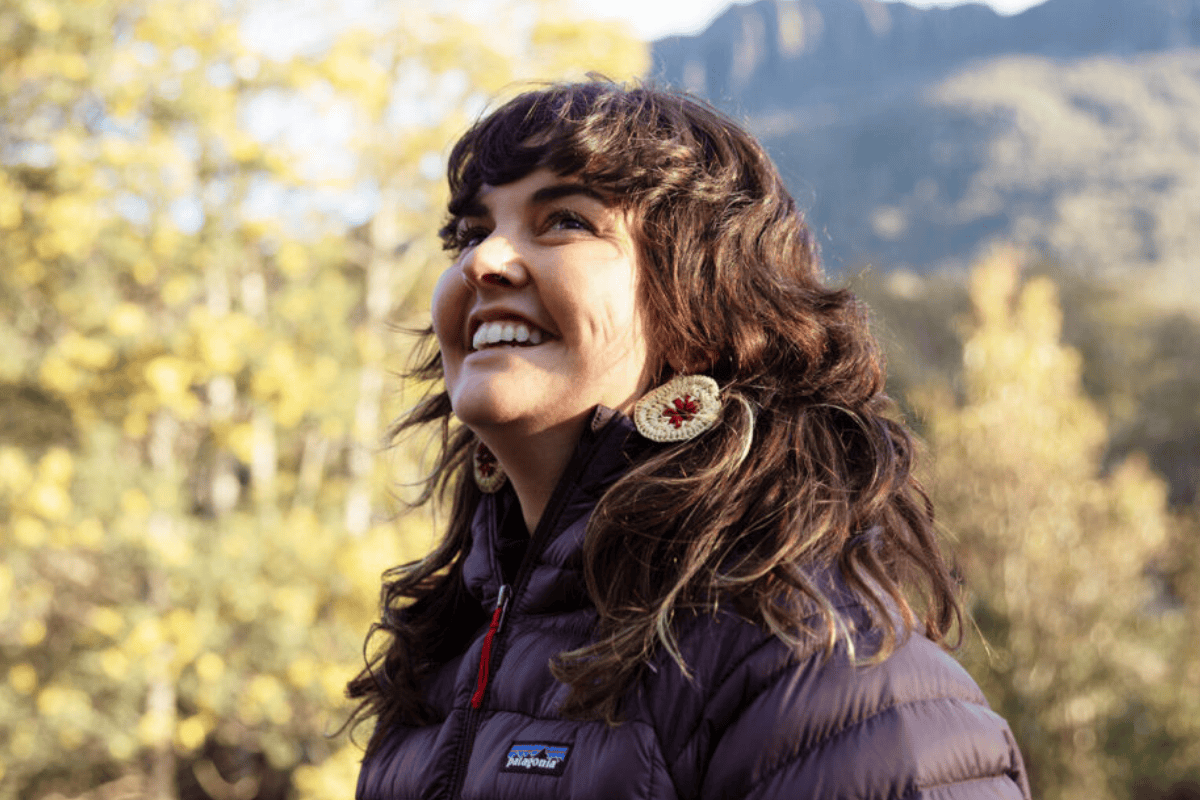
Tiahni Adamson is challenging old ideas of science – and using her work to protect Country and inspire others.
As a kid growing up between Palm Island, Port Augusta and Coffin Bay, Tiahni Adamson was the kind of child her teachers needed to brace for.
Not because she was trouble, but because she kept bringing “interesting” things to class: tadpoles she was trying to grow into frogs, then a heart and lungs from the butcher, which she inflated in front of her classmates to show how oxygen moves through a body.
“I was the ‘why?’ kid,” she says. “Why is the sky grey right now? Why is it blue tomorrow?”
Her mum – a paramedic – was, she says, “really great at supporting my incredibly excited brain about nature” – always finding ways to feed it with new experiences. It paid off.
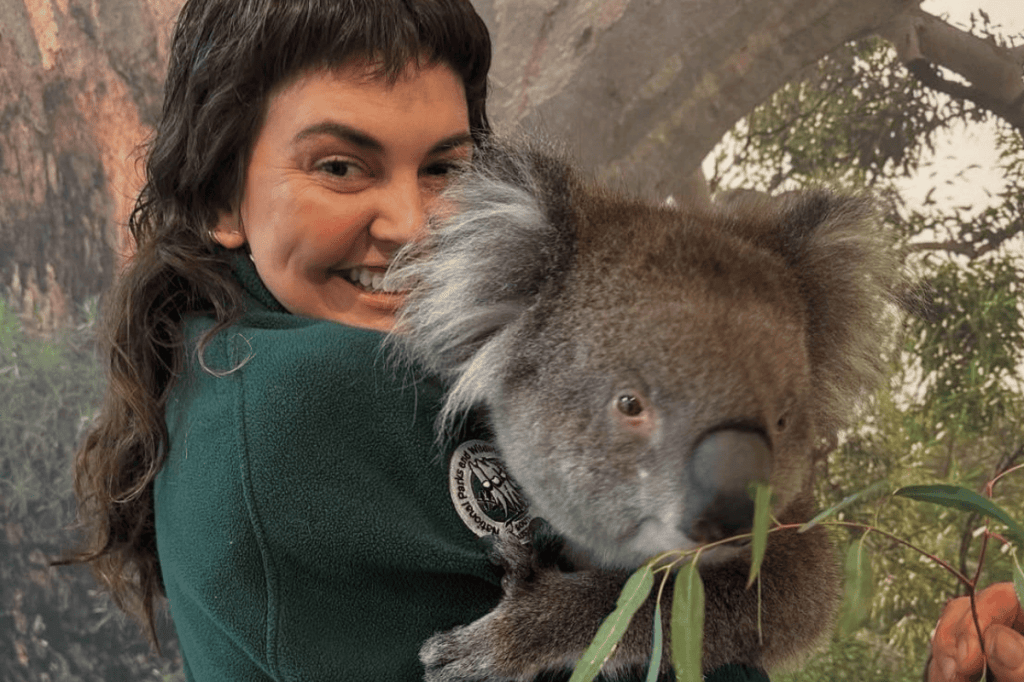
She’s now a conservation biologist and science communicator whose work brings together First Nations knowledge, climate action and conservation. Her impact has been recognised nationally and internationally – she’s a Superstar of STEM, an InDaily 40 Under 40 alum and the 2024 Young South Australian of the Year.
Last year, she won the Impact in Community category at the SA Women of Impact Awards and was also a finalist in the Aboriginal and/or Torres Strait Islander Impact Award.
The SA Women of Impact Awards recognise and celebrate women making an impact and creating positive change in South Australia.
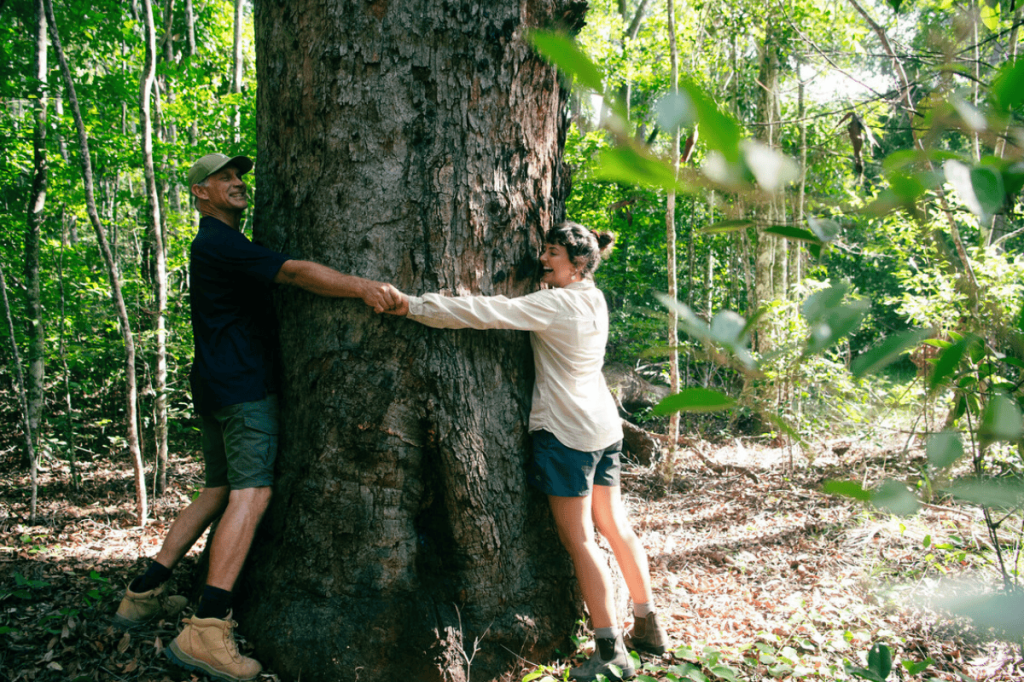
Where two knowledge systems meet
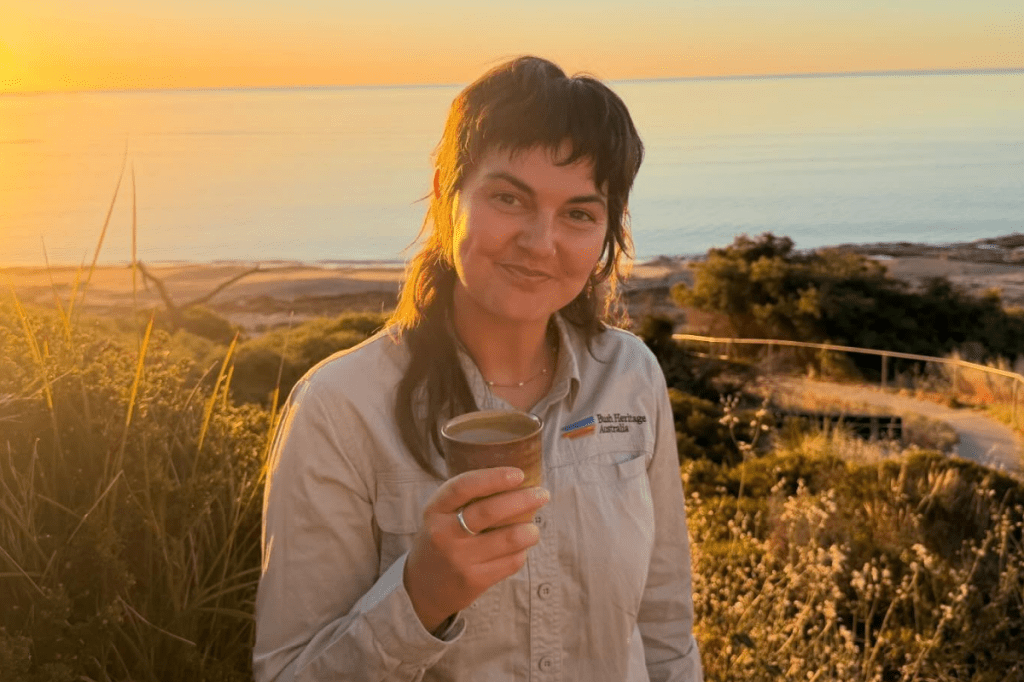
As well as sitting on the board of Green Adelaide and serving on the Premier’s Climate Change Council, Tiahni is the National Aboriginal and Torres Strait Islander Engagement Manager at Bush Heritage Australia – the conservation organisation founded by Bob Brown.
She works alongside Traditional Owners to bring First Nations knowledge into conservation across the country.
“We partner with around 10 million hectares of Indigenous Protected Areas, and we own another 10 million hectares,” she says. “We protect over 7000 native species across our reserves.”
A proud Kaurareg woman, Tiahni believes First Nations knowledge is central to solving our climate and biodiversity crises – and her role is where those two worlds meet.
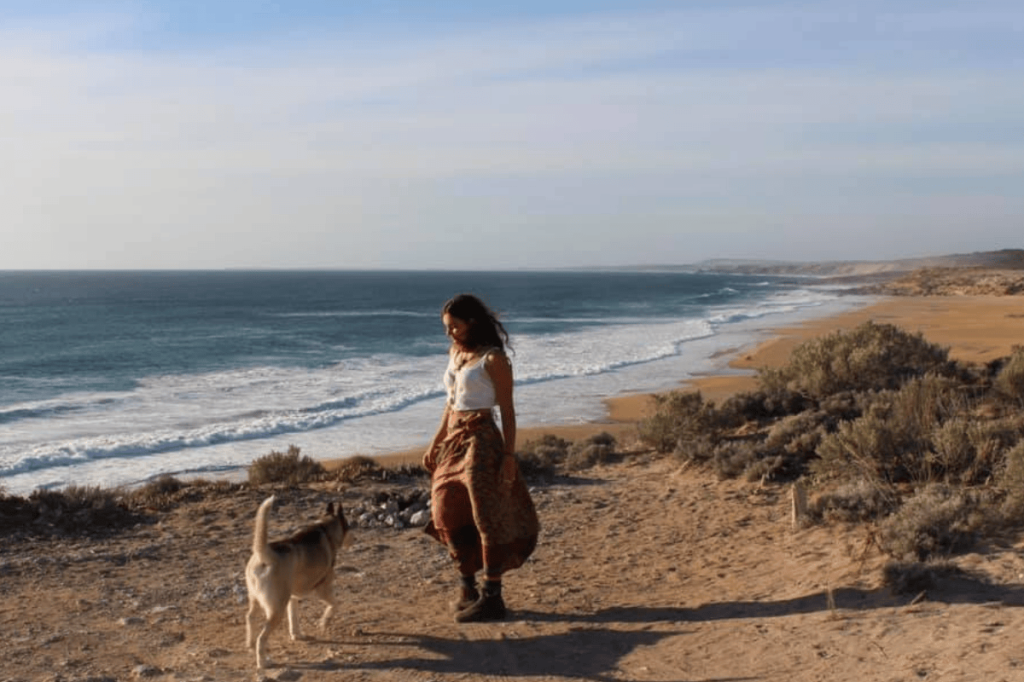
“Western science is often quite reductive,” she says. “It’s about bringing things down to the most specific alignment. Indigenous knowledge is very relational and place-based – our knowledge is tied to Country, to spirituality, to relationship with others.”
One example is cultural burning – the practice of using fire to manage Country that First Nations people have applied for thousands of years, cracking open seeds, rehydrating soil, clearing dead material to let water reach roots. Western land management is still catching up to what that actually does. But it goes deeper than any single technique.
“People have a funny interpretation of what Country is sometimes, where a place that’s natural has no people in it. But we know as Indigenous people that we’re part of the landscape. Our role in that system is that we help manage it, to keep it healthy.”
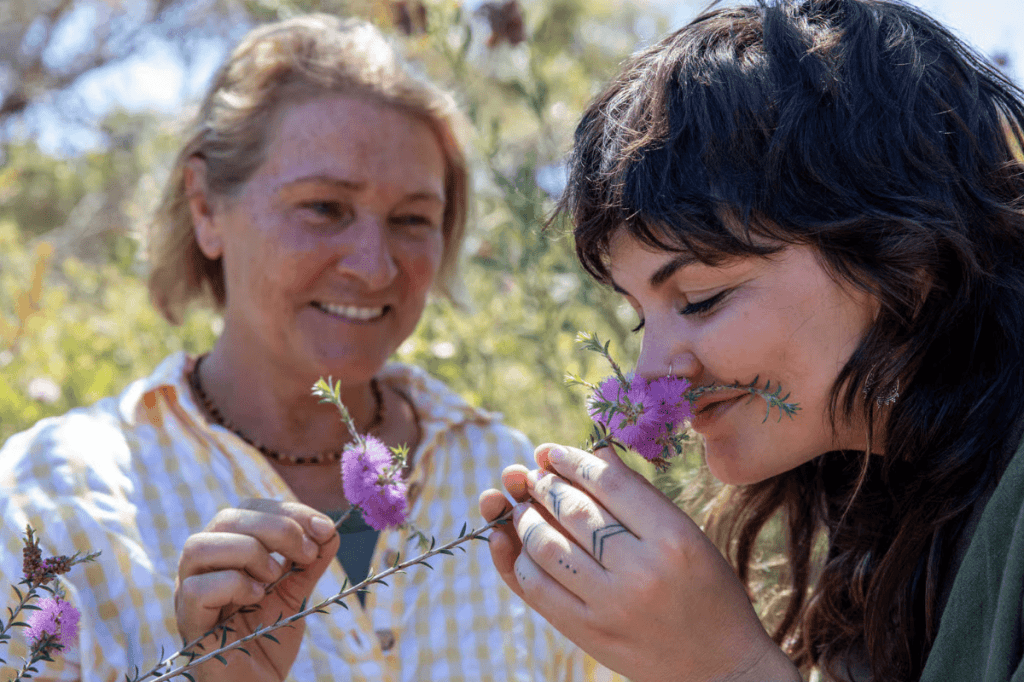
The grass through the concrete
It’s hard to work at the intersection of conservation and climate every day without being asked how you stay hopeful.
Tiahni’s answer is to look at nature itself.
“Think about the average Australian who’s put down some pavers,” she says. “No matter how hard they try, the soursob or the little bit of grass still finds the smallest crack in the concrete and grows up through it, finds some sunshine, finds some water, makes its way through.”
People, she says, are the same – and First Nations Australians have 65,000 years of adapting and rebuilding in the face of unimaginable change and hardship to prove it.
“We have this amazing ability to find the smallest bit of light in the darkest of places.”
For people working on the frontline of climate action, she says, looking after yourself is as important as looking after the planet.
“Being able to get things done when you don’t feel hopeful is really hard. Having joy – catching up with friends, having a nice meal, telling a joke – is the antidote.”
What you can do to help
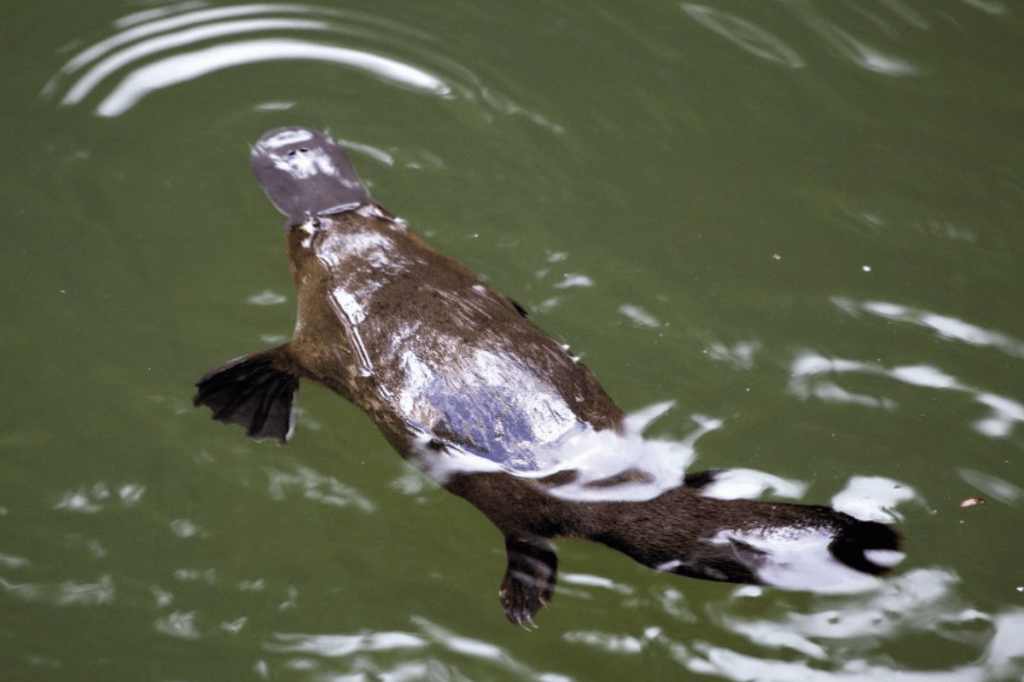
Healing is already happening in SA – Green Adelaide is leading a project to reintroduce platypus to the Karrawirra Pari/River Torrens, Trees for Life is restoring native vegetation across the state, and community groups are quietly doing extraordinary things along the riverbanks and in the backyards of Adelaide.
Tiahni says individuals can be part of that momentum without waiting for someone else to start:
- Ditch the plastic lawn: It superheats in summer, sheds microplastics and turns living soil into dead dirt. Native species and pollinating flowers do the opposite.
- Use your green bin properly and think about your waste sorting: In SA, food waste still makes up 40 per cent of everything we send to landfill.
- Start a worm farm or compost: Good for your garden, great for the planet
- Check where your super and bank are investing: Most Australians have no idea their money is funding fossil fuel expansion, and switching funds is one of the highest-impact changes you can make
- Keep the cat inside, or at least put a bell on its collar: Mainland SA has already lost almost 30 native mammals to cats.
And for those with the means: solar, a battery and a rainwater tank make a real difference.
What a scientist looks like
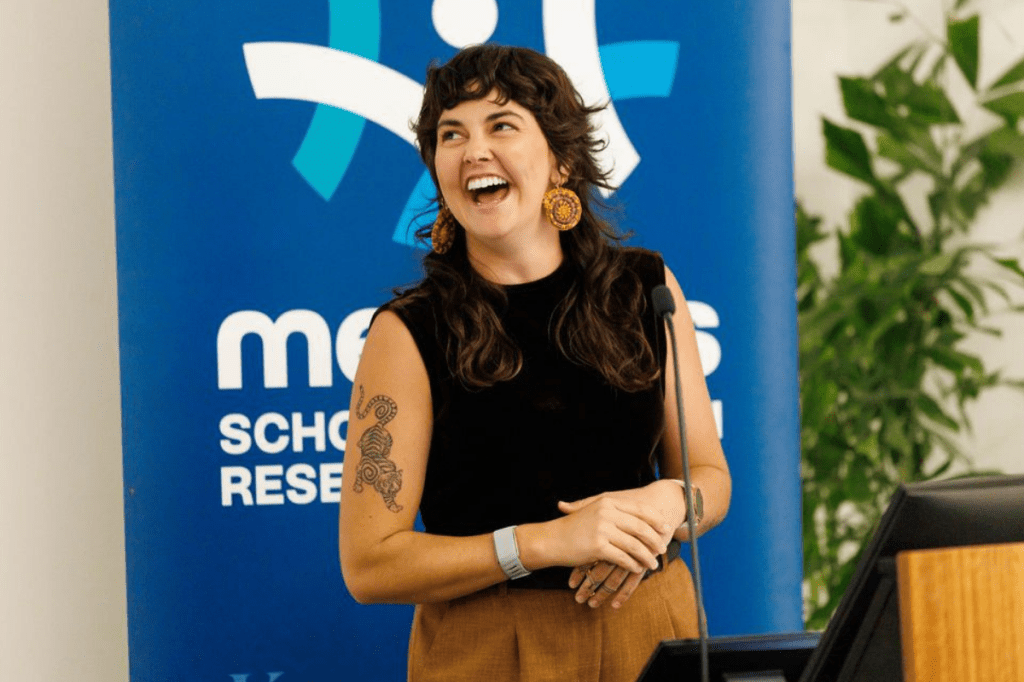
But individual actions are only part of it. Tiahni also spends a lot of time in schools and speaking to large audiences – she’s reached over a million people through her science communication work – and she says the cultural shift starts with who we picture when we imagine a scientist. When she speaks to school groups, she asks them to close their eyes and picture one. Most describe a middle-aged white man in a lab coat.
“We’ve got a long way to go,” she says. “Anyone who has a curious mind and is excited about understanding something is a scientist, in my opinion.”
With her curly mullet, tattoos and love of the outdoors, she’s a pretty good argument for expanding that picture. “Diversity of thought and lived experience helps us think differently – and leads to better science.” Which is exactly why, she says, it matters that women doing extraordinary work get seen.
Nominate someone who deserves it
The SA Women of Impact Awards, run by the state government’s Office for Women, are open for nominations now – and Tiahni is clear about why it matters.
“I know there are so many women in South Australia doing incredible work in difficult places, pushing up against hard systems, being the only woman in the room. And we get so caught up in our own world trying to change the thing that it’s not very often we get acknowledged or put ourselves forward.”
“Women and non-binary people typically apply for roles two to three levels below their skill set, while men apply three to four levels above theirs.”

The awards – and the act of nominating – push back against that habit.
“Back yourself,” Tiahni says. “Build the boat while you’re sailing it. It’ll never be perfectly lined up and ready to go – so don’t wait.”
Nominations for the SA Women of Impact Awards are open until 15 June, and winners will be announced in September.
Do you know a colleague, leader, mentor, advocate, volunteer or change-maker making an impact? Nominate her for the SA Women of Impact Awards here.