


As most South Australians decide whether to set an alarm tomorrow, these Adelaide twins are waiting to find out if next year they’ll be there in uniform.
In November 2008, Australian Army officer Ilona Horan was in Adelaide with three-month-old twins when she got a call from Afghanistan saying it had been “a bad day”. The twins’ dad, Special Forces Major Bronson Horan, had been seriously wounded by an IED. Soon after, he called her himself to let her know he was alive.
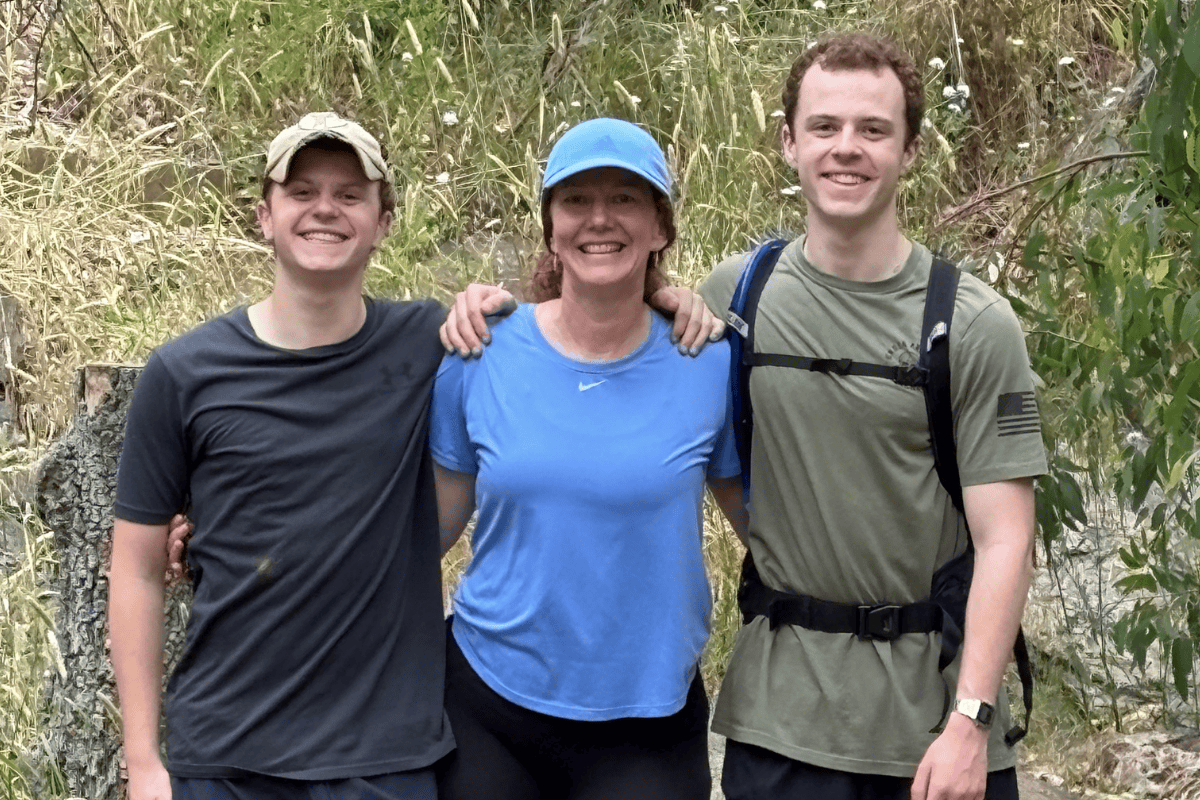
Those three-month-old boys are now in their final year of high school and waiting to hear if they’ll be accepted into the Australian Defence Force Academy – Australia’s military university. If they get in, both will undertake officer training in Canberra while gaining a degree in international relations. Eamonn has chosen the Army. Finlay hopes to join the Air Force.
Both will tell you their inspiration is their parents.
“We look at our parents and think, wow, they’re very cool,” Finlay says. “But also – they’re doing something good in the world. That’s the actual thing, the doing something bigger than yourself.”
Watching your invincible parents cry
When asked about what it’s like growing up in a military family, the twins say it’s hard to explain mostly because they “don’t know anything different”.
What they do know is what Anzac Day looks like when it’s personal.
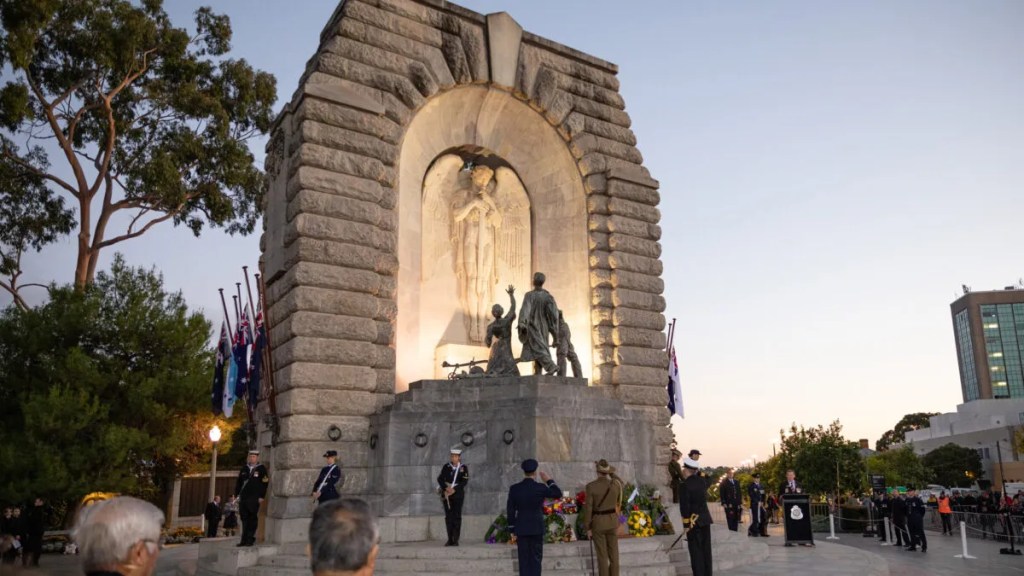
When Bronson was president of RSL SA and NT, the boys would stand in the front row while he spoke at dawn services.
“Dad was up there speaking, and it was just like – our dad’s up there,” Eamonn says. “And then you look around and realise it’s not just us. There’s a girl at our school whose dad served in Somalia. She gets it too.”
“When you see your big strong invincible dad get a bit teary,” Finlay says, “that’s when you understand the weight of it.”
As they’ve grown older, the meaning of the day has changed.
“When we were younger it was about the men and women who died at war,” Eamonn says. “Now it’s also veterans dying of conditions linked to their service. Mum and dad have known people who’ve taken their own lives, or seemingly fit people diagnosed with strange cancers. Serving your country isn’t a one-and-done thing.”
The coin toss
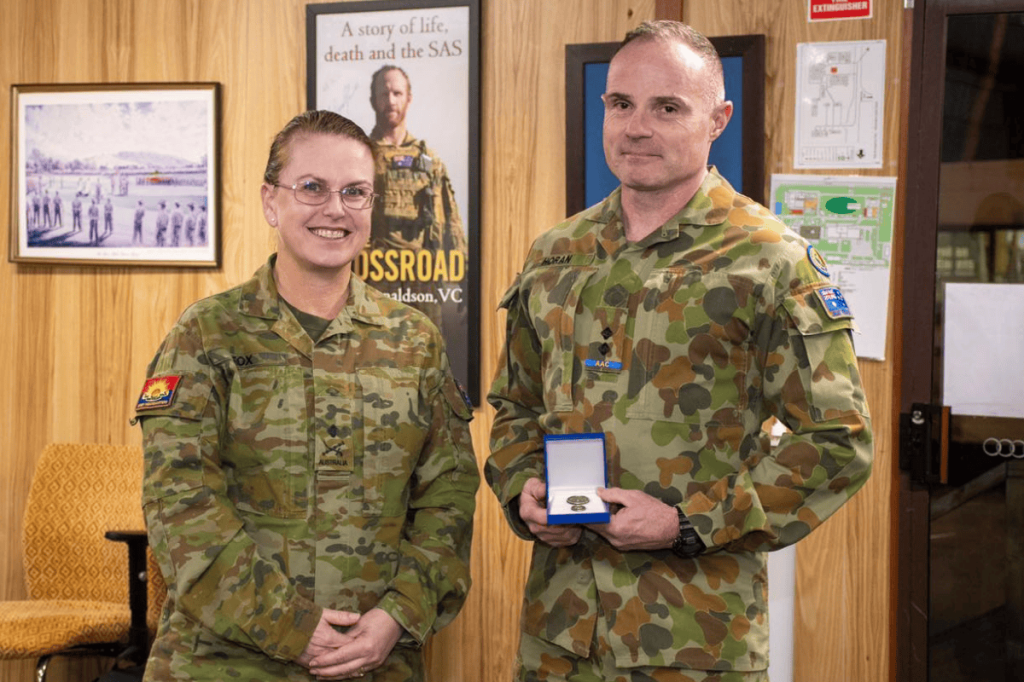
Bronson Horan was serving with the US Army Special Forces when he met Ilona while they were both deployed in Iraq. When the decision arose about where they would be based, they flipped a coin. Ilona won, so Bronson transferred to the Australian Army.
When the IED detonated on that Afghanistan patrol, the soldier directly behind him – 25-year-old Lieutenant Michael Fussell – was killed instantly. Bronson sustained a fractured spine, traumatic brain injury, hearing damage and shrapnel injuries. He lost his sense of taste and smell, his balance, and his night vision. He spent roughly three years relearning to walk and run, and was medically discharged from the Australian Army in 2012.
“He just has the most phenomenal will,” Ilona says. “He taught himself to stand on an exercise ball to retrain his balance. When he did that, his neural pathways rewired – and he got his sense of taste and smell back too.”
The family marks his survival each year. They call it Happy to Be Alive Day.
The Colonel
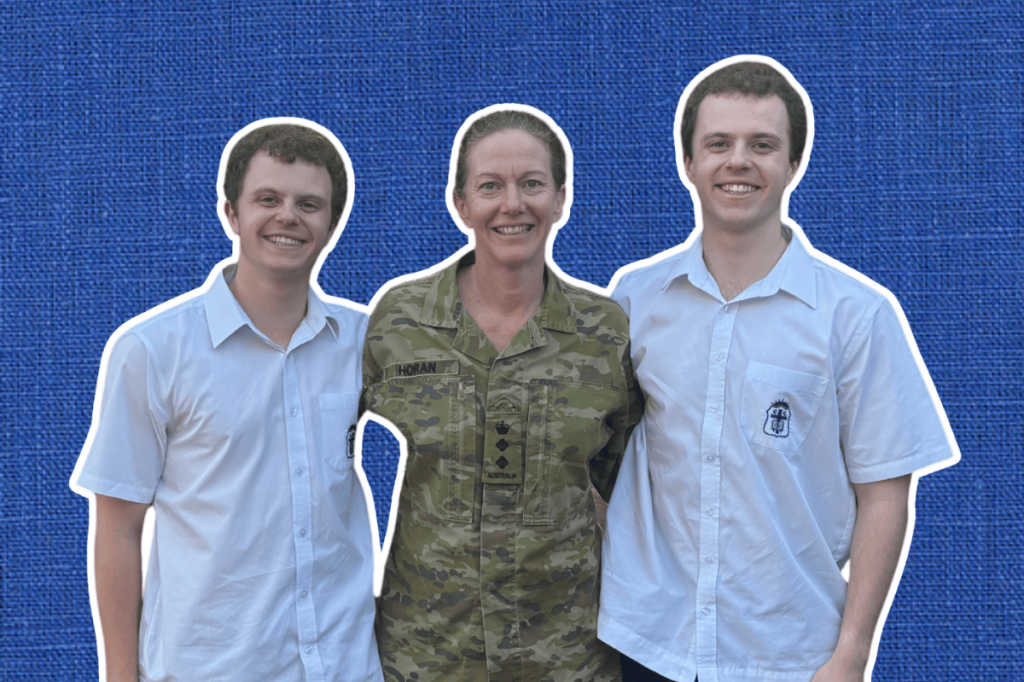
Ilona Horan served in the Australian Regular Army for 18 years – including deployments to East Timor and Iraq – before transferring to the Reserves in 2017 so the family could stay in Adelaide.
As Commander of the South Australian – Australian Army Cadet Brigade, she oversees 30 cadet units across the state. In her civilian role as Director, Corporate Services at Defence SA she supports defence and space organisations and projects to establish and grow in South Australia, including at Lot Fourteen.
“It was the people and the tangible sense of purpose that is the key takeaway from my [Army] career – a career I’m still enjoying,” she says. “We are incredibly passionate people who are able to manage complex situations in a calm manner, and we really want to help others.”
“When mum’s on TV I send a video to my friends and go – check this out,” Eamonn says.
Doing something bigger than yourself
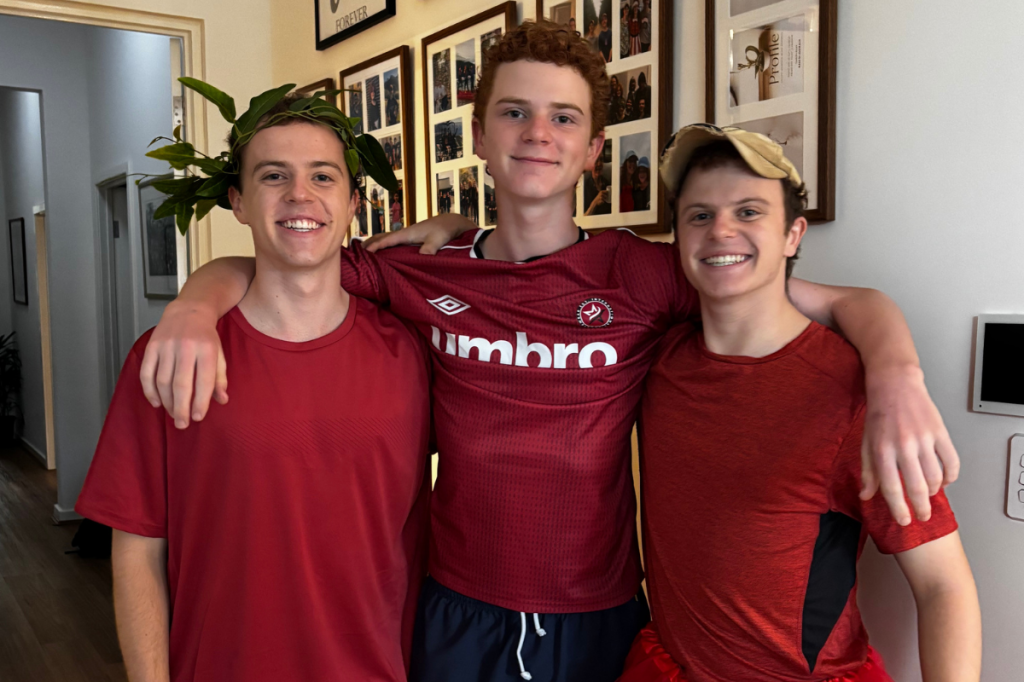
Neither twin is naive about what signing up for the Australian Defence Force means.
“Our dad has a metal band that he wears around his arm – it’s for his teammates who have died,” Finlay says. “That’s just acknowledging that whilst there are cool aspects, it’s also about the sacrifices that people make.”
What actually drives them is something their father told them. “Dad has this idea that the greatest thing someone can do is serve people,” Finlay says. “If his kids want to go serve people, he will encourage them in every way he can.”
That instinct to serve didn’t stop when Bronson left the Army. He went on to serve as an Army Cadet officer, and Finlay remembers him mentoring a kid whose father was very sick and whose mum was no longer around.
“He just needed a male role model,” Finlay says. “Dad was never going to be this kid’s dad – but when someone needed to teach him how to iron a shirt, Dad taught him.” Bronson later received a Gold Level Army Commendation for his quick thinking when a teenager fell critically ill during a cadet field exercise – keeping him alive until help arrived.
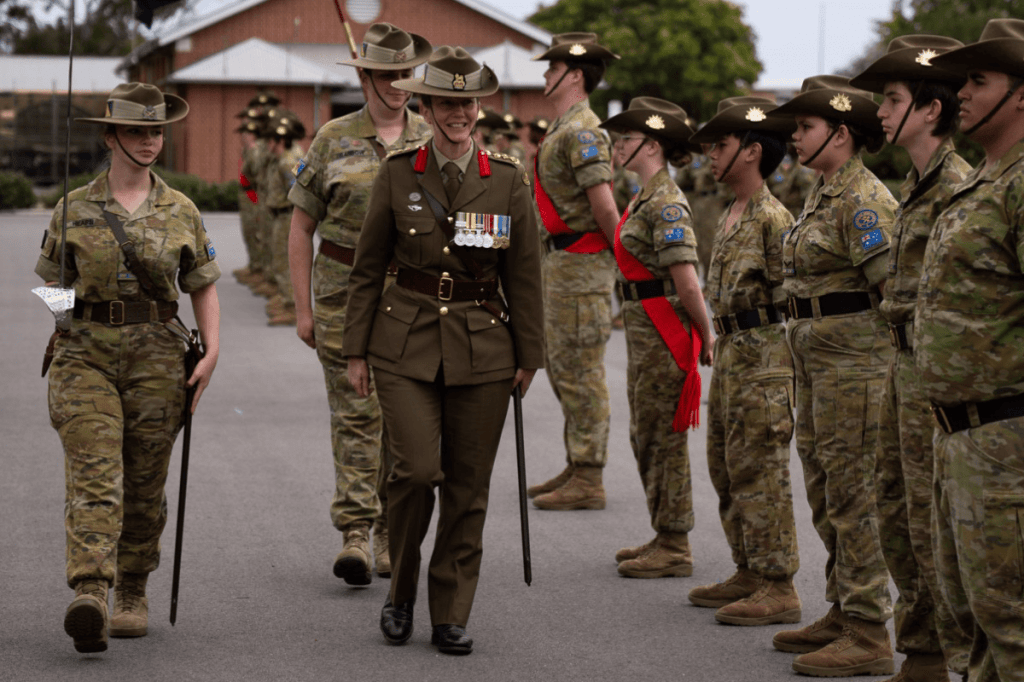
Sharing their parents with the cadets
The Australian Army Cadets is a youth development program for 12 to 18-year-olds, with 30 units across South Australia and term fees ranging from nothing to around $30. Navy and Air Force cadet programs are also available.
Neither twin lasted long in cadets – Finlay stopped after a few weeks in Year 7, Eamonn after about a year and a half – but both say it’s still worth trying.
“It’s not a recruitment pipeline,” Eamonn says. “You rock up, you’re surrounded by people who also showed up. You make mates outside your school circle.”
Ilona has seen the program change kids who arrive struggling to fit in.
“The uniform is instant common ground,” she says. “It’s for anyone who wants to try something, put themselves outside their comfort zone, and make new friendships. It’s just about making Australia’s youth more resilient and better humans.”
“It boils down to helping develop kids into people who have good character,” Finlay says.
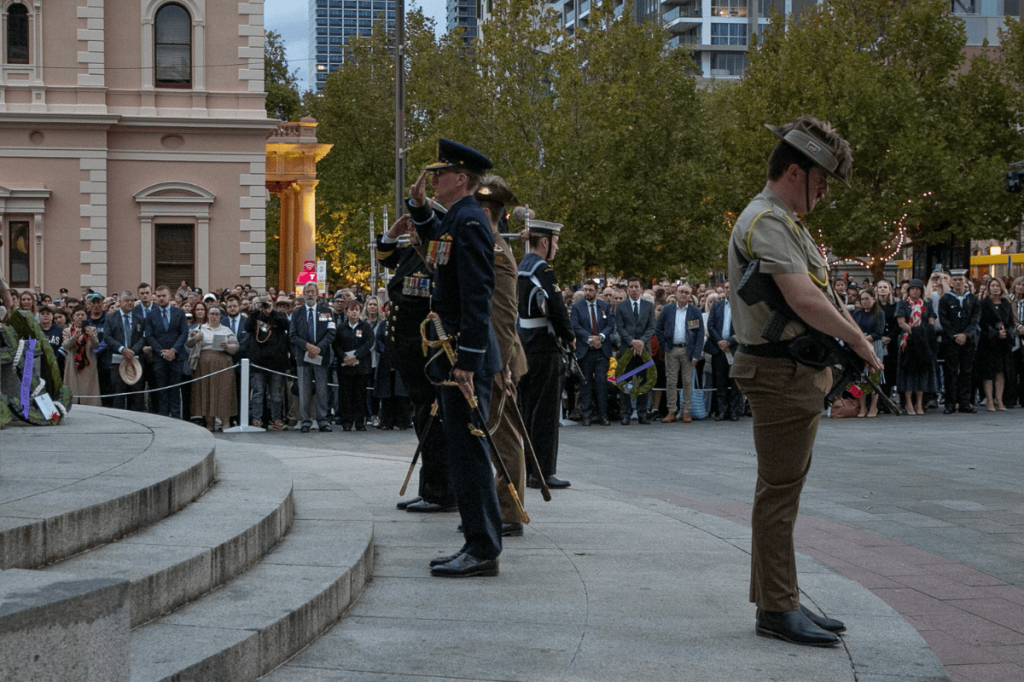
Before sunrise
On Saturday, 25 April, Finlay and Eamonn Horan will once again attend an Anzac Day dawn service, as they have been every year of their lives – except this year they hope it will be the last time they stand there as civilians.
Across South Australia, Army cadets will attend dawn services in regional towns that wouldn’t otherwise have a military presence – standing as flag bearers, marking the day.
“It’s huge,” Ilona says. “Even in the regional towns, veterans and the community completely embrace and appreciate the presence of cadets.”
She says Anzac Day is a moment to pause and remember. “Life is so busy that sometimes time just passes.”

“You can’t tell from looking whether my parents served,” Finlay says. “They’re just regular people who decided they wanted to do something bigger than themselves.”
“Mum woke up every morning with three-month-old babies, knowing her husband was out doing what he thought was right – and might not come back,” Finlay says.
“Very few people wake up in the morning and go, I want to go to war. No one wakes up wanting people around them to die, or to potentially not come back themselves. But Dad woke up every morning and went out and tried to do the right thing, knowing that by whatever chance, he might not.”
Find your nearest Anzac Day dawn service here.