



South Australia has some of the toughest domestic violence laws in the country. Here are some of the red flags to look out for – and why they’re so easy to miss.
Married at First Sight was never going to win a Logie for public health education. But when a groom sat across from his new wife on national television and calmly explained that he wanted someone “submissive” – compliant, obedient, falling into line – the reaction went well beyond social media.
Commentators linked his wishlist to the online “manosphere” – where being “alpha” means your partner does what she’s told – and asked whether prime-time TV was giving those attitudes a glossy makeover rather than a reality check.
People on the frontlines of South Australia’s domestic violence response say the real concern is when those attitudes play out somewhere without cameras. Because while a controlling comment on TV is easy to call out, the same behaviour in a private relationship is much harder to name – especially when it starts small.
South Australia passed legislation to criminalise coercive control last year – recognising that a pattern of controlling behaviour is a criminal offence in its own right. That pattern usually starts long before any physical incident. And the earlier you can spot it, the earlier you can address it.

It’s not always physical
Domestic violence includes physical, emotional, verbal, sexual, financial, social, spiritual and tech-based abuse – and any combination of these. What all of them have in common is that they’re used to gain power and control over someone.
The tricky part is that early-stage controlling behaviour rarely announces itself. It tends to arrive disguised as love, concern, or “just how I am”.
Kerry Beck, Executive Director, Department of Human Services (DHS), says coercive control is often an underpinning dynamic in domestic and family violence.
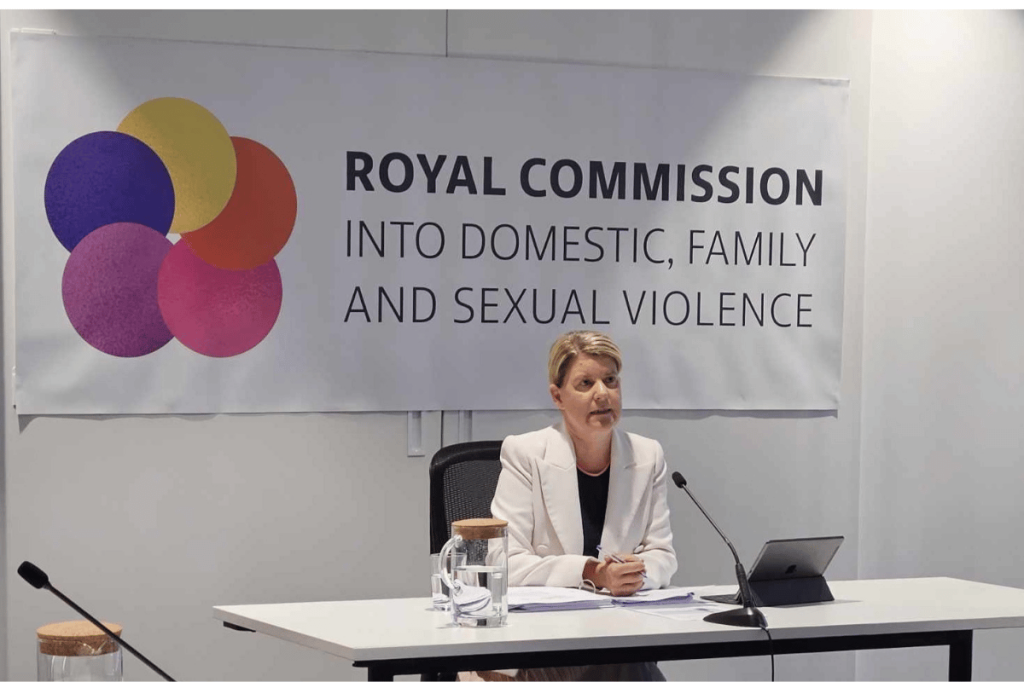
“The Royal Commission into Domestic, Family and Sexual Violence reiterates that coercive control is almost always an underpinning dynamic of domestic and family violence,” Kerry says.
“People using violence exert power and dominance over others using patterns of abusive behaviours over time that create fear and deny liberty and autonomy.”
That’s why the pattern matters. One comment, one demand or one uncomfortable moment might be easy to explain away. But if those moments keep adding up – and your freedom keeps shrinking – it’s worth taking seriously.
DHS and SA Police (SAPOL) flag several patterns worth looking out for.
Red flag #1: When caring starts to feel like surveillance
One of the earliest signs is attention that gradually tips into monitoring.
Your partner wants to know where you are and who you’re with at all times. They check your phone or ask for your passwords – “we shouldn’t have secrets.” They get angry if you don’t reply quickly, or if you change plans without clearing it with them first.
Over time, they might start having opinions about what you wear, who you see and where you go, usually framed as concern or “standards”.
Any single one of these, in isolation, might be easy to explain away. But it’s the pattern that matters – especially whether saying no is genuinely an option.

Red flag #2: The shrinking social circle
Isolation is one of the most consistent features of abusive relationships, and it usually happens gradually. A partner begins criticising your friends or other family members – they’re a bad influence, they don’t understand your relationship, they’re “trying to come between us”.
You start feeling guilty for spending time with anyone else. Social plans become a source of arguments, or your partner creates enough drama around them that it’s easier to stay home.
Isolation doesn’t just cut you off from support. It makes it much harder to notice what’s happening – because the people who might reflect it back to you are no longer around.

Red flag #3: Walking on eggshells
Emotional and psychological abuse is recognised in SA as domestic violence in its own right: name-calling, put-downs, humiliation, dismissing your concerns as “crazy” or “too sensitive” and blaming you for their anger – “you made me do this” or “look what you made me say”.
One of the clearest internal signals is that you find yourself managing your partner reactions rather than just living your life. You rehearse conversations before you have them. You change your behaviour to avoid triggering something. You feel more anxious, and less like yourself, than you used to.
If you feel like you’re always walking on eggshells, or like you have to ask permission to do ordinary things, those feelings are worth taking seriously.

Red flag #4: Money as a leash
Financial abuse often starts subtly – a partner taking over “for efficiency,” a shared account that isn’t really shared, pressure to stop working or studying “while we figure things out”.
Over time it can mean being put on a strict allowance, having purchases monitored and questioned, or finding debts or contracts in your name that you didn’t genuinely agree to.
DHS is clear that financial control is domestic violence – and that it’s one of the most effective ways to trap someone in a relationship, because without independent income or assets, leaving becomes genuinely hard.

Red flag #5: Tech, tracking and what happens after you leave
Technology has made surveillance easier. SAPOL warns that tech-facilitated abuse is increasingly common: constant messages that feel less like affection and more like check-ins, location sharing that’s presented as mutual but functions as monitoring, pressure to share intimate images, or threats to post private content.
It’s also worth knowing that this kind of abuse can continue – and intensify – after someone has physically left a relationship, including through children’s devices and shared accounts.

Red flag #6: The rush, the rules, and the excuses
Another pattern SAPOL and DHS flag is intimate relationships that move very fast early on – intense affection, pressure to commit, big decisions pushed through quickly – and then, once you’re more entangled, become progressively more controlling.
Each incident gets minimised: “I was just stressed,” “everyone argues like this,” “I didn’t mean it like that”. But your world keeps getting smaller.
This is sometimes called “love bombing” – and people experiencing it often don’t recognise it as abuse, partly because the person using it is at pains to convince them it’s normal.

Red flag #7: Threats and intimidation
Not all threats involve words. SAPOL warns that looks, gestures, property damage and dangerous driving can all be used to frighten a partner without physical contact.
It’s the kind of behaviour that made headlines when a MAFS contestant punched a hole in a wall on the previous season. Experts were quick to name it as intimidation.
The same goes for “jokes” about what would happen if you left, or what they’d do if you cheated – jokes that don’t feel funny, but that you’ve learned not to push back on.
If you find yourself complying mainly because you’re afraid of what happens if you don’t, that fear is a big warning sign.
What the law now recognises
South Australia’s coercive control laws recognise that domestic violence is not always a single incident. It can be a pattern of behaviour that builds over time – sometimes without physical violence, and often long before other people can see what’s happening.
Kerry says the way the new offence is implemented will be paramount.
“The Royal Commission heard that the implementation of a new coercive control offence represents a clear opportunity to transform from an incident-based approach to recognising that coercive control almost always underpins domestic and family violence and can include physical or non-physical abusive behaviours, or a combination of both,” she says.

That matters because coercive control can be hard to name from the inside. It might look like jealousy, anxiety, “protectiveness”, conflict, money stress or relationship drama – until you step back and see the pattern.
“The Royal Commission into DSFV identified that the criminalisation of coercive control requires a fundamental shift across the justice system in terms of the way in which DFSV is recognised and understood,” Kerry says.
“Criminalising coercive control recognises the types of behaviour that give rise to the perpetration of power and control, aside from the incidences and threats of physical violence that are already recognised by the justice system.”
The consistent message from SAPOL and SA government experts is this: you don’t have to wait for things to “get worse” before reaching out. Support is available whether or not you’re ready to leave, and whether or not anything physical has happened.

Do you need help?
If you are experiencing coercive control or other forms of domestic or family violence, you can contact the SA Domestic Violence Crisis Line on 1800 800 098. You can also contact 1800RESPECT on 1800 737 732 for 24-hour support.
If you’re worried you may be using coercive control against someone you love, you can contact the Men’s Referral Service on 1300 766 491.