


Free breakfasts, wellbeing rooms and lessons built around individual interests are helping students reconnect with learning at SASY’s new purpose-built Thebarton campus.
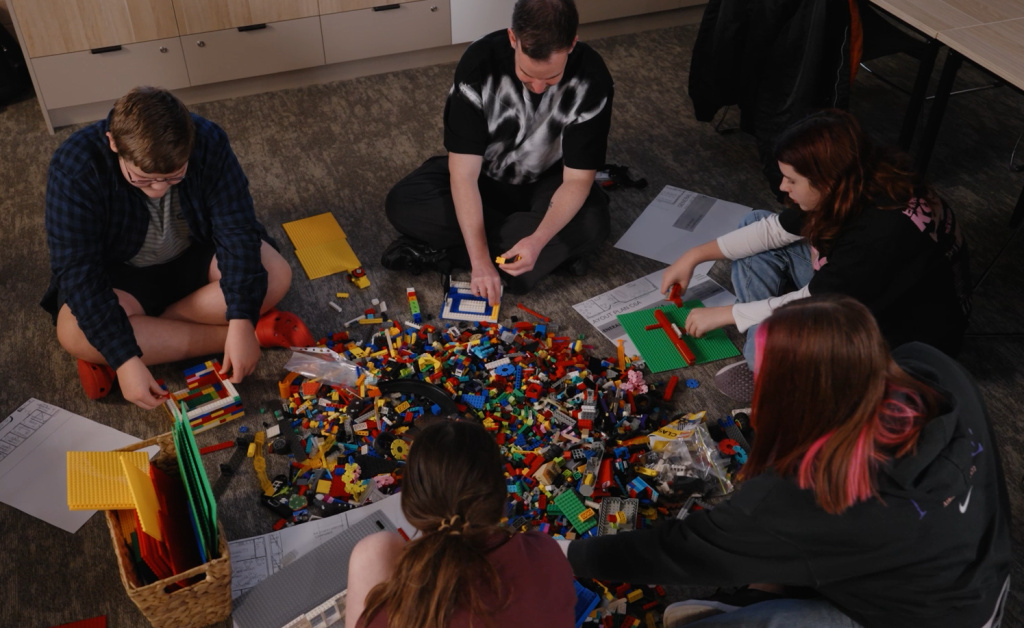
In a brand-new building just off Port Road in Thebarton, a group of Year 7 and 8 students are rebuilding their school out of Lego.
They’re working from a blueprint of the building, brick by brick. When they’re finished, they’ll use the model to create a virtual tour – something nervous new students can use to get oriented before they even walk through the door.
It’s a fitting first major project for these students from Specialised Assistance School for Youth, or SASY, which built this campus from scratch and opened it at the start of 2026. This is a place with no bells, no uniforms, no classrooms like the ones you remember – and that’s why the students have chosen it.
SASY is for young people who’ve stopped going to traditional school, or are about to. Some have been bullied, some are dealing with more at home than any teenager should, some just never found a version of school that fit. The unique concept has seen two of the school’s employees recognised South Australia’s prestigious 40 Under 40 awards.
“A lot of our young people that start here have had a negative experience with different areas of schooling,” says Head of Campus Nathan. “They’re trying something different that gives them a landing pad to start with, before we go straight into the education.”
A school built not to feel like school
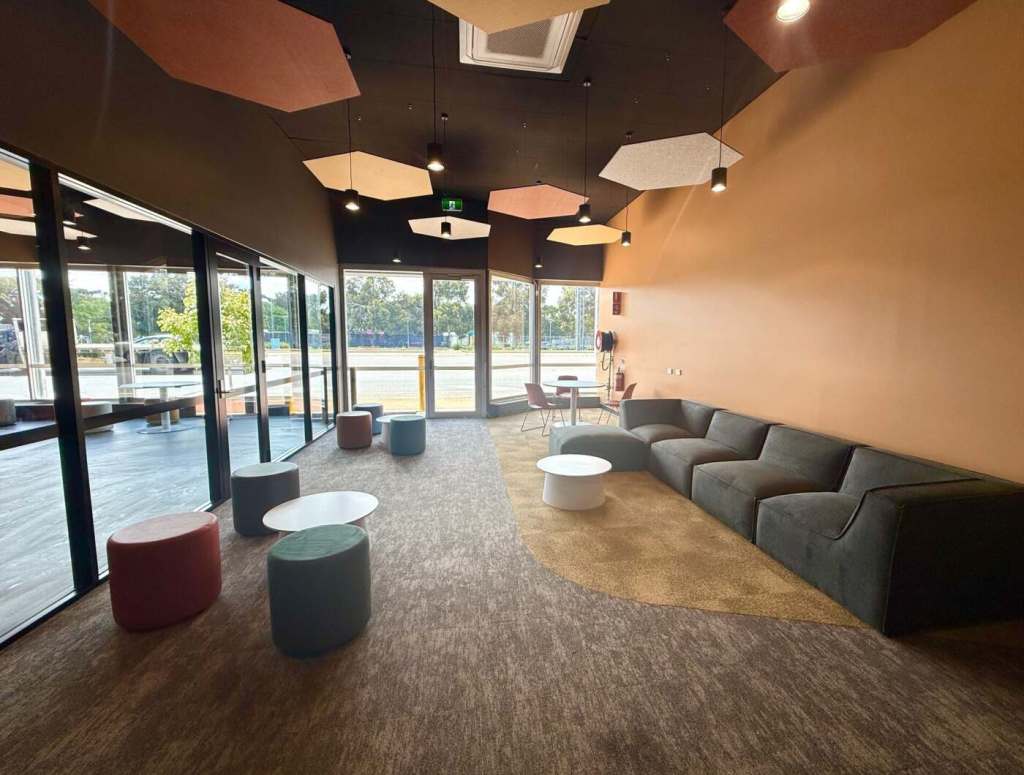
Once you get past reception, this is a building that reads more like a co-working space than a campus – open plan, couches, kids with laptops in the nooks they’ve picked for themselves.
There are eight program rooms, and no two are the same.
There’s a mix of different tables, chairs and soft furniture. Some rooms are lit bright, others dimmed right down.
“Each room is designed to cater to the different needs of different young people,” Nathan says. “It depends on the capacity of each young person.”
Even where you sit is yours to decide – a small thing that quietly undoes years of being told to face the front.
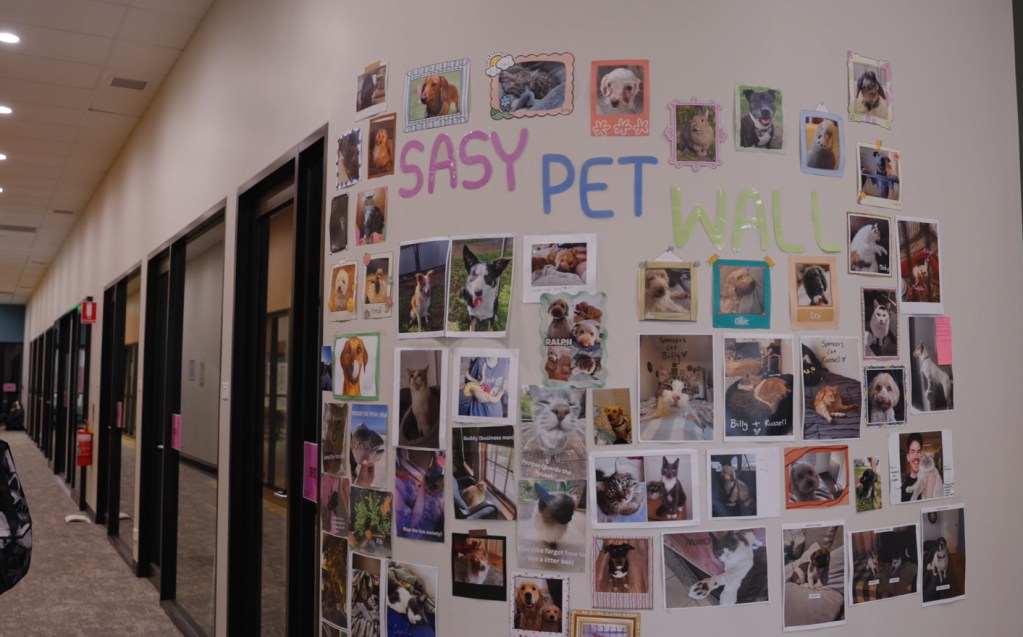
The campus is new enough that the students are still decorating it the way they want – a wall for photos of their pets, their own art and science projects on display, and a board where anyone can suggest what goes up next (fairy lights and Jellycat plushies are both on the wish list).
It starts with breakfast
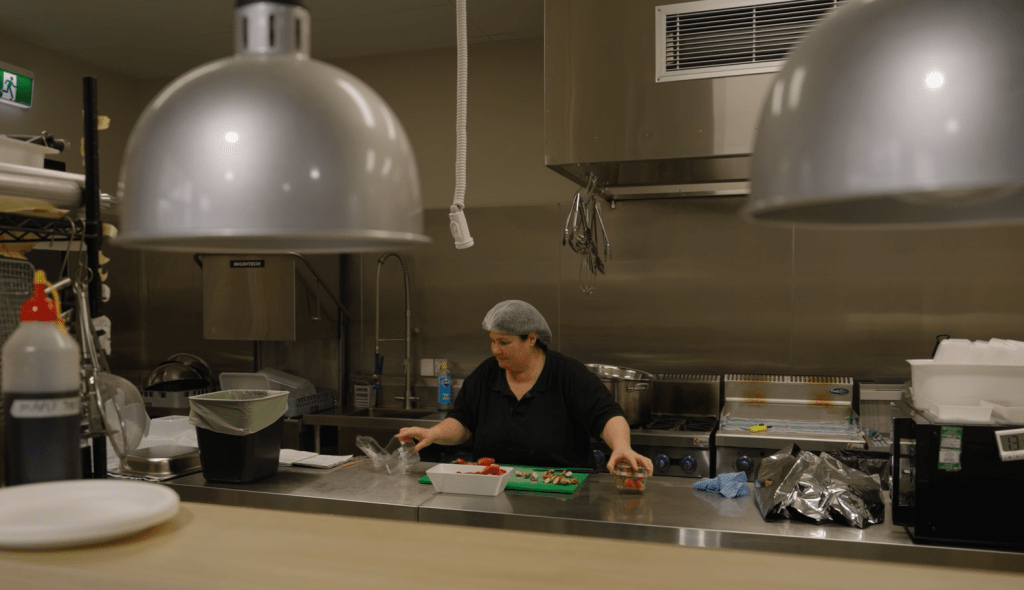
The day begins at 8am in the café with a proper hot breakfast, cooked by the school’s chef, Annamaria. It’s free for all students.
Morning tea and lunch are free too, and there’s a meal to take home at the end of the day for anyone who needs or wants one. The food rotates but stays familiar – bacon and eggs, croissants, spaghetti bolognese, the odd Taco Tuesday or Watermelon Wednesday.
“Breakfast is so important – it’s the first meal of the day,” Nathan says. “Some of these young people don’t have food at home, or they don’t have breakfast – that can be their choice sometimes, or because of the circumstances they’re in at home. By providing that, it’s one less stressor, and one less barrier to attending school.”
The kitchen does more than feed people, too. During Reconciliation Week, Annamaria worked native ingredients into the menu to create lemon myrtle cookies and wattleseed brownies – slipping new, meaningful flavours in alongside the familiar ones.
Learn your way
At SASY, lessons are called programs, and they’re built to bend around the student rather than the other way round. The work is still learning – it just doesn’t always look like a worksheet.
Learning often leaves the building, too. At least once a week the students head out somewhere – beach science, dog training, a street-art project – to do work in the real world rather than just read about it.
If someone’s done half an hour and hit a wall, they can stop. “We can take a pause, do a brain break, go for a walk around the block, then come back and pick it up again,” Nathan says.
If something stirs up a hard emotion, they can step out to a staffed wellbeing room to reset, then come back when they’re ready. Every activity is designed to be put down and picked up again.
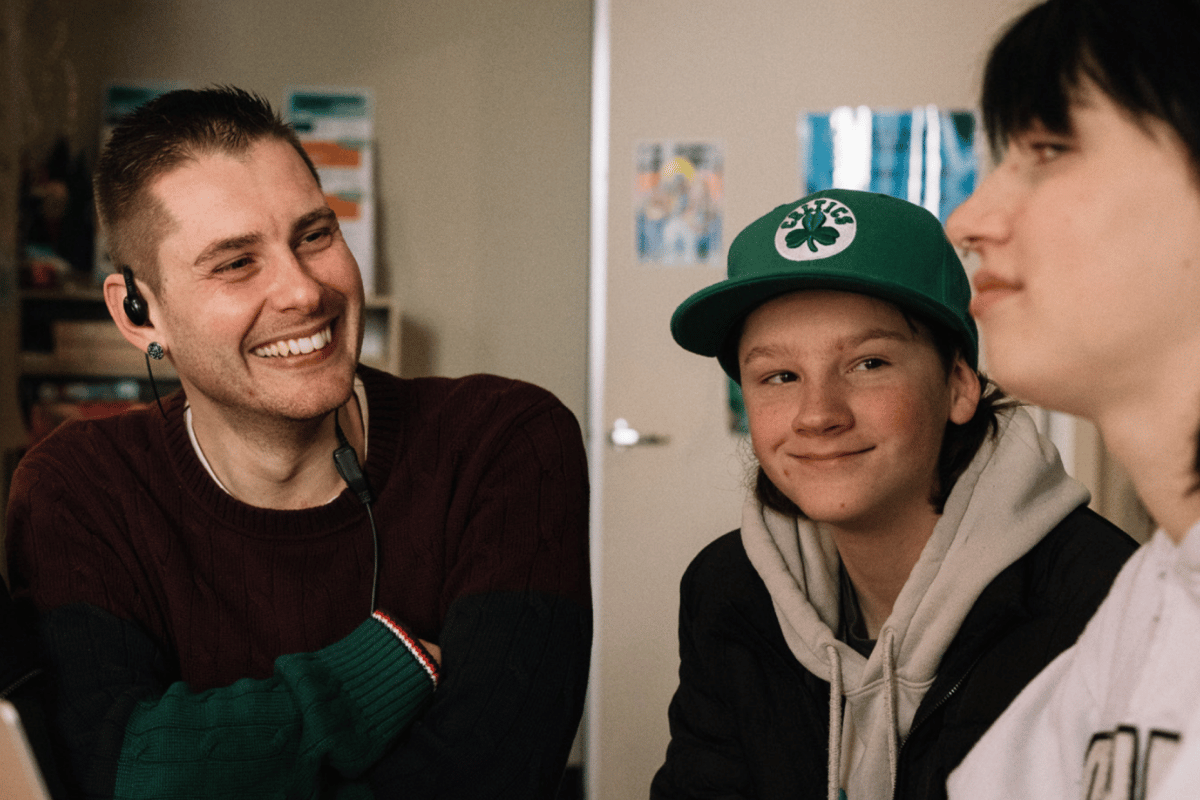
For Georgia, who started at the school this year, that flexibility is the best part. “We’re allowed to present our work however we want – in an essay, or a video, or a PowerPoint,” she says. Mainstream school, she reckons, was “very harsh with deadlines.” Here, it’s “more low-pressure”.
The other shift is that your interests come with you. Nico, also new this year, is writing a novel and running a Dungeons & Dragons campaign with their friends – all folded into their learning.
“There’s a lot more individualisation,” Nico says. “The staff are working really hard to find a way that works for you. They want to use your interests to integrate into your learning.”
Wellbeing and learning are the same thing
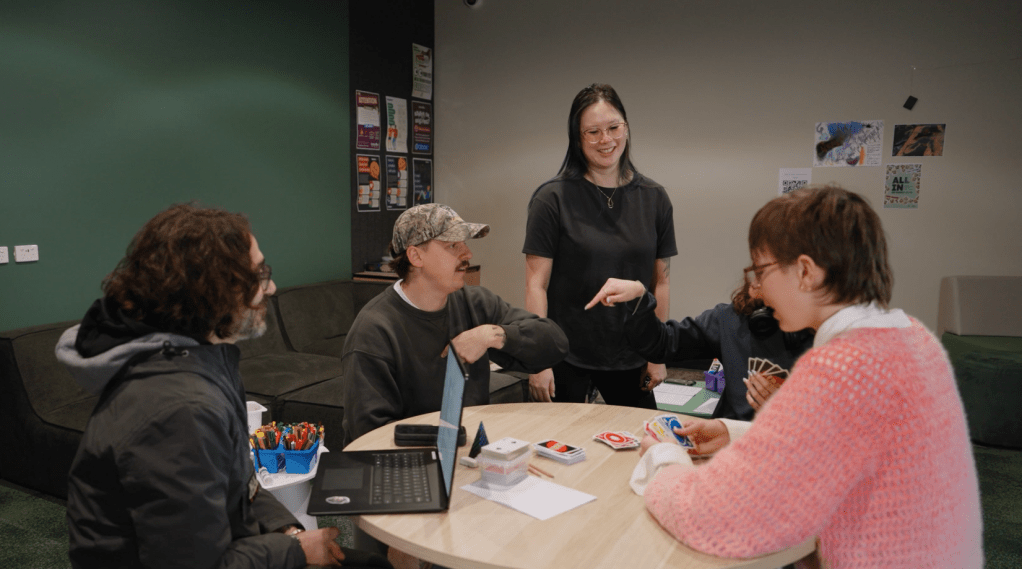
SASY runs on a simple equation: wellbeing plus learning equals education. It shows in the staffing – programs are usually run with a teacher and a youth worker side by side, and every Middle School student has a youth worker case-managing their support.
The campus has two wellbeing rooms, too, open all day and staffed by youth workers – lower lighting, cosy nooks, soft toys, somewhere to properly recharge. A student can come in to talk something out, put on some music, sit with other kids, or just breathe, then head back to a program once they’ve settled.
“If a young person is not feeling safe or included within the space,” Nathan says, “they can’t be in the right space to engage in their learning.”
It’s Georgia’s favourite spot in the building. “It’s very cosy, very welcoming,” they say. “There’s always people there who can listen to your problems if you have any.”
Who it’s for – and why it’s free
There’s no cost to families at all. SASY covers the food, the excursions, the books and pens, Metrocard top-ups, and – when a young person needs one and no one at home can help – even a copy of their birth certificate.
That’s possible because the school runs on a mix of state and federal government funding and philanthropic support.
“To continue the work that we’ve been doing, it’s really important that state and federal government does continue, so that SASY can continue the work that it’s been doing.”
Ten years on from opening with 16 students in a single CBD building, SASY now supports more than 240 young people across its two campuses.
The Thebarton site is its newest chapter, for Years 7 to 10. Purpose-built after a lot of consultation with students, it opened this year and features a science lab, art studio, recording studio and outdoor areas.
Senior students in Year 11 and 12 stay at the original Chesser Street campus in the city – which is run on the same model, with the same flexible areas no one would clock as classrooms.
Wherever you are in SASY, it’s a safe space for students. “I really like the community of it all,” Nico says. “I feel really connected to other students, as well as the staff – that’s something I personally really needed.”
Find out more about SASY, or book a campus tour.