


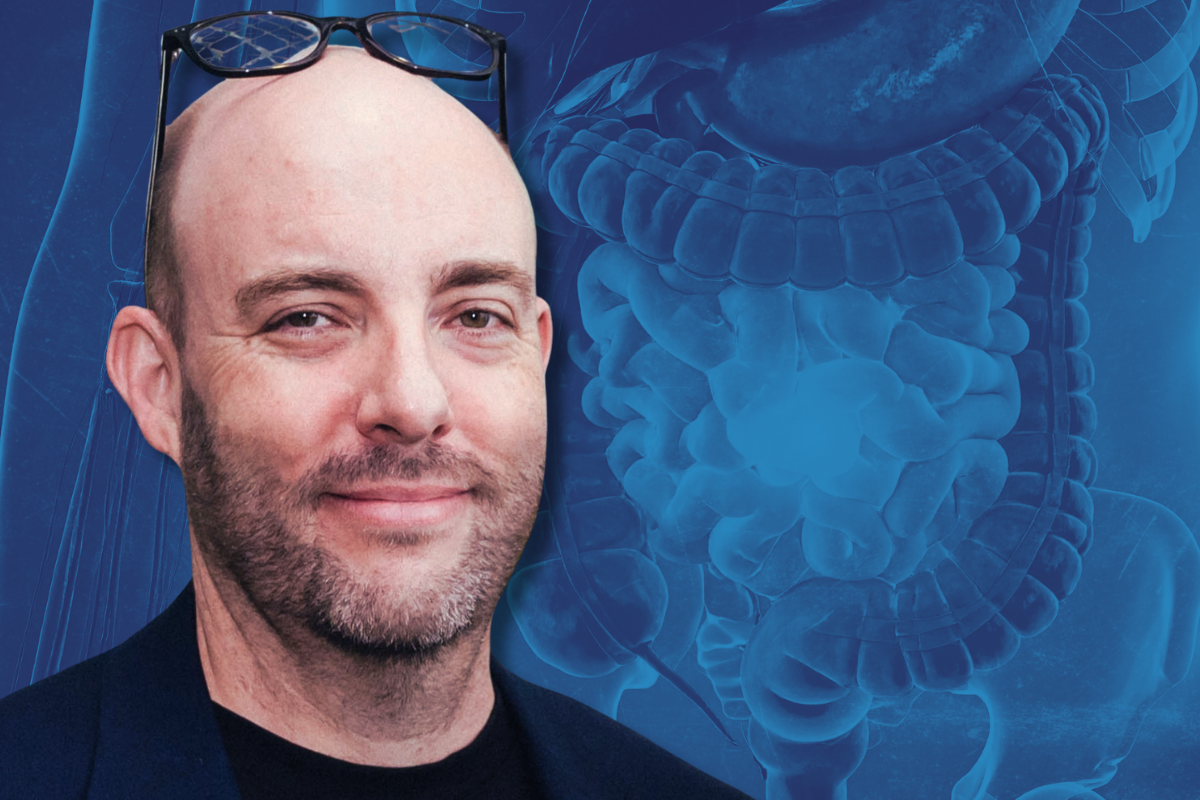
An Adelaide scientist is helping unravel the biology behind chronic gut pain, bringing new hope to millions of people living with IBS, endometriosis and other painful conditions.
For plenty of Gen X girls, the advice on brutal periods, constipation, diarrhoea and gut pain was simple: your mum had it, her mum had it, and you just have to shut up and put up with it too.
Fast-forward to now and Gen Z women are swapping their Irritable Bowel Syndrome (IBS) subtypes and endometriosis diagnoses in open-plan offices. IBS-C? IBS-D? Endo with IBS-M? Welcome to the group chat.
The science has changed too – and Adelaide is one of the global hubs leading the way.
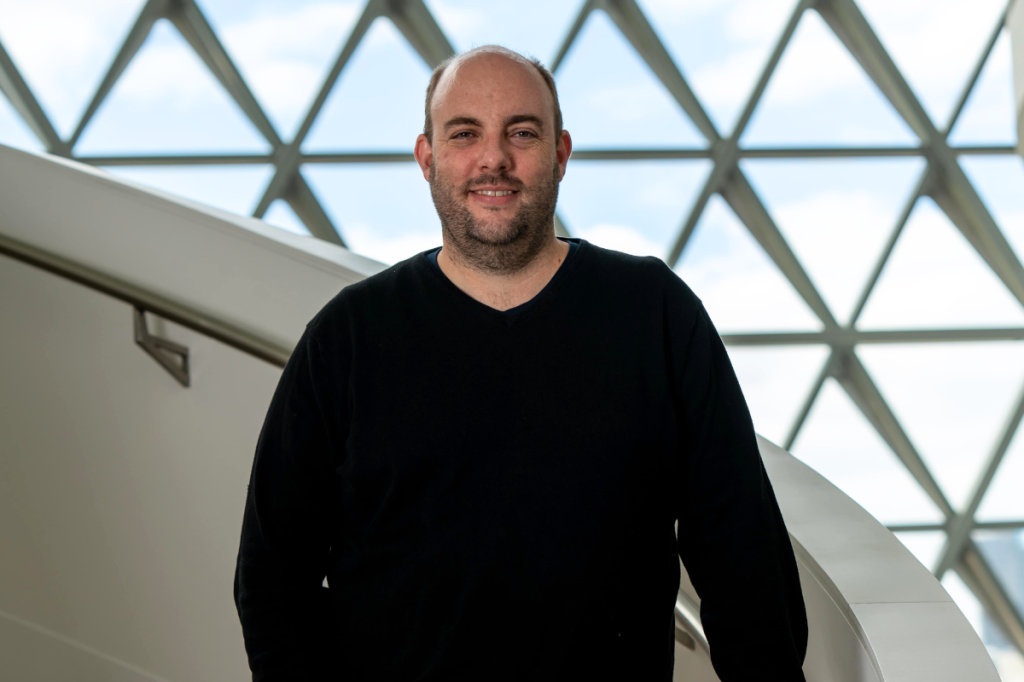
At SAHMRI (South Australian Health and Medical Research Institute), Professor Stuart Brierley has spent more than 20 years investigating why pain from our visceral (internal) organs can become chronic – and how to stop it at the source.
His work spans IBS, inflammatory bowel disease (IBD), bladder pain syndrome and endometriosis, and he’s a finalist for Scientist of the Year, as part of the 2026 SA Science Excellence and Innovation Awards.
“For so long, people have just been suffering from these conditions and really not knowing what’s causing them,” Stuart says.
Chronic pain affects more than 1.5 billion people globally, and one in five Australians are living with it.
When the alarm won’t switch off
Most of the time, we’re blissfully unaware of what our internal organs are doing.
“They’re just sort of on autopilot, and they do their own thing,” Stuart – who is also a professor at Adelaide University – says.
We notice when we’re hungry or need the toilet. Pain, however, is designed to get our attention.
“If we hit our thumb with a hammer, or if we burn ourselves on a hot kettle, we get that pain response, and that’s to protect us,” Stuart says. The thumb stays tender for days while it heals, then the alarm resets.
But in chronic visceral pain, the alarm doesn’t reset – sometimes after something as ordinary as food poisoning. The tissue may heal, but the pain-signalling system can remain switched on.
“These pain pathways have been hijacked,” Stuart says. “It’s sensory overload and it’s all too much.”
Why women feel it more
About two-thirds of people with IBS are women.
“We just fundamentally asked the question: well, why is that?” he says.
Working with researchers at the University of California San Francisco, including 2021 Nobel Prize winner Professor David Julius, Stuart and his team investigated whether female hormones were involved.
“It turns out that oestrogen plays a key role in the lining of the gastrointestinal tract,” Stuart says. It stimulates the release of chemical messengers that sensitise pain pathways.
“For women, this pathway is just naturally switched on. That just pushes women closer to the pain threshold. So it doesn’t take very much then to tip them over the edge to experience pain.”
It also tends to arrive in early adolescence. “IBS tends to kick in for women around about 12, 13, 14 years old,” Stuart says.
And it isn’t necessarily the only condition involved. The gut, bladder and reproductive organs share nerve pathways into the spinal cord and brain.
“There’s a lot of women who unfortunately suffer from both endometriosis and IBS, so they’ve got a double whammy. If you affect one organ, you actually affect the other one.”
Endometriosis still takes around seven years to diagnose from the first symptoms.
From ‘all in your head’ to targeted treatment
A generation ago, Stuart says, bowel and pelvic symptoms weren’t exactly dinner-table conversation.
“People didn’t want to talk about pee, poop and periods,” he says.
And because the changes driving IBS pain weren’t visible on the tests available to doctors, patients were often dismissed.
“They were told, ‘Well basically, it’s all in your head. Here’s some antidepressants, go away. It’ll be fine’,” Stuart says. “But of course, nothing could be further from the truth.
“We now know that there are all these microscopic changes happening in our tissues, which mean that these pain pathways are being remodelled and hijacked.”
Stuart’s team spent about 12 years working with US company Ironwood Pharmaceuticals on linaclotide, a treatment for IBS with constipation (IBS-C).
“Our work had previously shown that pain from the gut can be triggered in the gut,” he says. “So if that’s the start of the problem, then that means that should be the start of the solution as well.”
The drug stays largely within the gut, where Stuart’s team helped show it could quieten hyperactive pain-sensing nerves and relieve chronic visceral pain. It’s now available by prescription in Australia.

What comes next
Linaclotide only works for one of the four main IBS subtypes (IBS-C), so Stuart’s team is looking for other ways to apply the same principles.
This year, he received National Health and Medical Research Council funding to develop orally-delivered drugs that target oxytocin receptors on pain-sensing nerve fibres in the colon.
“This funding represents an important step toward developing a therapy that directly targets the drivers of pain rather than masking symptoms,” Stuart says.
The ultimate goal is “personalised and mechanism-specific treatments” for all types of visceral pain.

Talk about it – then get it checked
Stuart thinks the new openness around bowel symptoms and pelvic pain matters.
“It’s really important from the patient point of view to understand that they’re not alone in this,” he says. “The more people talk about it, the more people realise, ‘Oh, I’ve got the same thing’.”
But there’s another side to the explosion of gut-health content online. People who’ve spent years looking for relief can be vulnerable to products, supplements and diets that promise answers without much evidence behind them.
“Just because someone’s on a platform and just because someone’s saying something doesn’t mean to say that it’s factually correct,” Stuart says.
“You know your body best, so if something’s not right, go to your GP, get it checked out.
“It’s okay to be stoic. But you also need to go get things looked at if you’ve got ongoing problems.”
For Stuart, the Scientist of the Year nomination is another chance to get that message out.
“This isn’t about me. This isn’t about an award,” he says. “This is about letting people with IBS or IBD or endometriosis know that there’s work being done to understand their conditions, and work being done to try and help them find new therapies.”
Learn more about the 2026 SA Science Excellence and Innovation Awards and finalists.