


A “last hurrah” at the Edinburgh Fringe changed everything for Gravity & Other Myths. Here’s how the Adelaide circus troupe started – and how far they’ve gone over the past 13 years.
Gravity & Other Myths has played to almost 1.2 million people across 44 countries, won a Helpmann Award, taken out Best in Circus at Adelaide Fringe and collected five-star reviews from Edinburgh to Berlin.
But do South Australians realise how big this Adelaide-based company has become?
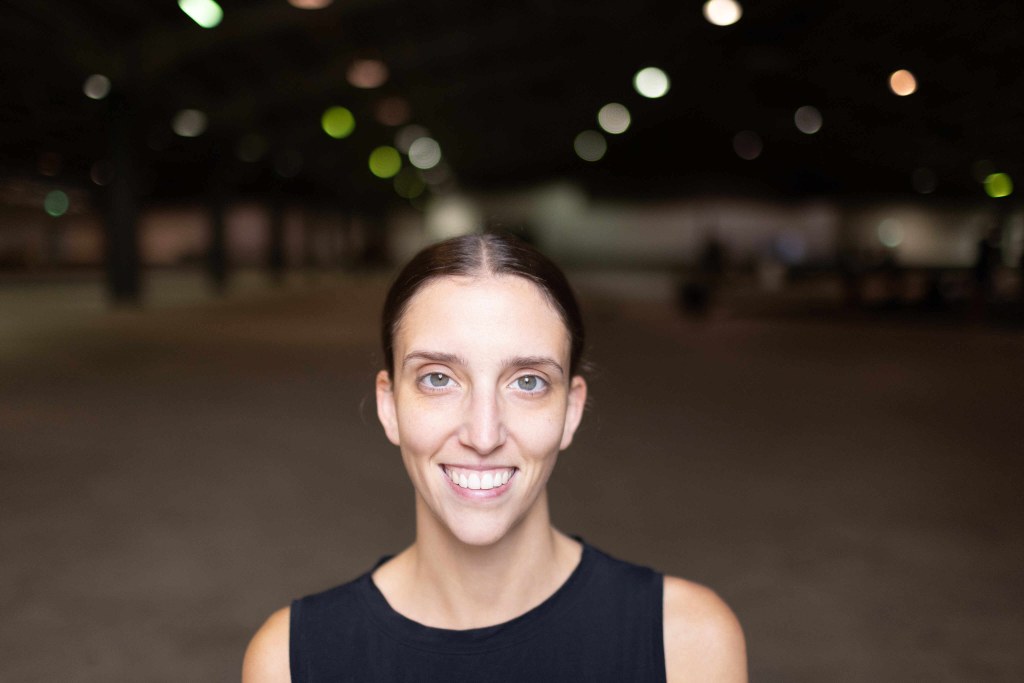
“No, absolutely not,” laughs co-founder, company director and creative producer Jascha Boyce.
“It’s wild. It’s still very surreal for us too, actually. Once the ball started rolling, we were kind of all just going along for the ride.”
Where it began: Cirkidz
When she was four, Jascha’s parents took her to Cirkidz circus school. “I think they chose it over dance or sport because it looked looser and more creative,” she says.
“I did do sports and music, but circus was the thing that really resonated with me because it allowed you to find your place. There’s so much opportunity for choosing different paths in circus.”
She joined Cirkidz’ performance troupe at nine and stayed a decade, training and performing alongside kids that became close friends.
Too old for the troupe
“By 2009, a few of us were getting too old to stay in the performance troupe at Cirkidz, so we decided to keep training together outside the normal hours,” Jascha says. “And from those training sessions, we decided the best way to stay together as a group was to make a show together.”
The youngest of the founding group was Tilda Cobham-Hervey, then 14 and now an internationally recognised actor and director. The eldest was their former Cirkidz trainer, Triton, at 29. Jascha was 19.
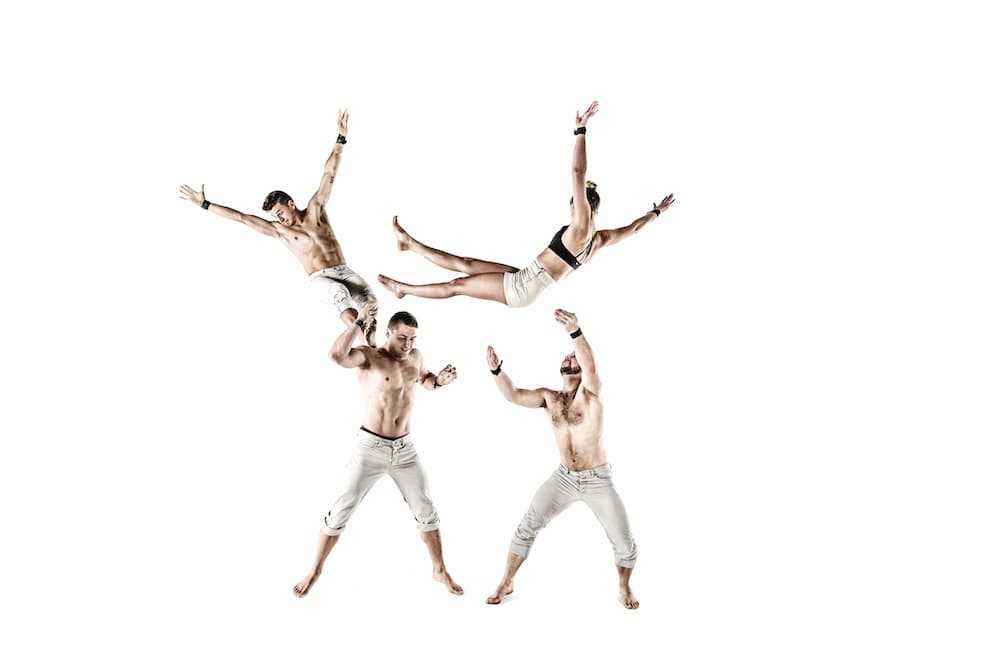
Their first show as Gravity & Other Myths (GOM) was called Freefall. It had text in it, hula hoops, and juggling, and was made for Adelaide Fringe.
“The Fringe is such an amazing platform for allowing young people like us to feel like there’s an avenue to present a show,” Jascha says. “We weren’t just creating for ourselves. We actually had an endpoint, which puts some wind beneath our sails.”
The last hurrah
Nobody was banking on a career in circus – they were just a group of friends who enjoyed telling stories through movement and honing their collective style and skills.
The founders were still at school or uni, studying everything from engineering to graphic design and marketing. Jascha was working as a massage therapist at a physiotherapy clinic, about to start a creative writing degree.
Then in 2013 they scraped together enough money to take a new show, A Simple Space, to the Edinburgh Fringe.
“We thought, look, let’s just do it as a last hurrah. It’ll be a fun way to finish this journey. It’ll be kind of the last thing we do together.”
In the final days of the festival, Jascha and fellow founder Lachlan Binns got talking to Wolfgang Hoffman, who ran a small touring agency in Europe. He came to their show, and told them afterwards that he didn’t usually do this, but he wanted to sign them then and there.
His first booking for them was an arts festival in Harare, Zimbabwe. Thirteen years later they’re still with his agency, Aurora Nova, and A Simple Space has been staged more than a thousand times.
‘Dirty circus’
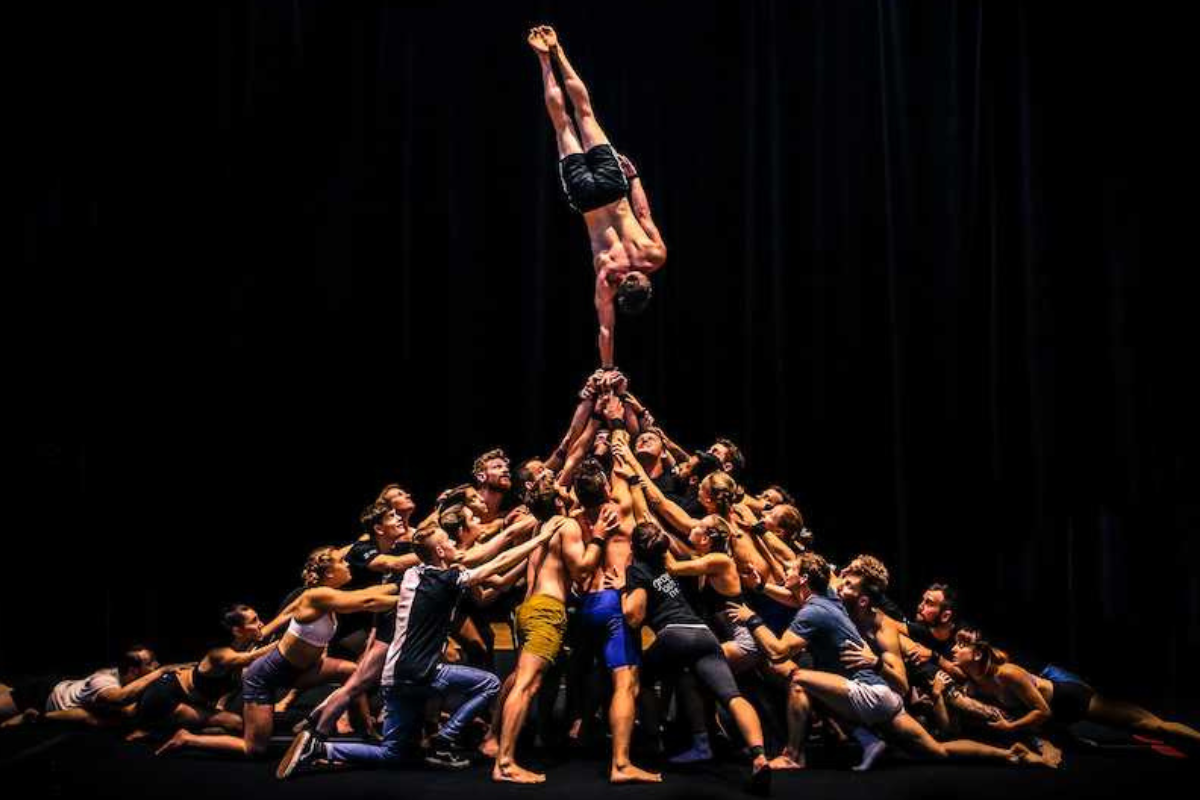
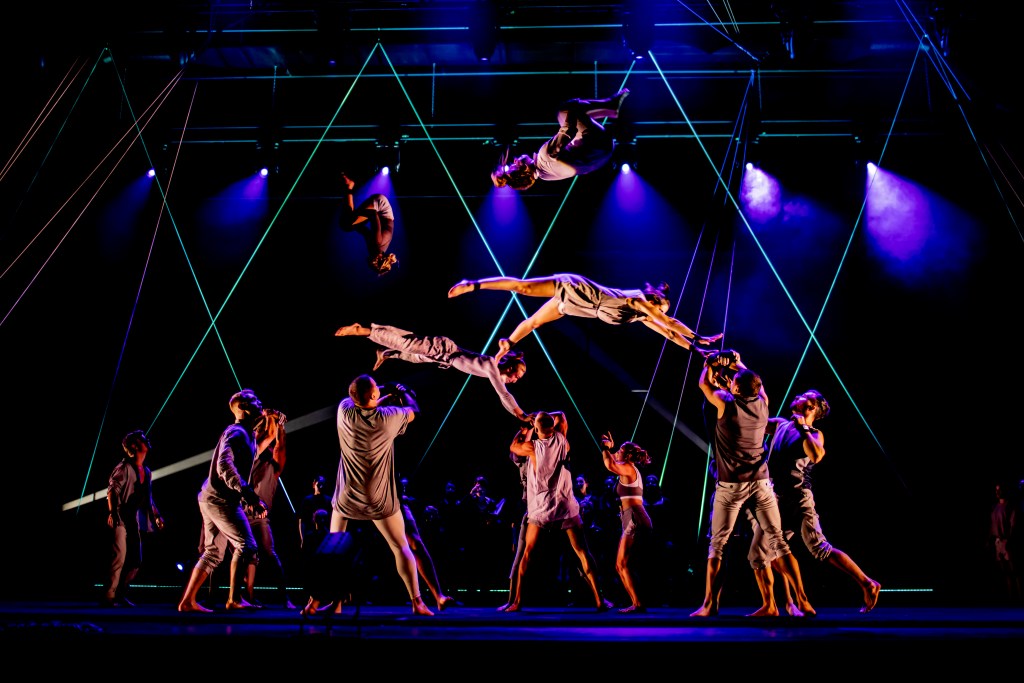
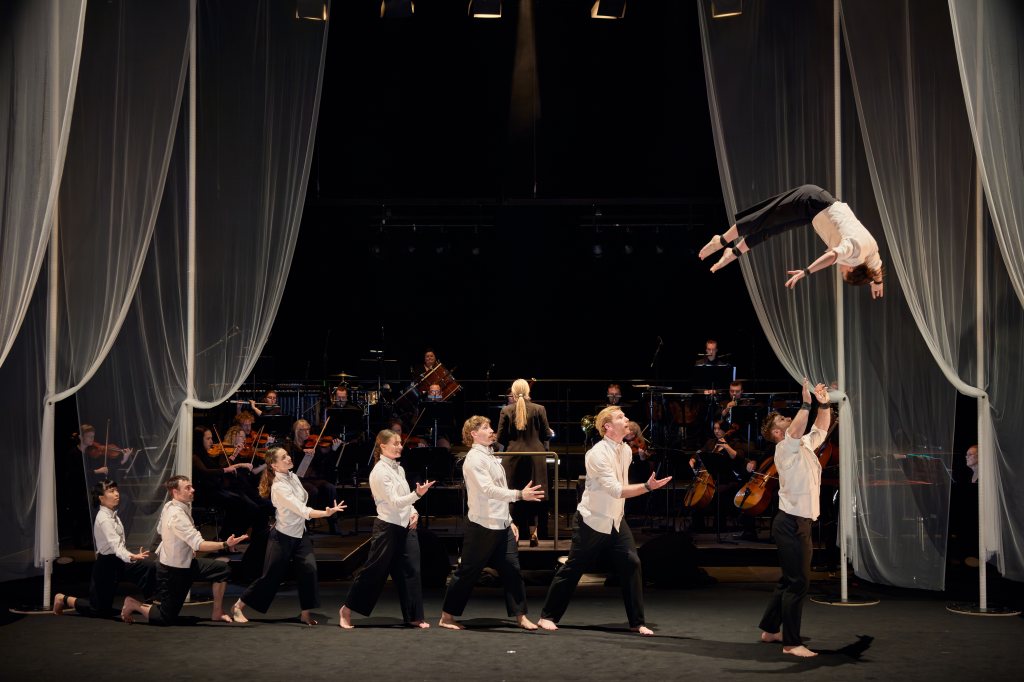
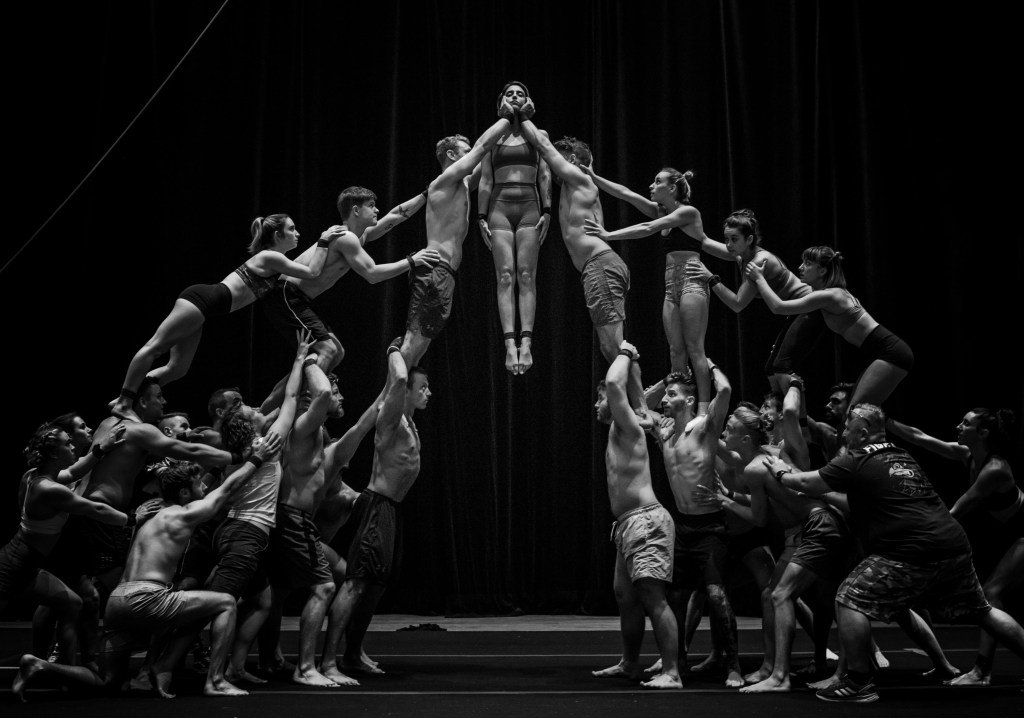
GOM now runs two casts of around ten at once, keeping about 20 acrobats in near full-time work. Their largest work, The Pulse, expands the company’s performers to close to 70 people.
“We sometimes like to call the style of our shows ‘dirty circus’. We’re not too focused around perfect technique or beautiful costumes. We’re just real people being honest and connecting through physical storytelling.”
That, she says, is part of why the work travels so well across languages and cultures.
Why they stayed
Staying Adelaide-based was a deliberate decision, not a default. The founders have talked seriously about basing the company in Europe, where the logistics would be simpler, or Melbourne when a circus space came up there.
“The founders especially, we really still feel so connected to Adelaide, and we feel like we almost owe Adelaide something for supporting us and allowing us to do what we’ve done,” Jascha says.
In Adelaide it was easier to stand out, win grants and become “a big fish in a small pond”.
“There wasn’t really anyone else in Adelaide doing what we were doing, so it really felt fresh and exciting. We felt like we had a lot of people on our side, mentoring us through those first years of figuring it all out. Although, really, we’re still figuring it out.
“It’s not ever a rivalry here. The arts community really work together,” she adds, pointing to designer Geoff Cobham as a mentor who shaped the company and led to its long relationship with Patch Theatre. “I think it allows you to take bigger risks and ask each other for help and guidance.”
The state government has backed GOM through various CreateSA grants and funding programs for most of the company’s life, and Jascha says that’s been an important part of how they’ve managed to survive and thrive.
Several founders have now come off the road and based themselves back here, and GOM is building a domestic touring strategy so more South Australians get to see what the rest of the world already has.
What a Ruby means
Named after the late arts patron Dame Ruby Litchfield, the Ruby Awards are an annual celebration of South Australian arts and culture, led by the state government through CreateSA. They recognise creative excellence, innovation, collaboration, leadership and community impact across 12 categories.
GOM has won three: Made in Adelaide in 2018 and 2019, and Outstanding Contribution by an Organisation or Group in 2021. The third is the one that stands out for Jascha.
“It was honestly a bit unexpected,” she says. “I did the acceptance speech, and thinking about it still makes me a little bit teary. It was mid-COVID and we were doing everything we could to keep the team together, but we really didn’t know what the world was going to look like. It was exactly what we needed to keep going.”
“We’ve been nominated many times and not received an award as well. But even just taking part and thinking about your achievements over the year and what could be eligible is such a great exercise, regardless.
“We are all so busy and overworked, and in our case we don’t spend a whole lot of time in Adelaide, so having that opportunity to reconnect with our people in Adelaide’s arts community at the Ruby awards is so important.
“It’s really about valuing each other.”
Discover more about the Ruby Awards – including other past recipients – at the Ruby Awards website.