


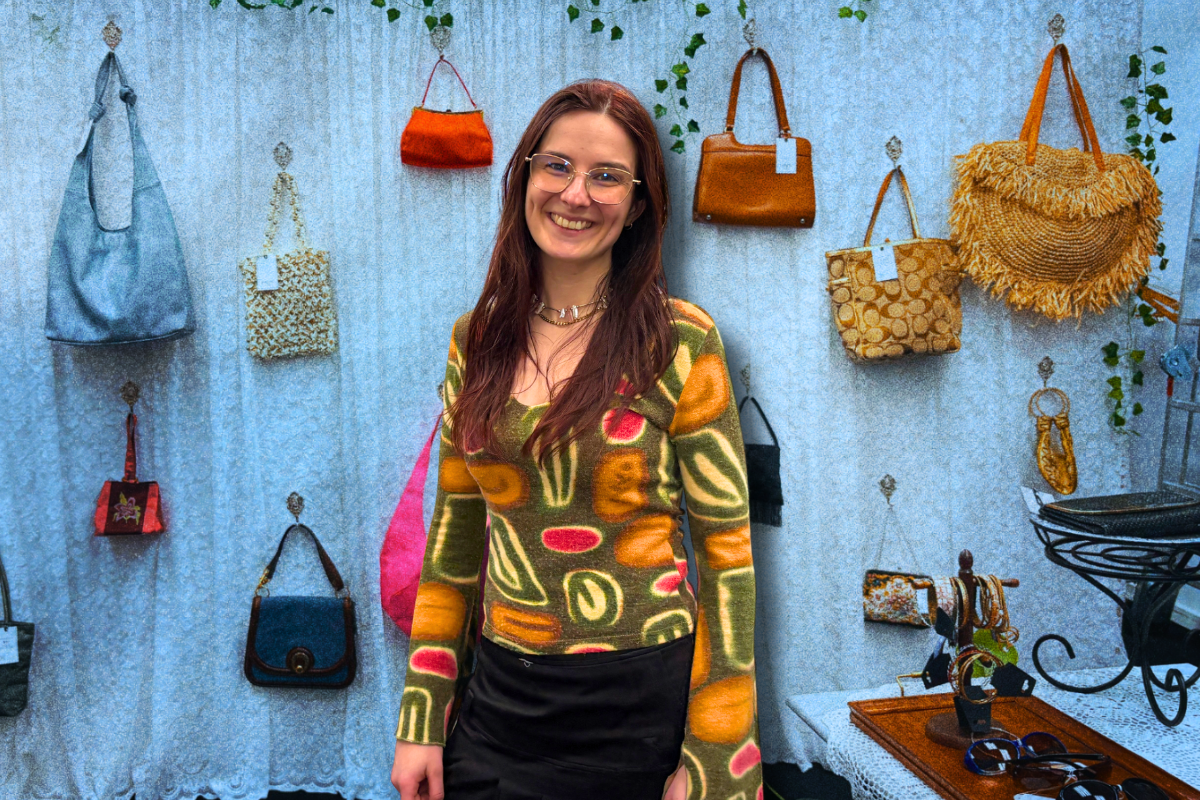
ADL Fashion Week can be prime time for outfit envy. Thrifty Gal’s Olivia Davies shares how to find your style through vintage and reworked clothes – with help from Green Industries SA on making them last.
You can love a fit on the runway without needing to buy the whole thing. Maybe it’s the colour combination, the shape of a jacket or how it’s styled that you want to try for yourself.
There’ll be plenty of inspiration at ADL Fashion Week, running from 7-11 October, with more than 30 events across Adelaide and North Adelaide. Alongside the shows, dining collaborations and parties, there are workshops and experiences exploring more sustainable ways to dress.
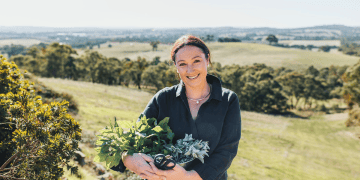
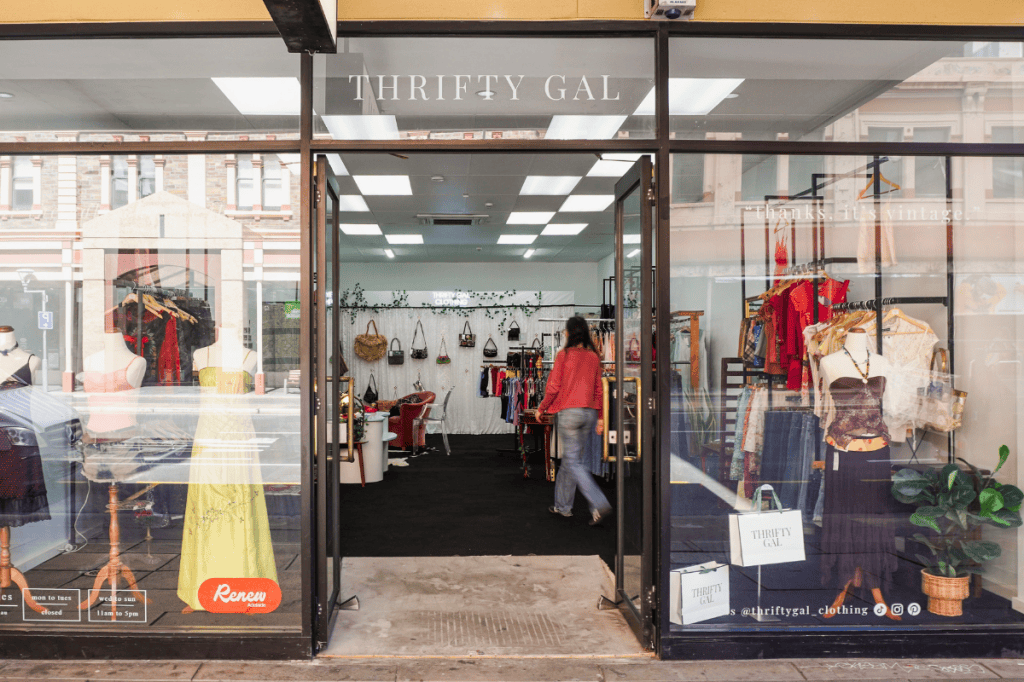
Olivia Davies, who recently opened vintage and preloved store Thrifty Gal on Grenfell Street, is involved in three of them.
“I think there’s a difference between getting inspiration from a piece that you love and just spending, who knows, $1000 on that piece,” she says.
“You could go and find something secondhand that is similar in style, similar in vibe, but suits your lifestyle a lot more – that you’re actually going to wear.”
Finding your own thing
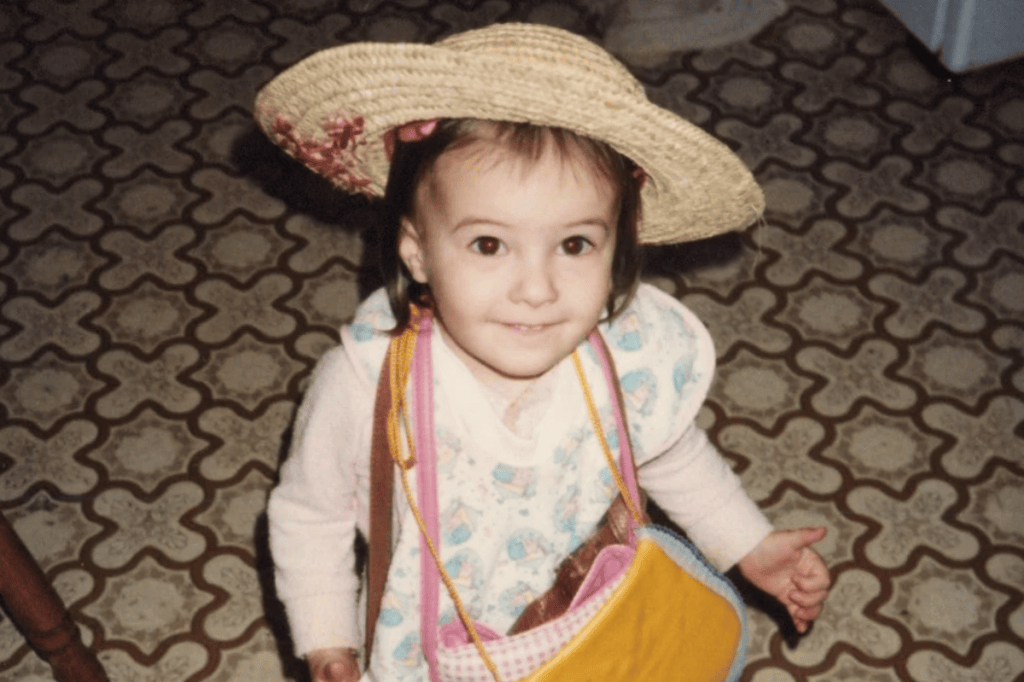
Olivia’s passion for fashion started early: She remembers turning a piece of stretchy leopard-print fabric into a different outfit each day as a child. Her mum also used to take her op shopping, but a career selling vintage clothes wasn’t the obvious next step after school.
“It was just like, ‘Oh, I’ve got to go to uni. I’m good at maths. Guess I’ll do engineering,’“ she says.
After several years in water-treatment engineering, she wanted more creative freedom. She left her job and tried selling preloved vases and vintage furniture at markets before clothing became the business.
“Hauling furniture to markets was not a vibe, to be honest.”
Thrifty Gal has a Y2K influence – think late-90s and early-2000s fashion – alongside carefully curated vintage and upcycled garments from other decades. Olivia describes Y2K as “very, very loud and very, very bold”, with room to show off your unique personality.
The store also has a guest book where customers can collage outfits from clothing cutouts, a way to express yourself without buying anything.
“I would rather someone not buy something this time and come back again instead of feeling pressured.”
The high of the buy
Olivia’s advice when shopping is to check the fabric, look for loose threads and try things on.
“Everyone’s body is so different,” she says.
Read the care label, too: the washing involved needs to work for you and your lifestyle.
There’s also the question of what’s making you reach for your wallet.
She says fast fashion shopping – especially online – can often be more about “the high of the buy,” rather than the actual garment. “I feel like with secondhand, it’s a lot more like, ‘Oh, this is a piece that I love.’“
Olivia makes a habit of donating what she’s no longer wearing before she adds anything new.
“People think I must have the biggest wardrobe,” she says. “That’s not true at all.”
Shani Wood, from Green Industries SA (GISA), agrees that enjoying fashion isn’t the problem.
“We really don’t want to shame people for wanting new clothes,” she says.
Instead, it’s the lack of reuse and recycling that’s such a worry.
Recycling company Upparel estimates Australians buy an average of 27 kilograms of new clothing a year, and throw away almost as much – about 23 kg each. Most of that could still have been worn, or at least kept out of landfill.
Your old work shirt has potential
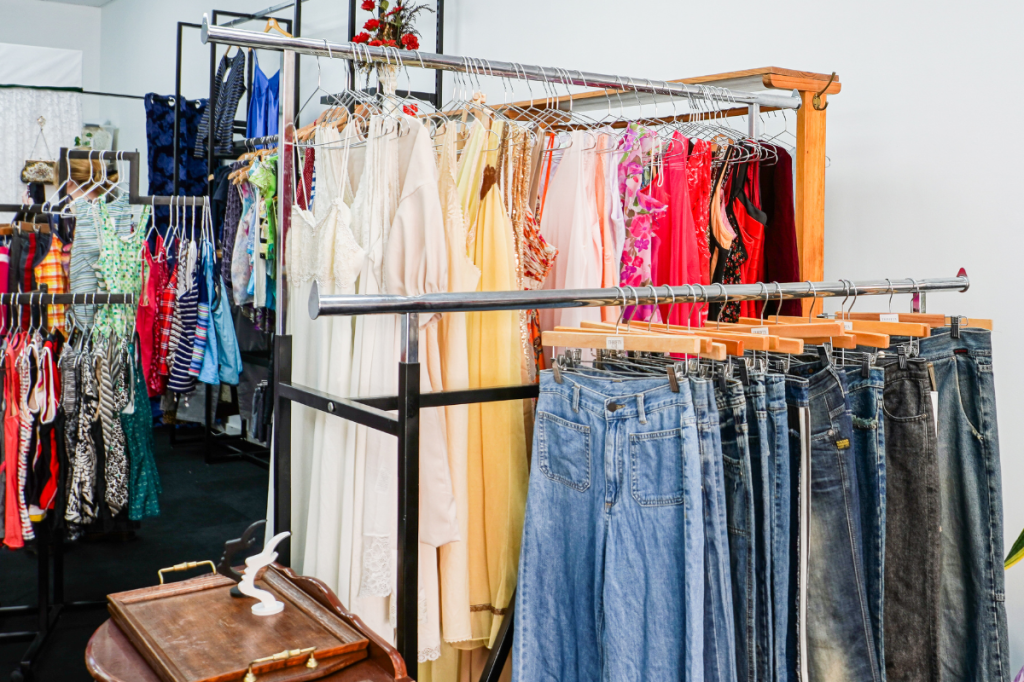
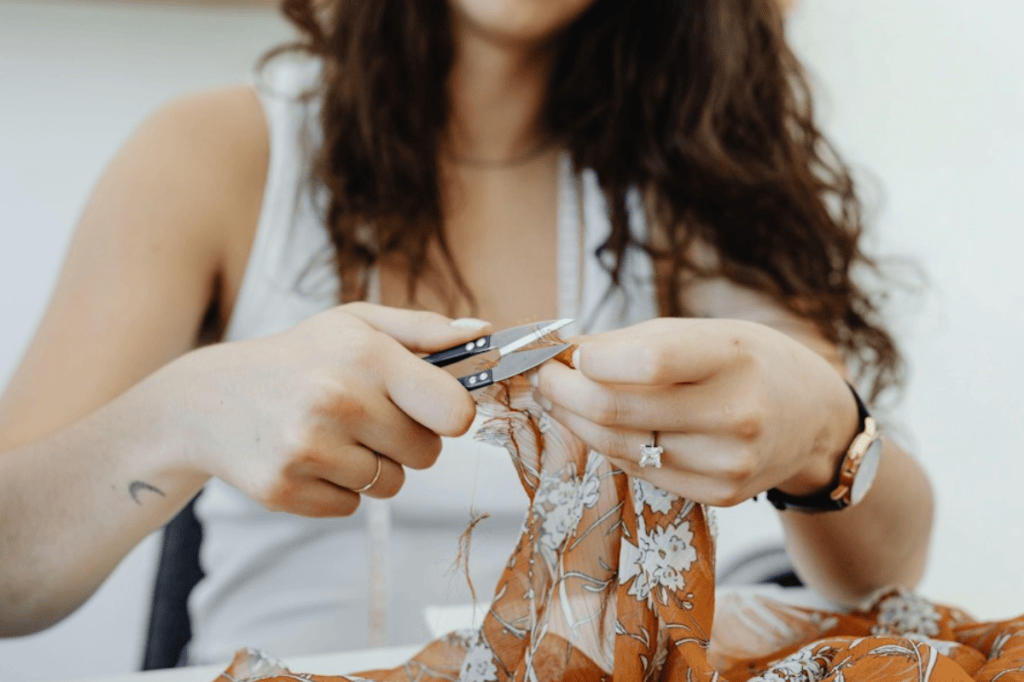
Thrifty Gal reworks overlooked blouses by adding elastic and ruching at the sides to create a more fitted shape – and give them a new lease of life.
“A lot of girls can wear them to work, but also out to the club with a mini skirt,” she says about their versatility.
She learnt to sew through YouTube and practice, and wants to help other people feel confident changing or repairing their clothes.
“If you’ve got a piece and you’ve worn it to death, maybe, and you love it but you’re a bit bored of it, then that’s when upcycling can help,” she says.
Her Denim Revamp Workshop on Thursday 8 October is a chance to try that as part of ADL Fashion Week. Bring denim that fits you well but is starting to feel a bit boring – jeans, shorts, a skirt or a jacket – and experiment with buttons, diamantes and metal eyelets to make it your own.
“We’re just going to go crazy and get everyone to revamp their denim pieces into something that they love and is uniquely theirs.”
While you don’t need to know them for the denim workshop, there’s a reason basic sewing skills matter for sustainable fashion: GISA helped fund Dr Kate Sansome’s research into clothing longevity, which surveyed 591 South Australians. Younger participants were keen to learn repair skills but had less confidence in them.
Repaired clothes had estimated lifespans about 2.5 years longer than unrepaired ones, based on time already owned and how much longer people expected to wear them.
“People want to do the right thing; they just don’t know how to,” Shani says.
A few more ways to get inspired
Olivia’s workshop is one of several Fashion Week events worth a look for people aiming to be fashionable more sustainably:
- The Creative Circular Fashion Workshop on Thursday 8 October explores turning discarded textiles into wearable pieces, with a meal and drinks included.
- The Exploring Slow Fashion walking tour on Friday 9 October visits sustainable businesses around the CBD, including Thrifty Gal, with opportunities to shop along the way.
- The Australian premiere of Handmade Future, at the Mercury Cinema on Saturday 10 October, is followed by a discussion with Olivia, Silver Fleece’s Mel Flintoft and designer Rachel Van Brussel about craftsmanship, ethics and fashion’s future.
Let someone else wear it
Sometimes your style changes, or something you once loved no longer fits.
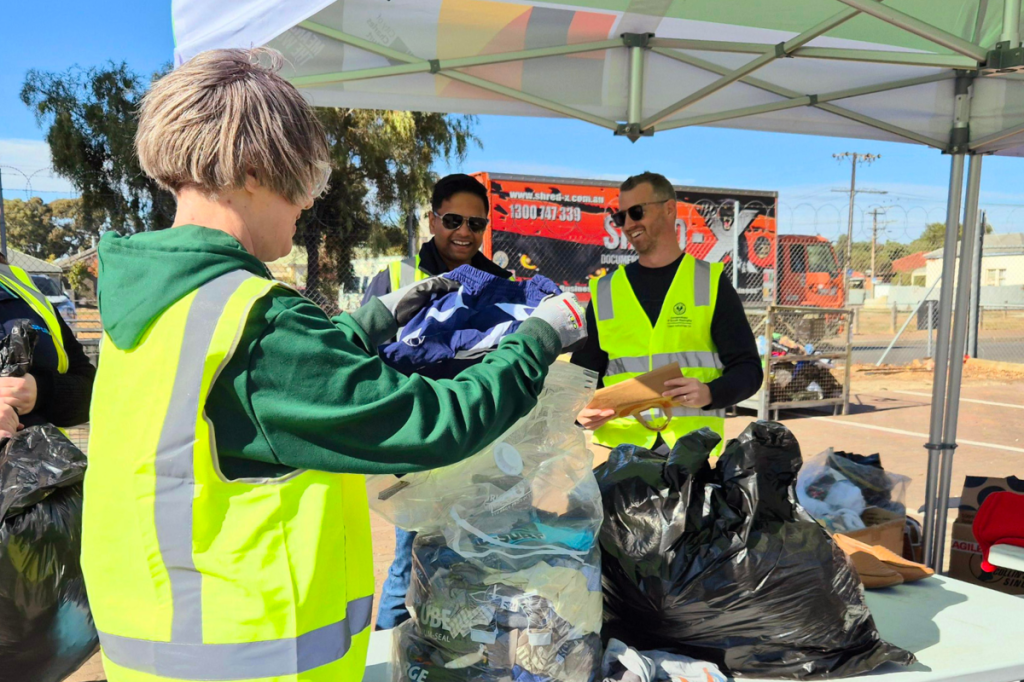
GISA’s Set your clothes free event gives unwanted clothes another chance, with 14 drop-off points across Adelaide and regional SA open on Saturday 31 October, 9am-3pm.
For the first time, the event will accept poor-quality clothing for recycling by Upparel, as well as good-quality pieces for charity resale.
Clothing, footwear, handbags and household linen can be dropped off in any condition, but everything must be washed first. Exclusions include underwear, underwire bras, belts, cloth nappies, doonas, pillows, soft toys and mattresses.
Working with local councils and charities, GISA collected 42.4 tonnes of unwanted textiles across two Set your clothes free events in 2025. That included 24.4 tonnes of clothing and footwear for charity resale, and 18 tonnes of household textiles sent for recycling into filling for products such as boxing bags and pet beds.
Shani is confident this year’s collection will bring in even more.
“And it’s not just about the environment,” she says. “There’s obviously social benefits if you’re buying secondhand or donating to an op shop, because it creates a lot of jobs as well.”
Clothing reuse generates 69 times more jobs than sending them to landfill. SA’s reuse sector provides more than 500 full-time jobs.
For more info on circular textiles and how to set your clothes free, check out GISA’s website.