


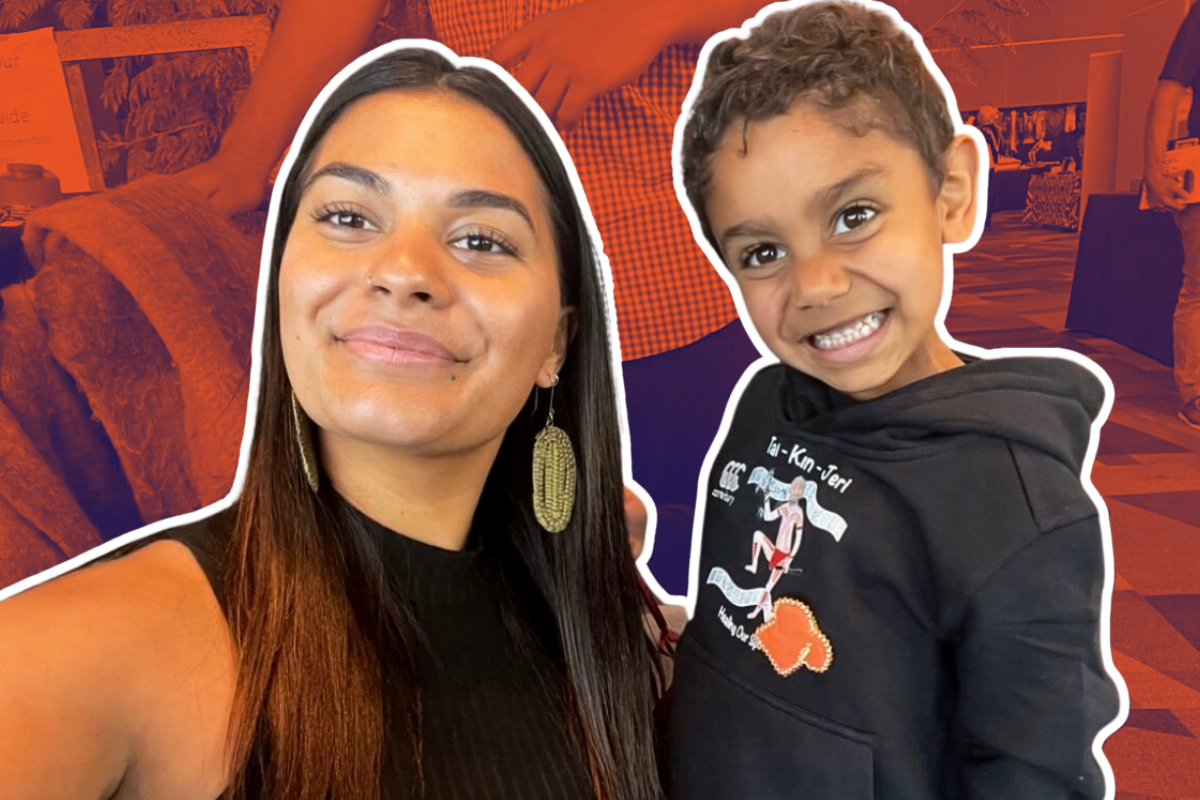
Tamia Blackwell once hated STEM, until culture helped it click. Now the 24-year-old Narungga educator is changing the equation for other Aboriginal students.
“I never experienced having an Aboriginal teacher,” says Tamia Blackwell, a proud Narungga woman from Point Pearce. “So I try to be that person for those young people.”
But Tamia did have inspiring ASETOs (Aboriginal Secondary Education Transition Officers) who helped her understand the impact she could have in the classroom.
“They were the reason I wanted to be a teacher,” she says.
At 24, she’s now an award-winning leader in Aboriginal education: she teaches at a southern Adelaide school, sits on the Reconciliation SA board, and is a First Nations expert with the Australian Education Research Organisation. She plays footy for Port District FC, where she also coaches.
“I’m big on not addressing the problem without being part of the solution,” she says.
It’s a lesson she learned as a teenager: Aboriginal kids do better when their own culture is incorporated in what they’re learning.
This NAIDOC Week (5-12 July) celebrates the milestone “50 Years of Deadly”. In her classroom and the SA community, Tamia is already building the next 50.
How a dance became an equation
Rewind to Year 10 at Woodville High. “I absolutely hated all elements of STEM,” Tamia says.
What turned that around was the first STEM Aboriginal Learners Congress, a new SA program built to bring Aboriginal culture into the science and maths classroom. That was the hook for a kid who loved her culture and loathed algebra.
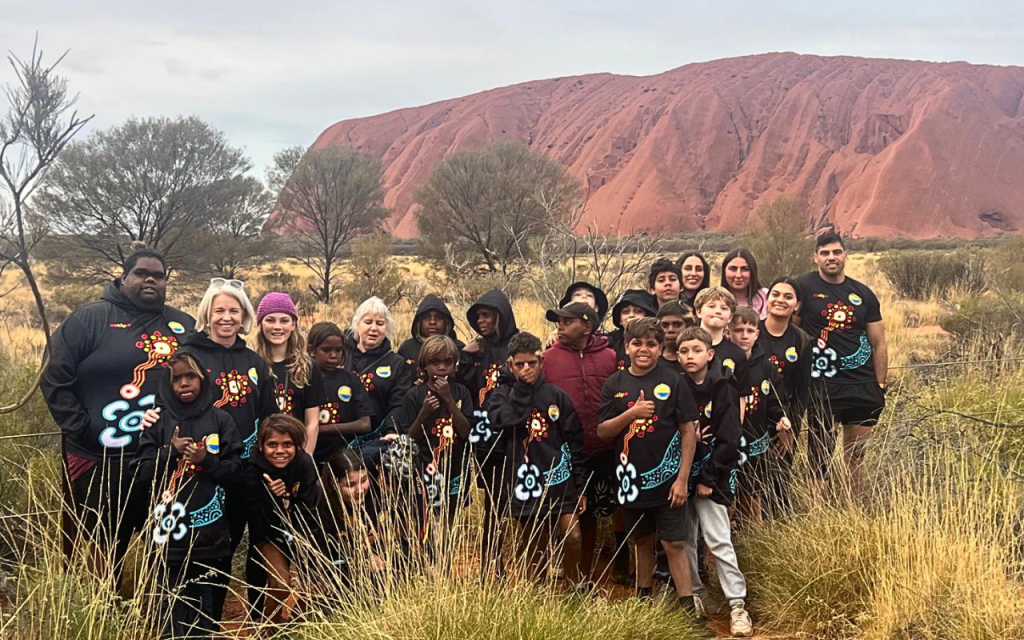
There, with her cousin Bryce and Aboriginal mathematician Dr Chris Matthews, she realised the dances she learnt from Elders on the weekends could connect to what she was learning in class.
“Dr Chris opened our eyes to how you can tell stories through symbols,” Tamia says.
Take the Kite Hawk dance: each move becomes a symbol, then you group and multiply them like any equation until the maths maps the whole dance.
“It was the first time I’d actually had any interest in an element of STEM,” Tamia says. “And I realised that if we can learn about our culture in a westernised school system that wasn’t set up for our people, then other young Aboriginal kids can too.”
As teenagers, she and Bryce flew to Melbourne to teach the workshop to university professors. “At the time we were like, ‘why is this such a big deal?’”
The Congress that started with around 300 students now runs for well over 2000, and Tamia’s still involved, mentoring the next generation to build workshops of their own.
Being the teacher she never had
These days Tamia is an award-winning STEM advocate, who watches the same penny drop for her own students. She says when Aboriginal students work out they can build and solve an algebra equation just by using their own culture and dances, they can’t quite believe it. “They’re proud of themselves,” she says, “but also proud that they can be the experts in that room.”
“The priority to have culture in the classroom hasn’t always been the case,” she says. “I’m grateful I was at school when it was starting to be valued, because I know that’s not the case for a lot of people.”
The content is only half the story, though; the other half is who children see leading the learning. Tamia is often the only Aboriginal teacher in the building, and Aboriginal staff make up just two per cent of the education department’s workforce, many of them in non-teaching roles.
“You can’t be what you can’t see,” she says. “Being up there at the front of the room is part of dismantling the stereotypes that Aboriginal people aren’t capable of being teachers.”
More than marks
Tamia also helps shape what gets taught across the state, pushing to have Aboriginal cultural knowledge recognised in the SACE and sitting on the committee that guides multicultural education and languages. There’s a reason she takes it all on.
The Medical Journal of Australia has found that educational equity could close the life-expectancy gap between Aboriginal and non-Aboriginal Australians by up to 12 years, about the size of the gap itself.
While there’s still a lot more to do to close the gap, progress is happening in SA. More Aboriginal students are finishing Year 12, Aboriginal language programs are turning up in more schools each year, and new scholarships are bringing through the next generation of Aboriginal teachers.
Then there’s the other half of the equation: truth-telling, the part that’s for everyone. Tamia says a classroom can do what no campaign or policy can. “We have a massive responsibility to make sure kids get the truth-telling,” she says, “even when it’s uncomfortable.”
For her it’s about what the next generation inherits. “I don’t want to see another generation come through where we’re still contesting things we know are true. Everyone has a role to play in that, not just Aboriginal and Torres Strait Islander people.”
Letting the kids tell it
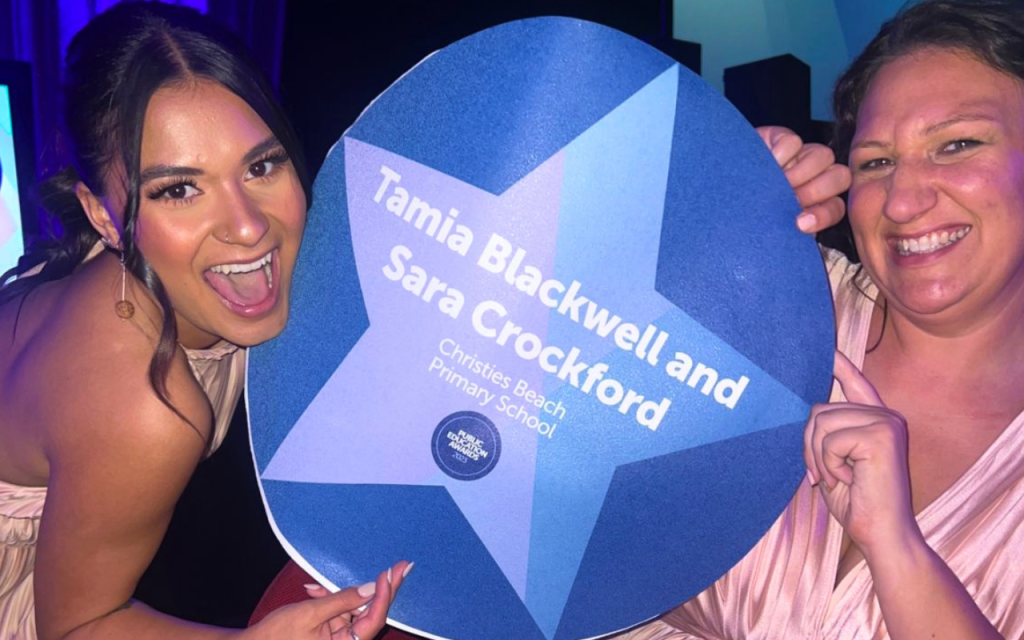
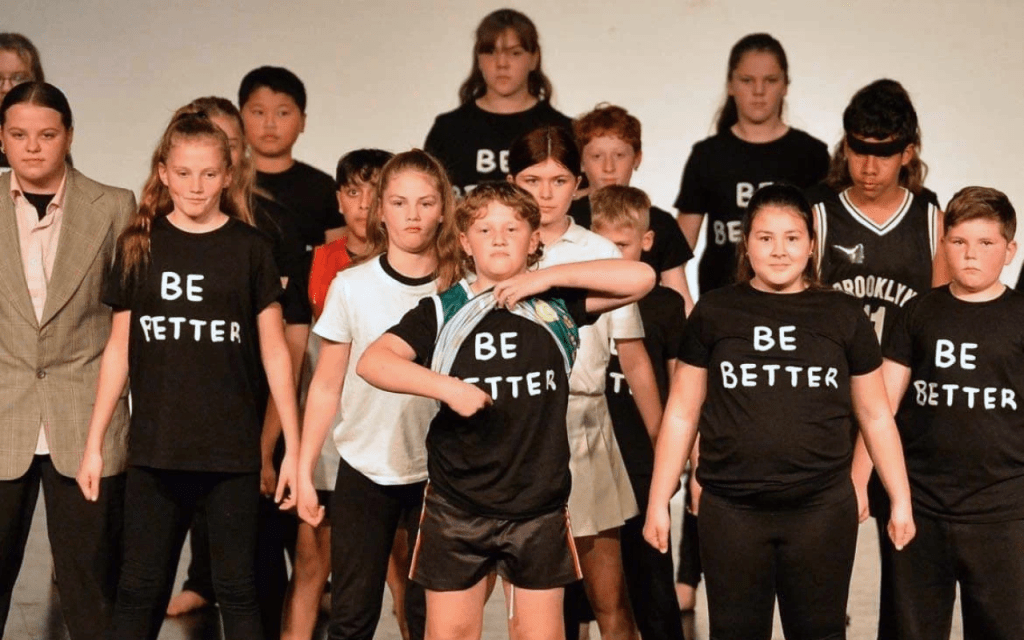
In 2020, fellow Christies Beach teacher Sara Crockford asked Tamia to help build a performance for Wakakirri, Australia’s largest story-dance festival. Tamia suggested the Stolen Generations.
“They’ve got to learn it at some point,” Tamia said, “and they’ll be blindsided if they hit it in the curriculum with no idea. So we wanted this to be an opportunity for them to succeed and have high expectations that they are capable of exactly that.”
They built the story-dance with elders, community and the students themselves. Some parents were uneasy at first, but once they’d talked it through, the school came out closer to its community. And the kids delivered. “They performed the story with sensitivity,” Tamia says. “They had the courage to come up on the stage and deliver something so emotional, but also so important and powerful.”
In 2023, their Wakakirri story took on racism in sport, something some kids were facing at their own footy clubs. Then in 2024, their performance reflected on the Voice referendum, after long yarns with elders about whether it was too raw. The answer, Tamia says, kept coming back the same: who better to tell it than the kids?
What stayed with her was what those Wakakirri performances gave the kids: the history, and the confidence to stand up and tell it. “It was their voice at the front of that entire collaborative process,” she says. “They created something they had ownership of.”
The next lot coming through
This year’s NAIDOC Week theme is “50 Years of Deadly”, and Tamia describes her own work as one link in a long chain “continuing the legacy of strength and resilience that has walked before me”. The other end of that chain is sitting in her classroom right now.
She watches them meet each other “without prejudice, with compassion and empathy”.
“That’s what makes me hopeful,” she says. “These guys are coming through. They’re going to be our future community leaders, and leaders of our country.”
NAIDOC Week 2026
On 10 July, South Australians of every age and background come together for the NAIDOC SA March to Parliament House, followed by a free Family Fun Day at Tarntanyangga/Victoria Square celebrating culture, community and connection. Expect face painting, amusement rides, a BBQ, live music, and stalls celebrating First Nations culture.
There’s also plenty of other activities in SA during NAIDOC Week, from an art exhibition and workshops at the South Australian Museum to bangle-weaving at Hindmarsh Library and boomerang decoration at Walkerville. You can also host your own NAIDOC Week event for your workplace, club or community.
Find out more about NAIDOC Week at the NAIDOC SA website.