



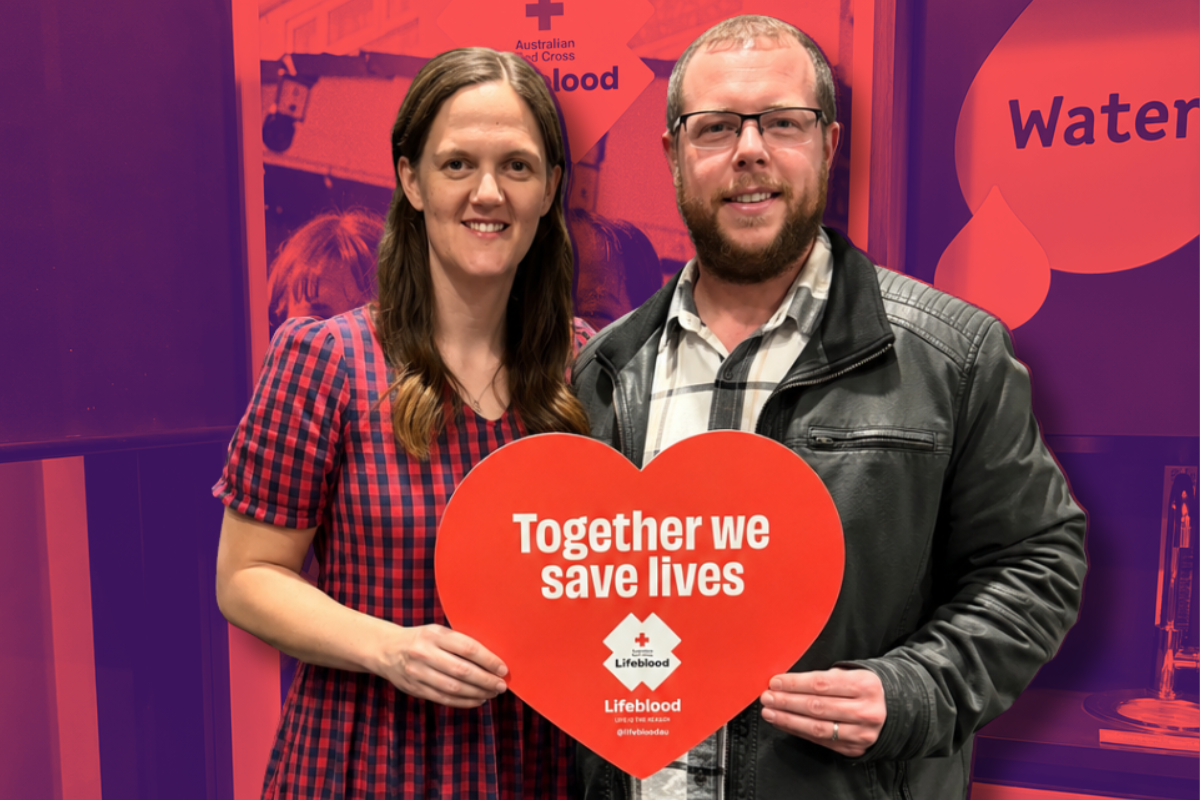
Most people don’t expect to find a love story at a blood donor centre. Then again, most South Australians aren’t donating in the first place – and with National Blood Donor Week starting 8 June, Lifeblood wants that to change.
When Alissa and Doug posted a photo from a blood donor centre on Facebook earlier this year, it wasn’t just celebrating a donation milestone.
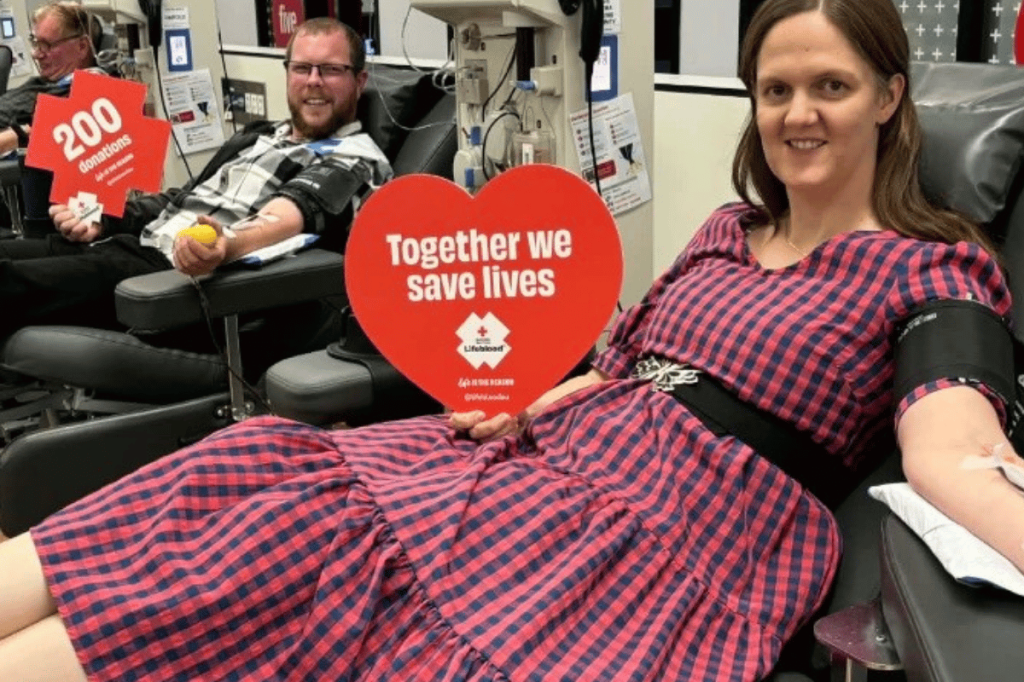
Sitting side-by-side in donor chairs, holding up Lifeblood signs marking Doug’s 200th donation and Alissa’s 175th, they were also celebrating something else: the relationship that started at the Modbury donor centre.
The pair had gone to school together and both remembered each other through music – choir and band crossovers they still can’t quite prove with photographic evidence.
Years later, they unexpectedly crossed paths while donating blood.
“We bumped into each other at the donor centre and went, ‘Oh, we know each other,’” Doug says.
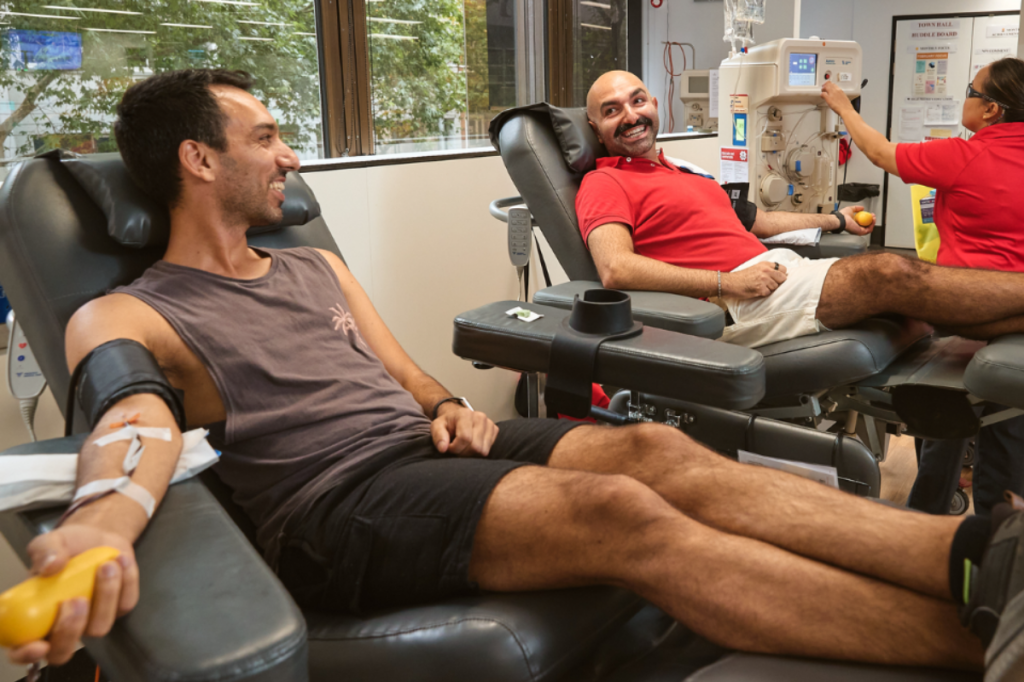
Now they donate together, using Lifeblood’s donate with a friend option so they can sit in chairs next to each other.
And Alissa says the staff at Modbury are all taking credit for the romance.
Why they keep going back
The love story is the fun bit. But Alissa and Doug were both donating long before they became a couple.
Alissa started at 16, back when that was allowed (the starting age is now 18). Her great aunt has needed blood and and a bone-marrow transplant, while her grandfather has blood cancer and may need blood products at some point.
“I’ve been donating for more than half my life,” she says. “It’s part of who I am and what I do. I wouldn’t stop now.”
Doug started when the Lifeblood ‘blood bus’ attended his workplace in 2014. He kept going because his family and friends had fought cancer and other health conditions, requiring the support of Lifeblood products.
“I don’t know if my products go to them personally, but I know they help people in need,” he says. “Regardless of whether they’re people I know or not, it’s an opportunity to help someone else.”
What 250 donations teaches you
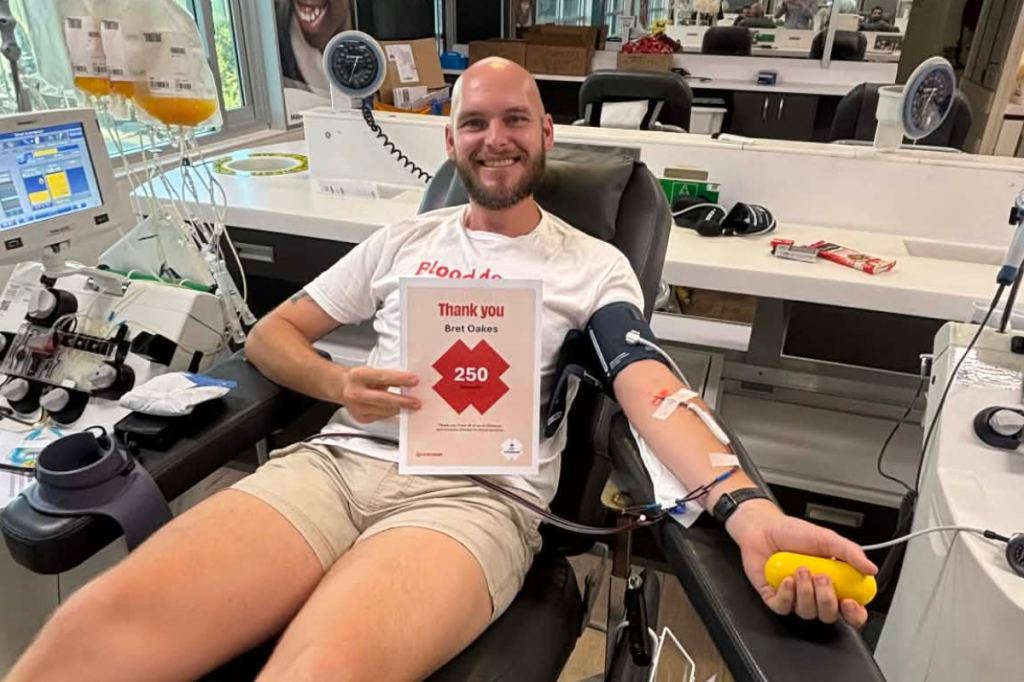
Brett has been donating for more than half his life too. He’s 36, and he’s clocked more than 250 donations.
He donates platelets every two weeks at Marion, where the nurses have become part of his routine.
“I consider the nurses at the Marion Blood Bank to be friends,” he says. “I see them every couple of weeks. We chat about work, we chat about what’s going on in life, and they’re always so caring and warm and open.”
He first heard about donating at school, when it was presented as one option for giving back to the community.
“Donating blood seemed very different to everything else,” he says. “It was very personal, literally giving a piece of yourself to the community.”
He started in his early 20s. Because he’s O positive with good veins, he was soon moved to plasma, then platelets. Every second Thursday, he donates, reads a book, chats to the staff and rewards himself with an iced coffee.
He calls it “socially sanctioned relaxation”.
“We’re so busy these days. Wouldn’t it be nice to actually just sit down and do nothing for about 20 minutes?” he says. “You can still tick the box of being productive and doing something, but you’re actually just chilling.”
What actually happens when you donate
If you’ve never donated, the practical bit is more straightforward than people imagine.
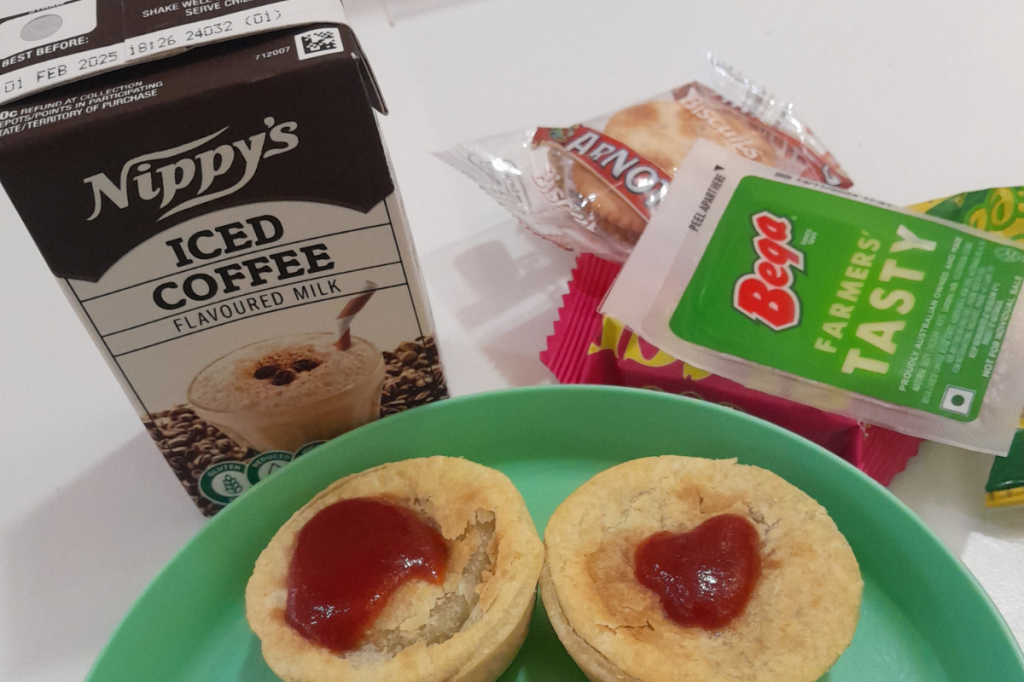
Set aside about an hour for a blood donation, or 90 minutes for plasma. You’ll do a health questionnaire and a mini check (blood pressure, haemoglobin), then move into a comfy chair. The donation itself takes five to ten minutes for whole blood and about 45 minutes for plasma. Afterwards, you stay 15 minutes for snacks and a drink.
Brett says whole blood donations can fit into a lunch break.
“You can be in and out in under half an hour, including the interview,” he says. “And you feel good, and you get some chocolate and a drink at the end. Why wouldn’t you do it?”
Plus donors never walk out hungry. Free snacks are on offer before you leave. Brett says his treat of choice is an iced coffee, but he’s also partial to a party pie – or three.
His one hot tip for first-timers: you need to be well hydrated to donate, but drink the recommended water on both the day before and the day of, not skulled all at once on the way in – like he once did. Once you’re hooked up to the machine, if you need the toilet, that’s the end of the day’s donation.
If needles make you nervous, you’re not alone – Lifeblood spokesperson Emily Granland says one in five people fear needles, and staff are trained to make you feel comfortable. Bring a friend, bring headphones, tell the nurses you’re nervous.
Why it matters
More than 33,000 blood and plasma donations are needed across Australia every week. Cancer patients are the biggest single group of recipients.
One blood donation can help save up to three lives.
Only three per cent of the eligible population currently donates – and Lifeblood needs another 110,000 new donors across the country in the next year.
For Brett, donating became more personal as people around him got sick. He lost a friend to bowel cancer at 28, and blood transfusions kept his quality of life up through palliative care. Other friends have had brain tumours or serious surgery and pulled through – often with donated blood part of the story.
For people in crashes, surgery or other emergencies, donated blood can become part of the difference between life and death.
“I could pass people on the street who might have received blood from me, I will never know,” he says. “But the thought of just helping someone out there, really in their time of need, is overwhelming. It makes me feel really good about what I can do for people, for the community. That’s why I keep going back every two weeks.”
Don’t rule yourself out
A lot of people assume they can’t donate because of tattoos, piercings or eligibility rules they heard about years ago. Most of those rules have moved on – it’s worth checking.
In April this year, Lifeblood removed the gender-specific sexual activity questions from the pre-donation questionnaire. All donors are now asked the same questions, regardless of gender. The change means many gay and bisexual men and transgender people in long-term monogamous relationships can donate blood and platelets for the first time.
Brett’s been through the questionnaire 250-plus times. He says the staff aren’t there to judge.
“They are there to help you and help the person who might need the blood,” he says. “It’s not about gossip or judgement or anything like that.”
How to become a donor
This National Blood Donor Week (8–14 June), Lifeblood is encouraging South Australians to check if they’re eligible and book their first appointment.
You may be able to donate if you’re aged 18 to 75, weigh more than 50kg and are feeling well. The quickest way to check is with the eligibility quiz at lifeblood.com.au.
Donate before 19 July and get a free, limited-edition bandage designed by artist David Booth, inspired by drawings from the kids at Adelaide’s Women’s and Children’s Hospital. It’s wearable art designed as a conversation-starter, so you can spread awareness and inspire other people to donate.
Bookings can be made there, through the Donate Blood app, or by calling 13 14 95. Adelaide has five permanent donor centres – in the city, Marion, Port Adelaide, Modbury and Noarlunga – and mobile centres visit other suburbs regularly, as well as regional SA.
To check your eligibility and book your first donation, head to lifeblood.com.au.