



Buy Now, Pay Later can make a big purchase feel like a bargain. But here’s why the whole scheme can be dangerous – especially during sales.
You open your phone to check one thing, and suddenly you’re being followed around the internet by EOFY sales ads for the discounted shoes, headphones, air fryer, linen sheets or “investment piece” you absolutely did not need five minutes ago.
Then comes the magic phrase: four easy payments. You might not be able to afford something on sale for $240 this week, but you can afford $60, and the other three instalments look just as doable when there’s a fortnight between each one.
That maths can feel totally reasonable. Responsible, even. Especially when the sale ends at midnight, your size is low in stock, and everyone else seems to be buying things without overthinking it.
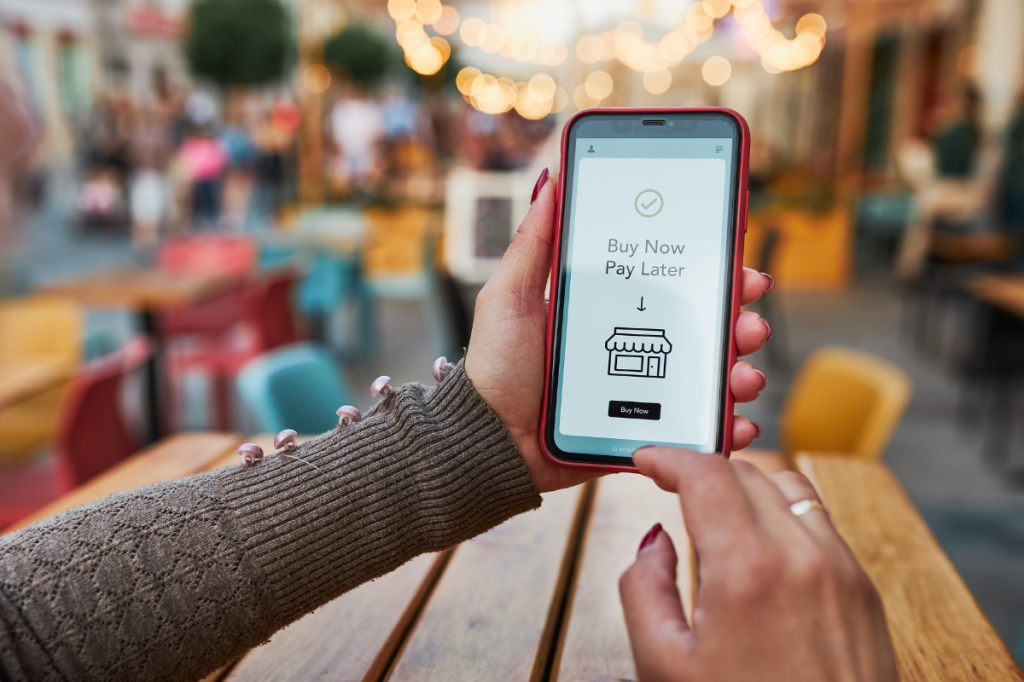
But Buy Now, Pay Later (BNPL) services like Afterpay, Zip and PayPal in 4 aren’t free money, no matter how the checkout makes them look. They’re credit, even if they just don’t always feel like it.
We spoke to Steffany Woolford from the South Australian Financial Counsellors Association (SAFCA) to unpack why BNPL is such a budget trap for South Australians to fall into, and how to make it through the sales without paying for them until spring.
‘Interest-free’ isn’t ‘cost-free’
Here’s the bit BNPL companies don’t put in the ads: ‘interest-free’ only holds up if everything goes perfectly. Miss a payment, and the fees start stacking up.
Afterpay charges a $10 late fee on orders over $40, plus another $7 if it’s still unpaid a week later. Zip Pay tacks on a $9.95 monthly account-keeping fee any time you’re carrying a balance – not for being late, just for owing money.
ASIC’s 2020 review of the sector found BNPL providers collected more than $43 million in late fee revenue in a single year.
“People hear ‘no interest’ and assume there’s no cost,” Steffany says. “But on a small purchase, a late fee can work out at an annualised rate that makes credit cards look generous.
“It’s designed to be effortless to use, but just as easy to get wrong and that’s when you pay.”
One in five Australian BNPL users missed a payment in the past 12 months. Among 18 to 29-year-olds, nearly half of those who missed one said they had to cut back on essentials to catch up, and roughly the same number took out another loan to cover it.

Designed to make you spend more
BNPL isn’t a neutral payment option sitting quietly next to credit card and PayPal at checkout. It’s a behavioural product, built to get you over the line.
Research shows that simply having BNPL available at checkout increases the likelihood you’ll impulse buy by 17 per cent. Splitting a $240 item into “just $60 today” reduces what psychologists call payment salience, which is the mental friction that normally makes you pause and think: ‘Do I actually need this?’.
“That pause is what protects your budget,” Steffany says. “BNPL is designed to skip it. The whole checkout experience, the instant approval, the small fortnightly numbers, the sense of getting a bargain, the cheerful colours – it’s all built to get you to yes before you have time to think.”
And the sales work doubly hard on you during EOFY, when urgency cues like “ends midnight” and “only three left” are already telling your brain to act now and process later.
Steffany says emails reminding you that you’ve ‘left an item in your cart’ are designed to make you feel that sense of urgency that you need to do something immediately.

When the groceries go on Afterpay
The most concerning use of BNPL isn’t the impulse buy at all – it’s the everyday essentials.
A national survey of financial counsellors found that 71 per cent of them now see clients regularly using BNPL to pay for food. More than 40 per cent reported clients using it for fuel, while around a third said clients were using it to pay utility bills.
“When BNPL becomes how you pay for essentials, that’s not budgeting – that’s debt,” Steffany says. “It’s a sign the underlying budget isn’t working, and BNPL is just delaying the moment you have to deal with it.”
She says clients often see BNPL as a kind of emergency fund, and that’s the part that’s hardest to unpick.
“When our financial counsellors talk through budget and debt options, people are generally open to taking the most suitable approach for their needs, such as negotiating with credit card providers, energy companies, or personal loan lenders,” she says.
“However, when it comes to BNPL accounts, many ask us not to intervene for fear that they may lose access, because they view BNPL as a safety net – something they can rely on if they need something there and then. Given the cost-of-living crisis, it’s totally understandable – people are struggling to put food on their table, fuel in their vehicles”
The problem is, it isn’t one. A Victorian study found that among BNPL users, 22 per cent had skipped a meal to cover repayments and 35 per cent had delayed a medical appointment. Steffany says she’s seeing the same pattern in SA.
“It feels like a fallback, but it isn’t. It’s another bill, and if you can’t pay it on time, the late fees turn it into one of the most expensive forms of debt you can take on.”
If you recognise yourself in any of this, it’s not a personal failing – it’s a moment to get some help. Free financial counselling exists for exactly this: to help you map out what’s actually going on and work out a way through.
The hidden home loan landmine
Then there’s the risk most people don’t see coming. These days, every BNPL application leaves a footprint on your credit report.
That means BNPL behaviour can affect your borrowing power when you go to apply for a home loan, a car loan, or even a rental.
“If lenders see multiple BNPL accounts, they can read it as overextension, and that might make the difference between getting your loan approved or not,” says Steffany.
If you’ve got one eye on the property market, it’s best to close every BNPL account you’ve got. If you can’t afford something without splitting it into four, the maths isn’t going to work for a mortgage either.

Steffany’s advice: skip it altogether
Ask any financial counsellor and the answer’s the same: BNPL can be a trap that’s hard to get out of. Even though you think it’s helping you at the time, it’s only going to add ongoing pressure to your budget which can cause lots of stress.
“There’s no version of BNPL that’s safer than just not using it,” Steffany says. “If you can afford something, pay for it. If you can’t, wait until you can.”
Practical steps to quit BNPL
Here’s some tips on getting out of the BNPL trap:
- Delete the retail apps. If they’re not on your phone, you can’t tap through at checkout in a weak moment.
- Unsubscribe from retail emails. Fewer sales reminders mean fewer triggers to spend when money’s already tight.
- Pay off what you owe. If you can’t clear it in one go, work out a repayment plan that fits in your budget – and stick to it.
- Close the accounts. Once a balance is clear, close the account properly so it stops showing up on your credit file. An unused account is still a liability to a lender.
- Stop, track & reflect on how BNPL is making you feel. Is this service actually preventing you from reaching your financial goals?
- If you can’t see a way through without BNPL, ask for help. “Don’t wait until you’re juggling four apps and missing payment,” says Steffany. “Financial counsellors are free, confidential and non-judgemental. We see this every day.”
The South Australian Government offers free financial counselling that you can find through the Affordable SA website. Alternatively, contact the National Debt Helpline (1800 007 007) for free and confidential financial counselling, or the Mob Strong Debt Helpline for Aboriginal and Torres Strait Islander people (1800 808 488). See other cost-of-living options available to South Australians here.